Europe’s Energy Paradox: Why the EU’s Response to Global Shocks Falls Woefully Short of Climate Realities
The European Union’s policy response to the compounding energy shocks of 2022 and 2026 often looks decisive—at least when compared against the fossil-fuel-first agenda of Donald Trump’s America. While European Commission President Ursula von der Leyen regularly urges member states to accelerate the continent’s departure from fossil fuels, a closer examination reveals a troubling reality: not nearly enough is actually happening to meet the existential demands of a warming planet and volatile international energy markets.
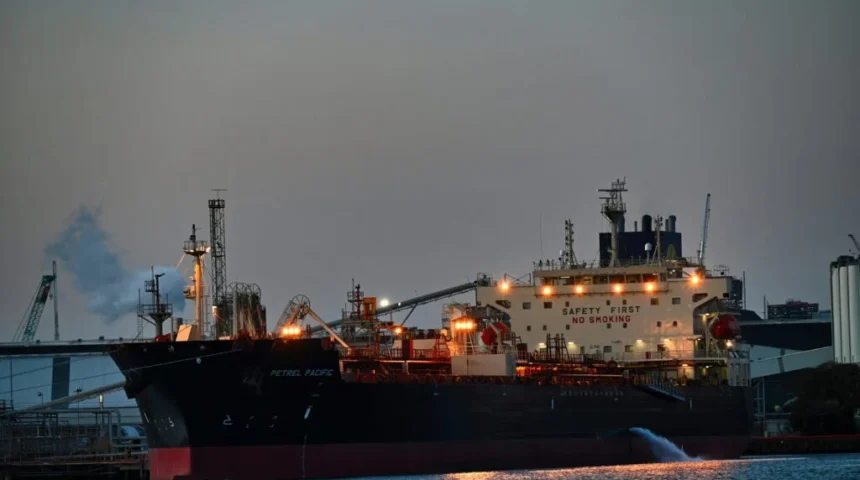
Over the span of just four years, the industrialized world has weathered two profound energy crises. The first, erupting in 2022, was a direct consequence of Russian trade embargoes and Western sanctions following the invasion of Ukraine. The second, an ongoing shock wave that began unfolding amid escalating conflicts in the Middle East tied to the United States’ military engagement against Iran, has once again underscored the immense vulnerabilities inherent in global reliance on fossil fuels.
Compounding these economic shocks, record-breaking summer heatwaves have battered the continent, serving as a stark reminder that the climate crisis is accelerating. Ideally, this convergence of extreme weather and geopolitical instability should have triggered bold, dramatic, and structural transformation across the developed world. Instead, the actual policy response has been profoundly underwhelming.
The Trump Administration and the Retreat from Clean Energy
The policy trajectory in the United States stands in stark contrast to any meaningful long-term climate action. While the Biden administration previously initiated pathbreaking climate policies—though largely focused on domestic decarbonization rather than the immediate energy repercussions of the Russian invasion of Ukraine—those measures have been systematically whittled down or swept away entirely.
Since returning to the White House in 2025, the Trump administration has frozen federal clean-energy disbursements and dismantled crucial tax credits designed to incentivize electric vehicles, residential solar installations, and heat pumps. In a particularly striking move, federal officials recently paid the German utility company RWE $1.2 billion in compensation to abandon several major wind power projects across the United States.
Rather than pivoting to renewables, the company has redirected those assets toward natural gas infrastructure, including a liquefied natural gas export terminal project in Louisiana. This strategic reversal occurred precisely while the Strait of Hormuz remained closed and American energy bills climbed steadily upward.
As American critic Ryan Cooper pointed out in The American Prospect in April 2026, the market economics had already shifted decisively: solar power was already the cheapest form of electricity in most parts of the world by 2025, even without government subsidies. By gutting these programs, the Trump administration has deliberately propped up fossil fuels, making its only real market competition more expensive at a time when global oil prices surged past $100 a barrel earlier in the year.
This outcome, of course, comes as little surprise to international observers, as few expected any other trajectory from the current Washington administration. Nevertheless, as Cooper noted, this global energy crunch has inadvertently pushed other regions of the world to accelerate their investments in renewables, even if the aggregate quantities still fall short of what is necessary to stem the tide of catastrophic global warming.
Spain has emerged as a standout case study in this transition. Its aggressive buildout of domestic solar and wind energy infrastructure has kept its average and daytime electricity prices structurally lower than its gas-dependent European peers. This transition has positioned Spain as a continental leader in cheap and occasionally negative electricity pricing, though the country remains partially exposed to broader price spikes tied to international gas market shocks.
Europe’s Half-Measures and the Illusion of Independence
Spain’s success aside, Europe’s broader response to the ongoing energy crisis remains egregiously insufficient. When faced with the severe heatwaves of recent summers and the unmistakable message delivered by recurrent energy crises—that renewables are the ultimate guarantor of both climate mitigation and energy security—Brussels has repeatedly flinched from making the harder structural choices.
In May 2026, European Commission President Ursula von der Leyen announced a forthcoming Electrification Action Plan, delivering a sharp and clear-eyed assessment of the continent’s precarious position. "The situation in the Middle East is sending shockwaves across the world," von der Leyen declared. "As long as we rely on oil and gas, we remain vulnerable. If we want true independence, we must accelerate electrification. We need to do more at a European level. Electrification and homegrown clean energy are the path to independence."
The rhetoric was met with widespread approval. The European Commission subsequently attempted to reframe the unfolding crisis as a historic opportunity through its AccelerateEU proposal. The package called for aggressively cutting dependence on volatile fossil fuel imports, speeding up widespread electrification, upgrading aging electricity grids, and channeling both EU funds and carbon revenues directly toward industrial decarbonization. The initiative explicitly aimed to address surging energy costs while shrinking exposure to volatile energy markets amid the escalating conflict in the Middle East.
Yet, alongside these visionary goals, the AccelerateEU framework included policy compromises that undermined its own stated ambitions. The proposal advised EU member states to coordinate gas storage filling jointly and revive collective purchasing mechanisms for oil and gas. It introduced a new "fuel observatory" to track domestic refining capacity and jet fuel supplies, and it recommended loosening state aid rules to allow national governments to temporarily shield consumers from skyrocketing costs.
Crucially, rather than codifying into permanent law the continent-wide energy-saving rules that were briefly and successfully adopted during the 2022 crisis, Brussels retreated to the path of least resistance, relying instead on voluntary demand reduction.
Civil society organizations were quick to point out the shortcomings. The Climate Action Network (CAN) Europe welcomed parts of the package but warned that it lacked a solid, dedicated financial mechanism to scale up relief for vulnerable populations who need assistance the most. Furthermore, CAN Europe cautioned that relaxed state aid frameworks risked inadvertently propping up fossil fuel generation rather than genuinely fostering long-term energy independence.
Subsidies, Surging Costs, and Structural Incoherence
Events following the announcement quickly validated those warnings. Data compiled by Bruegel, a Brussels-based economic think tank, revealed that EU-wide fossil fuel subsidies actually rose rather than fell. Member states deployed more than €11.8 billion in emergency fiscal measures to cushion households from the direct price shocks triggered by the war in Iran.
Environmental organizations condemned the policy pivot. Greenpeace criticized what it termed the deep structural incoherence of the EU’s response, arguing that short-term financial handouts to the fossil fuel industry had once again taken precedence over the green transition that the crisis should have forced. Every euro spent artificially cushioning gas prices, the group argued, is a euro spent further entrenching the very dependency that Brussels claims it wants to eliminate.
The financial toll of this continued exposure has been staggering. According to estimates from the Jacques Delors Institute, the war in Iran cost EU member states roughly €62 billion during its first 100 days alone. The institute emphasized that this figure represents far more than a temporary fiscal burden; it is the direct consequence of Europe’s persistent vulnerability to fossil fuel price volatility. Bruegel’s tracking data reinforces this conclusion, showing that the majority of public funds committed so far have been untargeted—directly contradicting the formal recommendations issued by both the European Commission and the European Central Bank, with over half of all tracked fiscal measures falling into this untargeted category.
Pressures on the Carbon Market and Industrial Laggards
Compounding these fiscal missteps, the European Union has begun weighing potential rollbacks to its most powerful climate policy instrument: the EU Emissions Trading System (EU ETS). As the bloc’s primary carbon pricing mechanism, the EU ETS forces industrial polluters to pay for their greenhouse gas emissions, thereby driving structural decarbonization across heavy industry.
However, in July 2026, the Commission announced proposals that would slow the pace of mandatory emissions reductions for businesses, relaxing the rules of the carbon market to grant companies more breathing room during a period of economic strain.
The European Environmental Bureau issued a scathing critique of the proposed changes. "Rather than reinforcing this critical investment signal at a time of fossil fuel volatility, the proposal weakens key provisions, rewarding polluters while undermining businesses investing in fossil-free production," the bureau stated.
Interestingly, pushback against weakening the carbon market has not come exclusively from environmental advocates. Established industry stakeholders and corporate leaders have also voiced strong support for maintaining a strict and ambitious EU ETS. According to assessments by the Cambridge-based Corporate Leaders Group and Cleantech for Europe—an initiative bridging the clean technology sector and EU policymakers—many progressive businesses view a predictable and robust carbon market as entirely indispensable for keeping their operations internationally competitive and future-proof.
The overarching takeaway from the EU’s recent policy trajectory is deeply discouraging. Rather than seizing the historic leverage provided by repeated energy shocks to definitively accelerate the green transition, European policymakers have repeatedly opted for short-term, contradictory measures. Brussels continues to treat climate protection and energy security as competing priorities rather than fusing them into a single, cohesive strategy. Ultimately, the central question facing the European Union is not whether its performance outpaces that of the United States, but whether its policy responses come anywhere close to meeting the urgent demands of the unfolding climate reality.

Related News