Global Venture Capital Rebounds Strongly in 2026 Driven by Massive Artificial Intelligence Investments
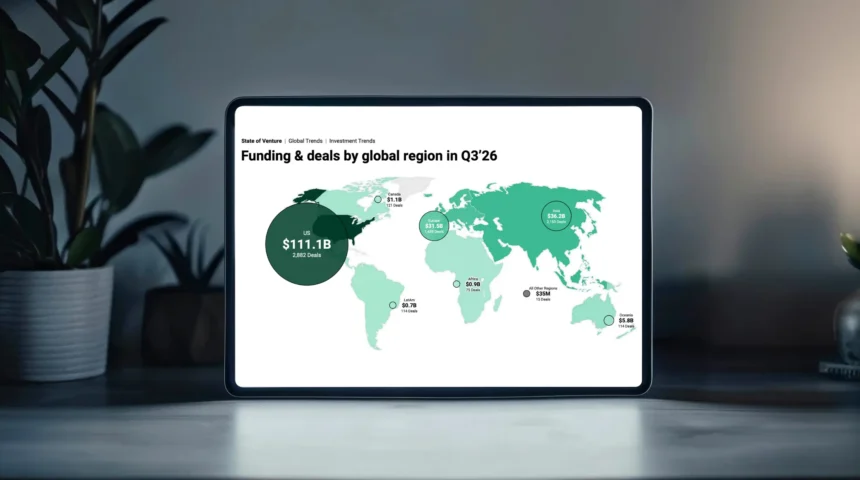
Global venture capital funding is experiencing a robust and significant rebound this year, propelled forward by historic, multi-billion-dollar investments concentrated heavily within the artificial intelligence sector.
According to comprehensive new data released by market intelligence firm CB Insights in its State of Venture Q3 2026 report, worldwide venture capital funding reached US$187.2 billion during the third quarter of the year. This latest quarterly influx pushes the year-to-date total to an impressive US$698.3 billion. This aggregate amount represents a staggering 108.9% increase compared to the exact same period in 2025, establishing a remarkable record high for overall venture activity throughout the year.
This extraordinary surge in capital deployment has occurred even as transaction volumes continued to contract. During the third quarter of 2026, overall global deal count declined by 23% quarter-over-quarter, dropping to 6,913 total transactions and hitting a historic low point for deal frequency. The widening gap between falling transaction numbers and skyrocketing funding totals highlights a defining characteristic of the current market environment: investors are deploying vastly larger sums of money into a much more selective and concentrated pool of elite startups.
Massive capital injections into prominent generative AI developers accounted for a substantial share of this global venture capital revival. Industry leader OpenAI, the developer behind the widely adopted ChatGPT platform, has pulled in an astonishing US$132 billion in total funding so far in 2026. This massive war chest comprises a colossal US$122 billion funding round secured in March 2026, followed by an additional US$10 billion strategic investment from SoftBank Group in October 2026.
Concurrently, Anthropic, the San Francisco-based creator of the Claude AI assistant, successfully secured US$95 billion through two massive tranches this year, including a US$30 billion round in February 2026 and a significantly larger US$65 billion round in May 2026. Combined, these four mega-transactions involving just two foundational model developers account for roughly one-third of all global venture capital funding raised during the first three quarters of the year.
Industry observers and corporate disclosures indicate that OpenAI intends to deploy its newly acquired capital to finance its extensive, long-term infrastructure commitments. Furthermore, the substantial cash injection serves to bolster the company’s balance sheet as persistent volatility and potential deterioration in the broader initial public offering markets threaten to further delay its heavily anticipated public market debut, which has been widely projected for 2027.
Recent market reports indicate that OpenAI’s annualized revenue has surged to US$50 billion, with company leadership projecting that figure to climb to US$70 billion by the end of 2026. Reports also suggest that the artificial intelligence pioneer is actively engaged in discussions to secure an additional US$30 billion in funding at a valuation exceeding US$1.4 trillion, with global technology conglomerates and sovereign wealth entities, including SoftBank and Abu Dhabi’s MGX, participating in potential discussions.
Meanwhile, Anthropic has outlined plans to utilize its 2026 capital reserves to accelerate its foundational safety and interpretability research, massively expand its compute capacity to satisfy surging global enterprise demand for the Claude ecosystem, and scale the specialized products and strategic partnerships relied upon by its expanding corporate client base.
Anthropic reported a third-quarter revenue standing at US$16.8 billion as it prepares for its initial public offering slated for November. The company has demonstrated notable operational efficiency, maintaining a cash-flow-positive position by generating approximately US$1.70 in revenue for every dollar spent on computing power during the third quarter. Financial projections shared with investors suggest that Anthropic is on track to reach an annualized revenue run rate of US$110 billion by the close of the year.
When looking at the broader artificial intelligence landscape, startups operating within the sector accumulated a remarkable US$495.5 billion during the first three quarters of 2026. This immense concentration of capital gives the AI sector an overwhelming 71% share of all global venture capital funding recorded year-to-date.
Global VC Funding Trends and Regional Dynamics
The structural shift toward larger, highly concentrated investments is clearly reflected in broader venture capital metrics. The global average deal size more than doubled over the past year, surging from US$23 million in 2025 to US$49.8 million year-to-date in 2026. This trend is even more pronounced within the artificial intelligence vertical, where individual funding rounds are averaging US$91.3 million so far in 2026, marking an 188% increase from the 2025 average of US$31.7 million.
Mega-rounds—defined as equity financing events valued at US$100 million or more—accounted for approximately 80% of total global venture funding in the third quarter of 2026, pulling in US$149.2 billion. This massive total was achieved despite mega-rounds representing a mere 299 transactions out of the 6,913 total deals completed during the quarter. This marks the third consecutive quarter in which mega-rounds have captured roughly 80% or more of all venture capital deployed worldwide.
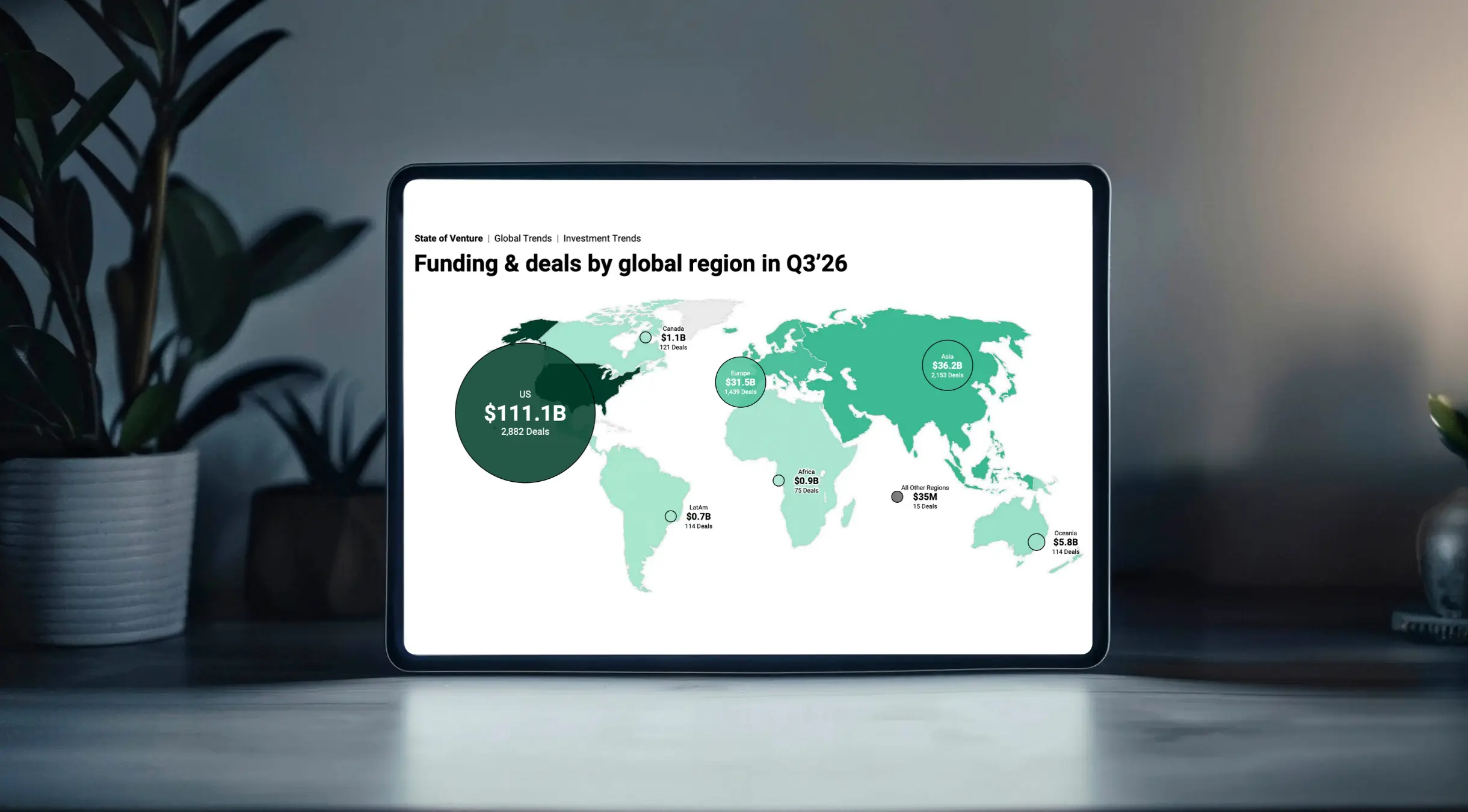
Geographically, Asia maintained its position as the second-largest recipient of global venture capital activity, capturing 31% of worldwide funding in the third quarter of 2026 with US$36.2 billion distributed across 2,153 deals. In total, Asian enterprises secured US$99.8 billion year-to-date, representing a four-year high and a 130% increase compared to the same period in the previous year.
Singapore experienced a particularly dramatic surge in venture funding, pulling in US$6.7 billion across 72 transactions in the third quarter alone. This performance propelled the nation’s year-to-date total to US$14.4 billion, establishing an all-time annual peak for the country and reflecting a phenomenal 220% year-over-year increase.
European tech startups also demonstrated robust momentum, securing US$31.5 billion in venture funding during the third quarter of 2026. This figure represents a 13% quarter-over-quarter increase and marks the region’s highest quarterly funding total since the second quarter of 2022. This strong performance brings total European venture capital fundraising for the first three quarters of the year to US$82 billion.
The largest individual funding rounds in Europe during the third quarter were concentrated in high-profile technology and infrastructure initiatives. French generative AI developer Mistral AI secured US$3.5 billion to advance its sovereign open-weight artificial intelligence models. London-based Nscale raised US$2.4 billion to expand its vertically integrated AI infrastructure and cloud computing capabilities ahead of a planned public market debut. Meanwhile, professional football club Liverpool FC completed a prominent US$2.2 billion transaction involving strategic investments from prominent global financiers.
Despite the absolute dominance of artificial intelligence, traditional technology verticals continued to command substantial investor interest during the third quarter. The financial technology sector remained a prominent pillar of the global venture ecosystem, drawing US$11.8 billion in funding and accounting for 6.3% of total global venture capital activity. Concurrently, the digital health sector maintained a strong market presence, securing US$8.3 billion and representing 4.4% of worldwide venture funding for the quarter.
As the venture capital industry enters the final quarter of the year, market leaders anticipate that the current momentum will persist, with the broader artificial intelligence ecosystem continuing to absorb historic quantities of capital. Financial services firm KPMG forecasts accelerated growth across foundational infrastructure supporting artificial intelligence, alongside emerging sub-sectors such as physical AI, industrial automation, and robotics. Furthermore, market analysts expect this wave of capital deployment to flow smoothly into adjacent strategic industries, including defense technology—where national governments continue to prioritize investments in AI-enabled autonomous systems and sovereign defense capabilities—as well as alternative energy initiatives.

Related News