Europol and International Law Enforcement Shut Down Major Crypto Laundering Service Cryptomixer, Seizing Millions in Bitcoin
In a major coordinated international law enforcement operation, a coalition of global police agencies has successfully shut down Cryptomixer, a prominent cryptocurrency laundering service that authorities say served as a primary financial hub for cybercriminals worldwide. Europol confirmed the disruptive takedown in an official press release, characterizing the platform as the go-to destination for illicit actors seeking to conceal the origins of proceeds generated from a wide array of illegal activities, including drug trafficking, weapons smuggling, sophisticated ransomware attacks, and payment card fraud.
According to Europol, since the platform first launched in 2016, Cryptomixer successfully facilitated the laundering of approximately 1.3 billion euros, equivalent to roughly $1.5 billion, exclusively in Bitcoin. The operation marks yet another significant blow to the underground digital economy, where cybercriminals increasingly rely on specialized obfuscation services to convert illicit digital assets into untraceable funds before attempting to cash them out through conventional financial systems or legitimate cryptocurrency exchanges.
The mechanics of public blockchains make platforms like Cryptomixer a vital tool for digital extortionists and hackers. By design, prominent cryptocurrencies such as Bitcoin and Ethereum operate on transparent, public ledgers. Every single transaction is permanently recorded and visible to anyone, allowing law enforcement agencies, financial investigators, and specialized blockchain intelligence firms such as Chainalysis and Elliptic to trace the flow of funds across the digital landscape over extended periods. Because this inherent visibility poses a constant threat of identification for cybercriminals, laundering services have historically stepped in to break the chain of custody.
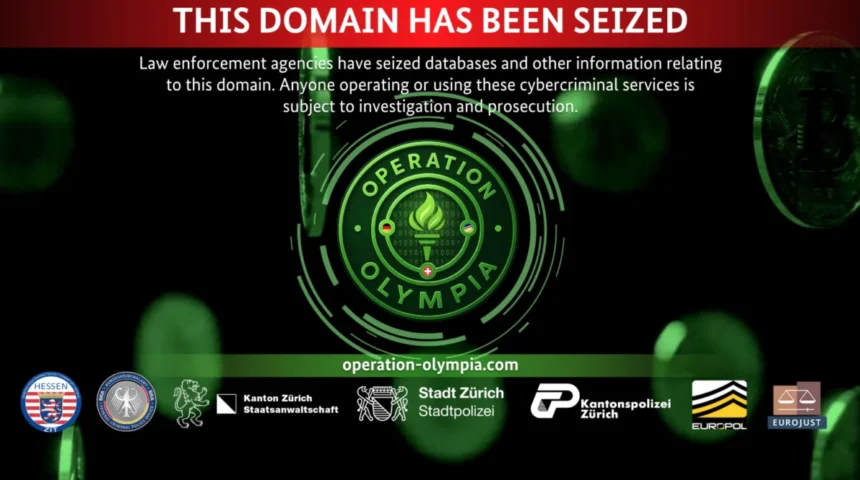
During the coordinated enforcement action, authorities seized approximately 25 million euros, or roughly $29 million, in Bitcoin. In addition to the substantial cryptocurrency seizure, law enforcement officers confiscated three physical servers, secured 12 terabytes of critical digital data, and took control of the platform’s official web domain, cryptomixer.io. Visitors attempting to access the domain are now greeted by the customary law enforcement seizure splash page, signaling that the service is permanently offline and under the control of global police authorities.
Europol detailed the specific mechanisms employed by the platform, noting that the site routinely facilitated the obfuscation of criminal funds for notorious ransomware syndicates, underground economy forums, and illicit dark web marketplaces. The service actively marketed its software as an impenetrable shield, claiming that its proprietary mixing algorithms effectively blocked the traceability of funds on the public blockchain.
To achieve this level of obscurity, Cryptomixer pooled cryptocurrency deposits from a multitude of different users into a centralized reserve. These funds were then held for long and randomized periods before being redistributed to various destination addresses at unpredictable intervals. Because digital currencies provide a public ledger of all historical transactions, these complex mixing services artificially complicate the process of tracking specific coins, thereby successfully concealing the ultimate origin and destination of the cryptocurrency.
Beyond merely obscuring transaction trails, Cryptomixer offered its clientele a high degree of operational anonymity, providing essential cover for cybercriminals who wanted to launder their digital holdings before attempting to transfer the funds to legitimate cryptocurrency exchanges. Europol explained that once the cryptocurrency had been thoroughly cleaned through the platform’s mixing process, the tainted assets could be seamlessly swapped for alternative privacy-focused cryptocurrencies or converted into traditional fiat cash without triggering standard anti-money laundering alarms at centralized financial institutions.
The dismantling of Cryptomixer is part of a broader, long-term international crackdown on cryptocurrency mixing and laundering services. Over the years, law enforcement agencies and financial regulators around the world have aggressively targeted, shut down, or sanctioned several similar high-profile platforms that played pivotal roles in the criminal underground. Notable prior actions include sweeping sanctions and legal measures directed against Tornado Cash, the dismantling of ChipMixer, and various other illicit mixing operations that have historically provided financial cover for state-sponsored hacking groups and cybercrime syndicates alike.

Related News