Understanding the Blockchain Hierarchy: A Deep Dive into Layer 1, Layer 2, and Layer 3 Architecture
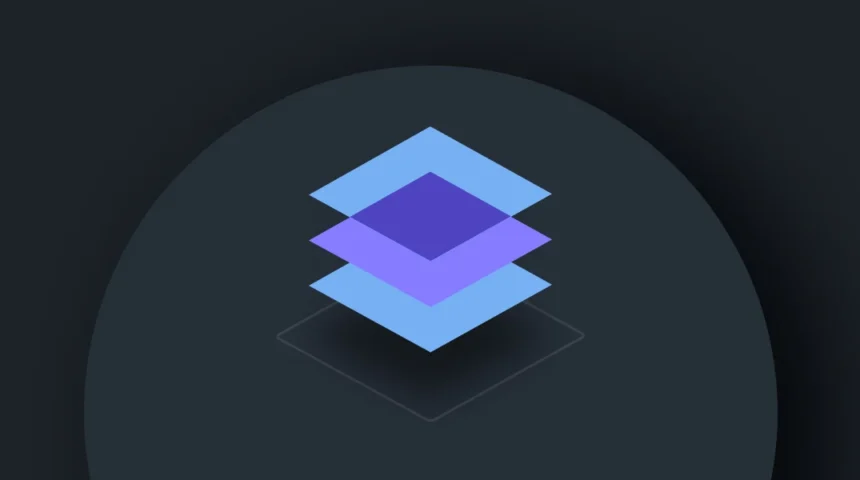
As the global financial landscape continues to grapple with the integration of digital assets, the underlying architecture of blockchain technology has become a subject of intense focus for developers, businesses, and investors alike. To understand how Bitcoin and other decentralized networks function—and how they plan to scale to meet the demands of global commerce—one must understand the concept of “layers.” In the evolving world of blockchain, these layers act as a framework for innovation, dividing the technology into the core foundation, functional scaling solutions, and the application-ready ecosystem.
The blockchain ecosystem is generally structured into three primary tiers. At the base lies the underlying architecture, the bedrock upon which the entire network rests. Above that are the protocols designed to improve functionality, such as the Lightning Network, which address the inherent limitations of early blockchain designs. Finally, there is the application layer, which hosts decentralized finance (DeFi) apps, games, and cross-chain integrations. By examining these layers, we can better understand how the industry is working to transform a secure but occasionally cumbersome digital ledger into a robust, global payment infrastructure.
Layer 1: The Foundation of the Blockchain
Layer 1, or L1, represents the blockchain itself. It is the fundamental architecture, the ruleset, and the public ledger that defines the network. When we discuss Bitcoin, Layer 1 refers to the Bitcoin blockchain, including its network of nodes, the consensus mechanism—in this case, Proof of Work (PoW)—and the public ledger that records every transaction ever made on the chain.
When Satoshi Nakamoto introduced Bitcoin in 2009, the concept of “layers” did not exist. The network was a single-tier system designed to be a peer-to-peer electronic cash system. For the first several years of its existence, this architecture was sufficient. Transactions were relatively fast, the costs associated with moving funds were minimal, and the network was not yet under the immense pressure of millions of global users.
However, as Bitcoin’s popularity surged, the limitations of this monolithic structure began to manifest. As more people attempted to use the network simultaneously, the block space became a scarce resource. This led to increased transaction fees and slower processing times. Furthermore, the energy-intensive nature of the Proof of Work mechanism, while vital for security, became a focal point of criticism regarding environmental sustainability. These challenges made it difficult for the Bitcoin network to operate as a high-frequency, everyday currency. It became clear that if Bitcoin were to fulfill its promise as a global medium of exchange, it could not rely solely on the base layer. The constraints of the L1 were not a failure of the technology, but rather a reflection of the “blockchain trilemma,” which posits that it is difficult to achieve decentralization, security, and scalability simultaneously on a single base layer. To address these hurdles without compromising the security of the core chain, the industry turned to secondary solutions.
Layer 2: Scaling Through Functional Protocols
Layer 2, or L2, consists of protocols built on top of the base layer to enhance functionality, primarily by solving the issues of speed, cost, and scalability. The most prominent example of this is the Lightning Network. The Lightning Network functions as a secondary, “off-chain” layer that allows users to conduct transactions without immediately broadcasting every single movement of funds to the primary Bitcoin blockchain.
The mechanics of the Lightning Network represent a paradigm shift in how digital payments are processed. By allowing transactions to occur on the second layer, the network enables near-instant settlement. Rather than waiting for the base chain to confirm a transaction, participants can engage in multiple exchanges directly with one another. These transactions are essentially summarized and settled on the main Bitcoin blockchain in batches at a later time. Because the vast majority of these interactions happen off-chain, the load on the primary blockchain is drastically reduced, which in turn lowers transaction fees and increases the throughput of the entire system.
This "off-chain" approach is critical because it empowers the widespread use of Bitcoin for everyday, micro-transactions. If a user wants to purchase a cup of coffee or pay for a digital subscription, the Lightning Network allows that payment to clear in seconds, rather than requiring the wait times associated with traditional on-chain block confirmations. By creating a scalable infrastructure for real-time processing, Layer 2 protocols provide the necessary bridge between the secure, rigid structure of Layer 1 and the dynamic, fast-paced needs of the modern consumer economy. These protocols maintain the integrity of the base layer while offloading the heavy lifting of high-volume transaction processing.
Layer 3: The Application and Utility Ecosystem
If Layer 1 is the ground and Layer 2 is the highway, Layer 3 is the destination where the actual interaction between the technology and the end-user occurs. Often referred to as the application layer, Layer 3 includes decentralized finance (DeFi) applications, games, and various cross-chain tools. These applications leverage the efficiency of the lower layers to provide services that were previously impossible on a standard blockchain.
The role of Layer 3 is to provide a user-friendly interface and specialized logic. While Layer 2 focuses on moving value quickly and cheaply, Layer 3 focuses on how that value is utilized. This could include complex smart contracts, gaming economies where in-game assets are represented as tokens, or decentralized exchanges that operate across different blockchain networks.
It is important to note that the Bitcoin network has remained somewhat conservative regarding the adoption of Layer 3 applications. Because the primary mission of the Bitcoin network has always been to serve as a secure store of value and a medium for the transfer of money, the community has generally prioritized the stability and simplicity of the base layer over the complexity of hosting decentralized apps. While other blockchains have leaned heavily into the Layer 3 ecosystem, Bitcoin continues to focus on its role as the world’s most secure financial ledger, leaving the application layer to be built out by developers who wish to extend that security into new areas of utility.
The Future of Payments and Merchant Integration
The advancement of these layers is not merely an academic exercise; it is a practical necessity for the mainstream adoption of digital currency. For businesses, the transition from an experimental phase to a functional payment phase depends heavily on the reliability and speed provided by these protocols.
OpenNode is one of many organizations facilitating this transition. By providing merchants with no-code solutions, OpenNode allows businesses to integrate Bitcoin payments through the Lightning Network with relative ease. This bridges the gap between complex blockchain architecture and the simple requirements of a retail environment. Furthermore, these systems allow for instant conversion, enabling merchants to accept Bitcoin while choosing to settle in local fiat currencies. This mitigates the volatility risk for business owners, allowing them to benefit from the speed and global reach of the Lightning Network without necessarily needing to hold the underlying asset on their own balance sheets.
As blockchain technology continues to mature, the distinction between these three layers will likely become even more defined. The base layer will continue to prioritize the security and decentralization that made Bitcoin the industry standard, while Layer 2 will continue to refine the scalability required for global commerce, and Layer 3 will continue to push the boundaries of what is possible in the digital economy. Through this multi-layered approach, the vision of a fast, efficient, and decentralized financial system moves closer to reality, transforming the way merchants and consumers interact on a global scale.

Related News