New Book Explores How Bitcoin Is Becoming the Ultimate Financial Collateral Without Requiring Sales
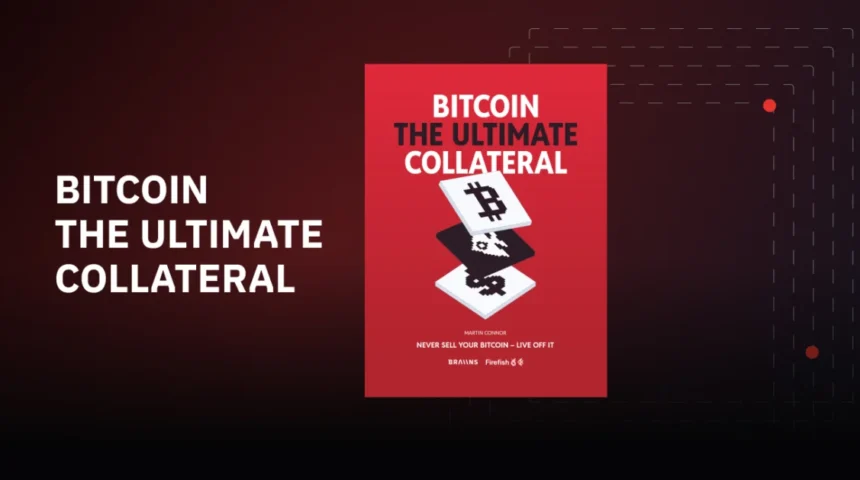
As Bitcoin continues its steady march toward deeper integration into the mainstream financial ecosystem, industry observers point to one critical capability as the final frontier for digital assets: collateralization. For years, attempting to use Bitcoin as collateral for a loan from a traditional banking or lending institution would likely result in rejection, as legacy financial systems struggled to reconcile the volatile, decentralized nature of cryptocurrency with conventional risk models. However, a new publication titled Bitcoin: The Ultimate Collateral sheds light on a rapidly growing alternative, demonstrating how bitcoiners and forward-thinking corporate entities now possess viable pathways to unlock the liquidity of their holdings without triggering a taxable event or parting with their digital gold.
Written by Martin Connor and featuring substantive contributions from an array of prominent industry experts—including Juraj Bednar, Kristian Csepcsar, Brian Cubellis, Martin Matejka, Eli Nagar, Igor Neumman, and Wyatt O’Rourke—the comprehensive book takes a deep dive into the mechanics of collateralized lending. It examines how Bitcoin is uniquely positioned to reshape not only the cryptocurrency lending sector but the broader paradigms of modern finance.
Why the Wealthy Never Sell Their Assets
The foundational premise of the book draws a direct parallel between the financial strategies historically employed by ultra-high-net-worth individuals and the emerging opportunities within the Bitcoin economy. Wealthy individuals rarely liquidate their primary appreciating assets—such as substantial corporate stock portfolios, prime real estate holdings, or complex family trusts—to fund their day-to-day lifestyles or business ventures. Instead, they leverage these assets as collateral to secure low-cost loans from traditional financial institutions.

Because the debt is backed by robust, high-value collateral, commercial banks are more than willing to issue capital, secure in the knowledge that the near-certainty of repayment minimizes their counterparty risk. Bitcoin: The Ultimate Collateral explores the underlying economic principles that make this wealth-preservation strategy so effective and applies them directly to Bitcoin. By analyzing the structural similarities between traditional wealth-holding practices and digital asset accumulation, the book builds a compelling case for why Bitcoin represents the pinnacle of collateralized finance.
Bitcoin as the Ultimate Collateral
What sets Bitcoin apart from traditional asset classes is its unique combination of technical properties. Due to its entirely digital, permissionless architecture and its capacity for near-instantaneous global transaction settlements, Bitcoin locked securely within multisig escrow arrangements offers unmatched security and efficiency. Unlike real estate, which can take months to appraise and liquidate in the event of a default, or equities, which are bound by traditional market hours and centralized clearinghouses, Bitcoin can be evaluated, secured, and redeemed at a moment’s notice. Furthermore, its long-term deflationary supply cap has historically positioned it as an appreciating asset over extended time horizons.
To mitigate volatility risks for lenders, modern platforms like Firefish implement conservative over-collateralization models. Specifically, loans on the Firefish marketplace are backed at a 2:1 ratio with Bitcoin, ensuring that lenders enjoy a robust safety buffer against market fluctuations. The publication guides readers through the intricate mechanics of how securing a loan functions within this ecosystem, detailing the dual perspective of borrowers seeking liquidity and lenders deploying fiat capital to generate yield.

The Role of Platforms Like Firefish
Founded in 2002, Firefish has emerged as a notable player in this niche, providing individuals and corporate entities with a streamlined mechanism to secure liquidity backed by their Bitcoin holdings. Conversely, the platform also empowers participants to act as lenders, allowing them to deploy their fiat currency and earn attractive interest rates on their capital. The book provides an exhaustive examination of these operational mechanisms, walking through the diverse financial options available to users navigating the Firefish ecosystem. Crucially, the platform has established a proven track record, bolstered by early and sustained institutional adoption from key industry players such as infrastructure and mining giant Braiins, which has utilized Firefish since its inception.
Real-World Case Studies and Corporate Integration
Moving beyond theoretical frameworks, Bitcoin: The Ultimate Collateral investigates real-world implementations by examining various companies that have successfully leveraged their treasury reserves to fund daily operations, finance new business expansions, or strategically accumulate additional Bitcoin. These case studies highlight the boundless economic opportunities available to forward-looking enterprises that successfully unlock the dormant value of their digital asset reserves without sacrificing long-term exposure to the asset.
As the financial landscape continues to evolve, the publication serves as a timely resource for anyone seeking to understand the intersection of cryptocurrency and traditional credit markets. Bitcoin: The Ultimate Collateral is currently accessible to the public, offering both a free digital download and a paid physical edition for readers interested in mastering the intricacies of Bitcoin-backed lending and asset collateralization.

Related News