Bitcoin Mining in Freezing Weather: How to Prevent Severe Hardware Damage and Optimize Operations
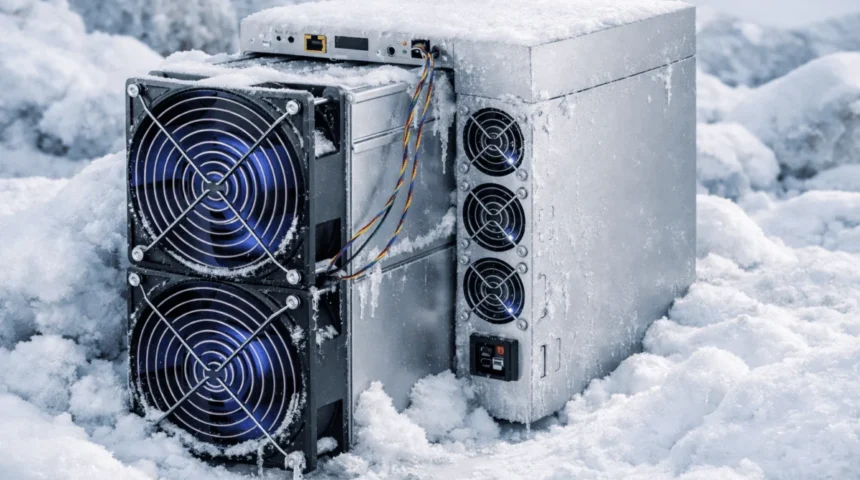
As winter temperatures plunge across major mining regions, industrial and commercial Bitcoin mining operations face a silent but destructive threat: sub-zero cold. While cooling and overheating are perennial concerns for ASIC hardware, insufficient ambient temperatures can be just as hazardous to mining equipment as excessive heat. Industry experts and mining firmware developers are issuing fresh warnings regarding the physical risks associated with booting up ice-cold hardware during curtailments, power trips, and routine maintenance updates.
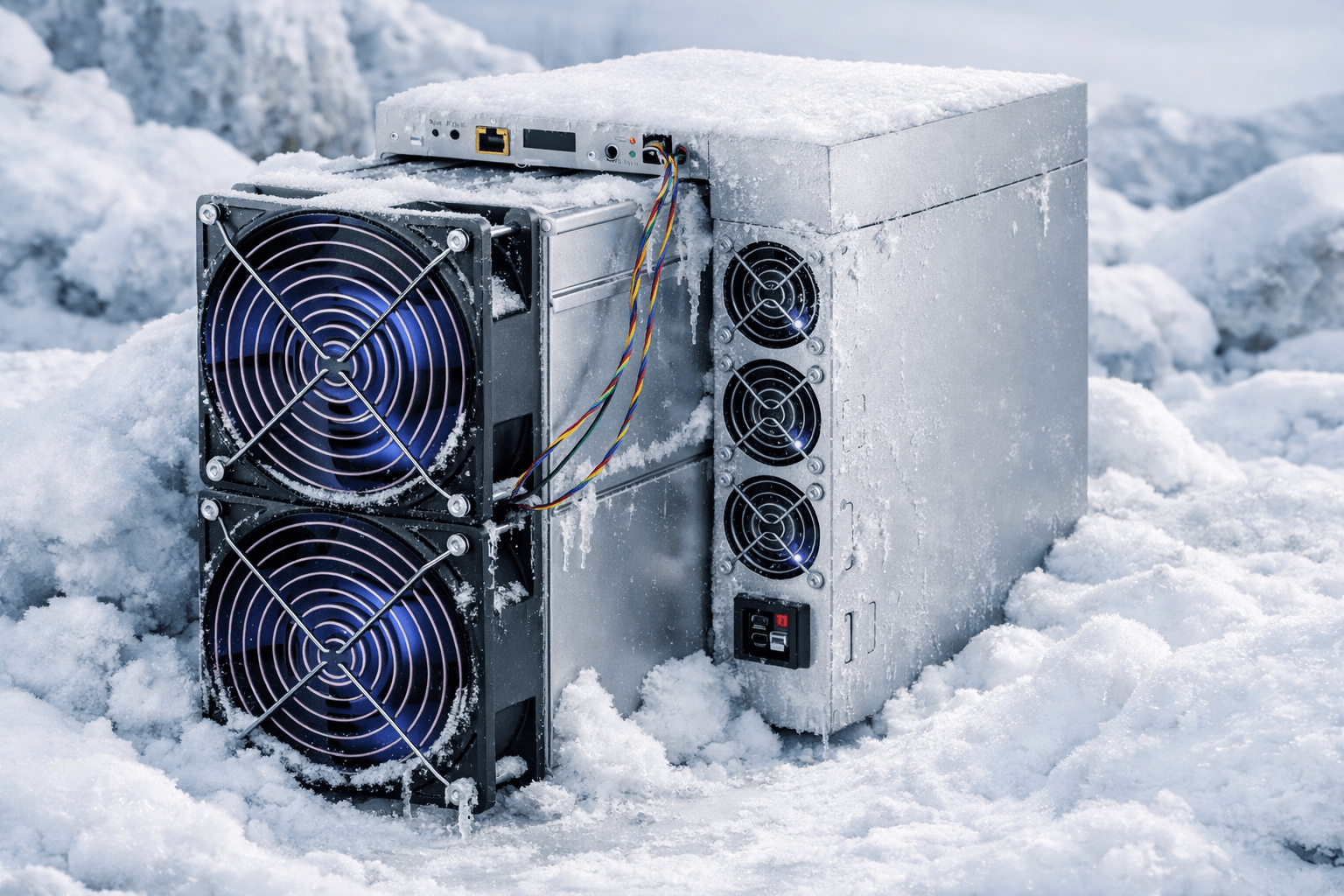
According to manufacturer specifications established by industry leaders like Bitmain, the optimal operating temperature for standard mining hardware ranges from 41 to 95 degrees Fahrenheit, or 5 to 35 degrees Celsius. Crucially, technical guidelines dictate that miners should never be operated in ambient environments where temperatures drop below 32 degrees Fahrenheit, or 0 degrees Celsius. When machines fall significantly below these thresholds, they enter a vulnerable state where sudden thermal shifts can cause irreversible micro-fracturing and physical damage to sensitive semiconductor components.
This danger is most acute during standard operational interruptions. Whether a facility experiences an unexpected power trip, undergoes a scheduled curtailment event, or initiates a planned reboot for firmware upgrades and setting modifications, turning off a machine allows it to shed internal heat rapidly. If the surrounding environment is freezing, the hardware cores plummet in temperature. Attempting to power these ice-cold units back up without adequate thermal preparation introduces severe mechanical stress to the printed circuit boards and processor chips, frequently resulting in catastrophic hardware failures.
Braiins Releases Critical Cold-Weather Operating Guidance
To combat the rising incidence of winter-related hardware degradation, the team behind Braiins OS has published a comprehensive set of operational recommendations for navigating sub-zero conditions. The core principle guiding these recommendations is simple: rapid temperature changes represent the single greatest hazard to mining longevity. Operators are strongly advised to prevent their machines from cooling below zero degrees Celsius under any circumstances.
When operational realities necessitate a complete shutdown or curtailment, facilities must make every effort to manage the cooling process gradually. To achieve this, operations with advanced containerized setups can utilize hot air feedback systems. By slightly opening access doors while simultaneously sealing off all cold air intake vents, operators can simulate internal heating loops. This forces the machines to recirculate their own residual warmth, preventing an immediate thermal collapse.
However, engineers emphasize that manipulating airflow in this manner requires extreme vigilance. Restricting cold air intake must be treated as a temporary measure designed solely to allow machines to self-warm. Because enclosed spaces can heat up exponentially once intake is blocked, operators must maintain constant, real-time monitoring of individual chip and printed circuit board temperatures to avoid triggering secondary thermal overshoots. Properly insulated container setups help stabilize internal metrics, ensuring that even as external blizzards rage, the internal operating environment remains within safe parameters.

Managing Reboots and Extended Offline Periods
Large-scale Bitcoin mining installations frequently require routine reboots of hashing units due to pool switches, maintenance windows, or software deployments. While facilities equipped with superior structural insulation can weather these interruptions with minimal friction, cold-weather reboots demand strict adherence to manufacturer thresholds.
The challenge intensifies exponentially for mining operations participating in demand-response programs or localized grid curtailment initiatives. In these scenarios, units may sit completely dormant and unpowered for days or even weeks in freezing conditions. Before attempting to bring these long-offline units back online, facility managers must conduct thorough physical inspections where possible, verifying that internal board temperatures have not dipped below the critical zero-degree threshold. Bypassing this inspection and forcing power into frozen silicon boards is a primary driver of premature hardware mortality across the mining sector.
To address these operational bottlenecks without relying solely on manual interventions, software-level mitigations have emerged as a vital line of defense. Advanced firmware solutions, such as Braiins OS, incorporate specialized features designed to manage the re-entry process gently. Among these tools is an automated pre-heat function governed by a strict ten-minute operational cap.

During this pre-heat phase, the firmware intentionally delays intensive hashing operations while monitoring thermal metrics, waiting until internal chip temperatures reach a designated target threshold. If the ten-minute window expires before the target temperature is reached, the firmware initiates the boot sequence regardless, but immediately forces the cooling fans to operate at minimum RPM speeds. This preventative measure ensures that the rush of air does not induce further cooling during the delicate startup phase.
Operators monitoring their dashboards during this process must look closely at fan speeds and thermal velocity. If a device is actively hashing while its fans remain locked at minimal speeds—such as 13 to 25 percent capacity—yet the chip temperature fails to climb toward the target default of 60 degrees Celsius, it signals that ambient conditions are overpowering the hardware’s self-heating capabilities. In such cases, technicians must intervene manually to supply external warmth before attempting another boot sequence.
Mitigating Connectivity Loss and Rapid Thermal Decline
Beyond physical temperature management, winter mining operations frequently contend with network stability issues caused by severe weather events impacting regional telecommunications and internet infrastructure. When a mining rig unexpectedly loses its connection to a mining pool, standard hardware will typically halt operations and enter an idle state. In a sub-zero environment, an idle machine stops generating internal thermal energy instantly, causing the hardware to plummet to ambient outdoor temperatures within minutes.

To mitigate this dangerous thermal shock during frequent connection dropouts, firmware engineers recommend a proactive configuration strategy. Operators can introduce multiple fallback pool URLs into their device settings, as modern systems support an unrestricted number of backups. Maintaining a robust list of active endpoints ensures that if a primary connection fails, the machine attempts to pivot instantly rather than dropping offline.
For facilities facing chronic, severe connectivity instability during winter storms, a more radical software configuration known as a "drain pool" can be deployed. By configuring a placeholder address utilizing the "drain://x" syntax, the mining equipment is tricked into believing it is actively submitting hashrate to a valid destination, even though no username or password is provided and no actual data is transmitted to an external server.
While this mechanism keeps the hashing boards fully powered, active, and warm during temporary internet outages, it comes with a distinct economic downside: the hardware continues to draw grid electricity while sending its computational output into a digital void. To prevent runaway power costs, operators must ensure that the drain pool is strictly positioned as the absolute final fallback option in the device configuration hierarchy.
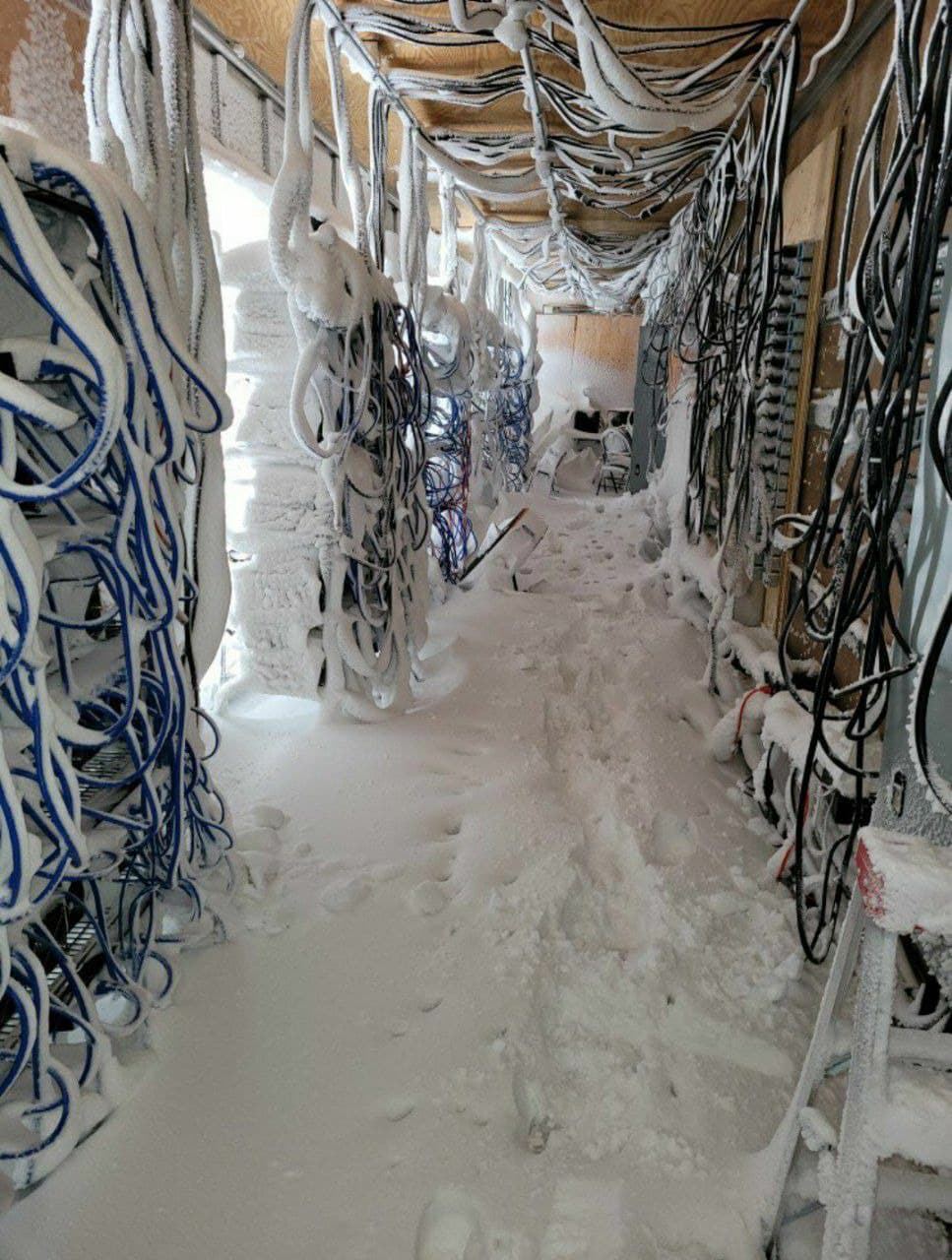
As industrial cryptocurrency mining continues to scale globally, navigating extreme environmental conditions remains a defining operational challenge. Data indicates that miners worldwide currently maintain over two gigawatts of aggregate hash power utilizing Braiins OS firmware, relying on battle-tested software designed to stabilize performance and protect sensitive components against hostile weather. By combining rigorous physical insulation practices, controlled airflow management, and intelligent firmware-level safeguards, commercial mining operators can successfully safeguard their capital investments and maintain resilient, uninterrupted operations throughout the harshest winter months.

Related News