Oura Escalates Smart-Ring Patent War, Sues Ultrahuman Again to Block U.S. Sales of Ring Pro
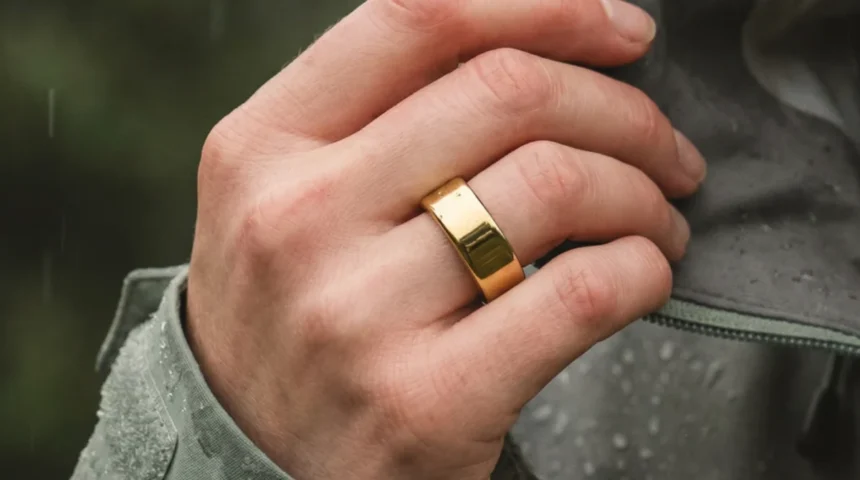
Smart ring pioneer Oura has escalated its ongoing legal battle with Indian rival Ultrahuman by filing a fresh patent infringement lawsuit in the United States. The legal action seeks to block U.S. sales of the Bengaluru-based startup’s flagship Ring Pro, arriving just months after a redesigned version allowed the company to successfully return to the American market following a restrictive import ban.
The federal lawsuit, filed Thursday in a Texas district court, represents the latest chapter in an aggressive strategy deployed by Oura to protect its intellectual property across the rapidly expanding smart-ring market. Oura has increasingly targeted competing hardware manufacturers through the courts, having previously brought patent disputes against several notable industry players, including Samsung, RingConn, Circular, and Zepp Health, as competition within the wearable technology sector continues to heat up.
In its latest complaint, Oura alleges that Ultrahuman’s Ring Pro directly infringes two specific patents that cover both the exterior design of the ring and its complex internal components, such as its specialized battery architecture and sensitive tracking mechanisms. Consequently, Oura is pursuing both monetary damages and a permanent injunction that would effectively halt the importation, manufacturing, and distribution of the Ring Pro within the United States.
The legal confrontation unfolds against the backdrop of a fierce, multi-year rivalry between the two wearable tech companies. Ultrahuman’s redesigned Ring Pro was officially launched in February following a protracted legal dispute that saw Oura secure a favorable ruling from the U.S. International Trade Commission (ITC) in August of the previous year. That ITC decision triggered a formal import ban on Ultrahuman’s earlier generational model, the Ring Air, which had originally helped the Indian startup establish its commercial footprint and popularity among U.S. consumers.
However, after engineering a redesign, Ultrahuman secured a favorable ruling from U.S. Customs and Border Protection in March, effectively clearing the path for the startup to resume its commercial push in the lucrative American market.
Oura, however, contends that the Customs ruling was narrowly focused and only applied to the single patent at the center of the previous dispute, leaving other core innovations unprotected. The latest lawsuit specifically cites two distinct patents, designated as D804,471 and 12,769,363.
An Oura spokesperson emphasized the company’s perspective in a statement, asserting that Ultrahuman’s business model has relied on adopting established breakthroughs from the market leader. "Ultrahuman has a history of copying Oura’s innovations, as demonstrated by the 2025 ITC ruling against the company," the spokesperson said. "Ultrahuman introduced a redesigned ring but failed to address continued infringement of Oura’s patents, seeking instead to capitalize on our innovation and the market leadership we have built."
Compounding the tensions, one of the patents highlighted in the new complaint—designated as patent 12,769,363—is exceptionally fresh. It was formally issued to Oura by the U.S. Patent and Trademark Office on October 20, merely two days before the company initiated its lawsuit in Texas. The patent outlines structural smart-ring designs incorporating internal hardware elements, including a curved battery configuration, internal circuit boards, magnetic components, and precise biosensors.
In addition to Ultrahuman, Oura has named Texas-based electronics manufacturer SVTronics as a co-defendant in the lawsuit. According to the court filing, SVTronics manufactures the Ring Pro at a specialized production facility located in Plano, Texas, operating under the direct instruction and control of Ultrahuman. Oura alleges that the combined actions of manufacturing, importing, and commercializing the device constitute a joint infringement of its protected intellectual property rights.
Ultrahuman co-founder and chief executive officer Mohit Kumar expressed confidence in the company’s legal standing, confirming that the startup intends to contest the allegations vigorously.
"Oura has now chosen to assert different patents, including one that issued just two days before this lawsuit was filed," Kumar stated. "We will address these claims through the appropriate legal process and will defend our position vigorously. There is no court order affecting Ring Pro, and it remains available to customers in the U.S."
The ongoing hostility between Oura and Ultrahuman began to escalate publicly in 2023 when Oura initially filed suit over the Ring Air. While that specific conflict culminated in the ITC import ban, Oura’s broader legal campaign has yielded varied outcomes across the industry. While some competitors have chosen protracted litigation, others have opted for commercial settlements. Notably, smart-ring makers RingConn and Circular ultimately resolved their respective legal disputes with Oura by entering into multi-year patent licensing agreements, agreeing to pay recurring royalties to Oura in order to maintain lawful sales of their products in the United States.
These aggressive legal maneuvers are taking place as the global market for smart rings experiences substantial commercial growth. Market research firm IDC projects that worldwide shipments of wearable smart rings will increase by 12.8% over the course of the year, pushing total volume to approximately 4.9 million units, with forecasts indicating shipments could climb to roughly 6.3 million units by 2030. While Oura has maintained its position as an established category leader, companies like Ultrahuman represent a wave of ambitious challengers aiming to capture meaningful market share.
The intellectual property showdown also coincides with a dynamic period for both companies on the corporate and product development fronts. In September, Oura made headlines when it decided to shelve its anticipated $2.2 billion initial public offering, pointing to general uncertainty within financial markets as the primary reason for the delay. Despite the halted IPO, Oura has continued to push forward with software and hardware developments, rolling out new fitness and health-tracking metrics designed to help users better understand how physical activity impacts cardiovascular health.
Meanwhile, Ultrahuman has continued to secure financial backing and expand its technological capabilities. In September, the startup closed a $70 million funding round backed by prominent institutional investors, including Qualcomm Ventures and Labcorp, bringing the company’s valuation to approximately $365 million. As part of its broader strategic vision, Ultrahuman is collaborating with Qualcomm to develop advanced smart-ring architectures capable of executing complex software workloads directly on the device, positioning the hardware for future expansion beyond basic health and fitness metrics into artificial intelligence interactions and gaming applications.

Related News