Smart and Screen-Accurate: How to Build Practical 2026 Halloween Costumes From Your Everyday Wardrobe
The relentless squeeze of the cost-of-living crisis has forced many households to reevaluate their discretionary spending, making the prospect of dropping hard-earned cash on an expensive, single-use Halloween costume feel increasingly unwise. Spending significant amounts of money on a thematic outfit destined to spend the next 364 days gathering dust in the back of a closet is a luxury fewer consumers are willing to indulge in as economic pressures persist.
Fortunately, dressing up for the spooky season no longer requires a binary choice between participating in cultural festivities and making sensible financial decisions. A notable trend among this year’s most recognizable film and television costumes is the heavy reliance on versatile everyday clothing items that can easily be integrated into a regular wardrobe long after the holiday has passed. In many instances, the exact pieces selected by costume designers are publicly known, presenting a unique opportunity for enthusiasts to curate screen-accurate Halloween outfits that double as practical wardrobe investments. Provided they are kept free of fake blood and theatrical gore, these cinematic looks offer a cost-effective way to celebrate without breaking the bank.
Bryan from Resident Evil
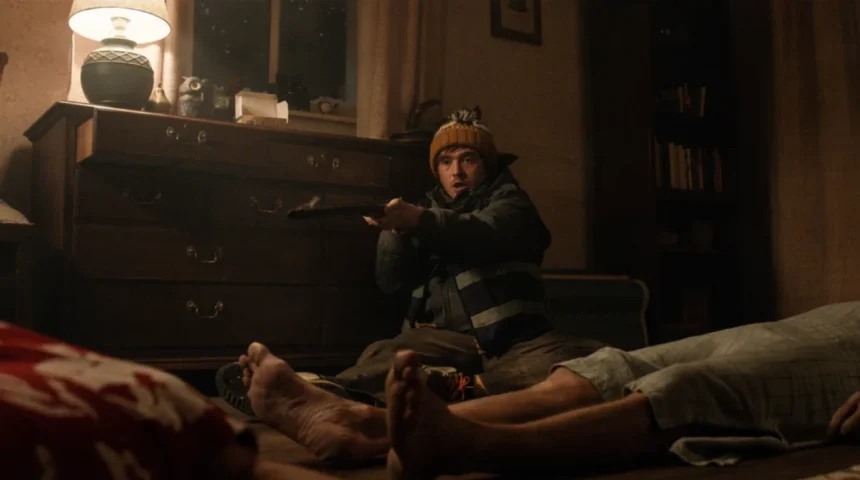
In Sony Pictures’ Resident Evil, the beleaguered protagonist Bryan wears a single outfit throughout the entire narrative, as the bloody horror unfolds over the course of one catastrophic night. Because the character is a medical courier caught in a desperate situation, his practical attire features several distinct layers, making it a surprisingly functional choice for those braving chilly autumn weather while trick-or-treating or attending outdoor Halloween gatherings.
The primary prop required to complete a recognizable Resident Evil costume is a green cooler bag, which can be easily customized with a medical cross using white fabric paint. Alternatively, fans have the option of acquiring the official $25 Resident Evil Medical Courier Popcorn Bucket offered through theater chains, though high demand means securing one ahead of Halloween can prove challenging. Furthermore, the official popcorn bucket features a fake splash of blood and prominent film branding across the back, rendering it slightly less practical for general costume purposes compared to a standard, customizable cooler bag.
Beyond the signature bag, building Bryan’s look relies primarily on effective layering. By combining a yellow plaid shirt, a dark jacket, and a blue reflective safety vest, the core costume comes together effortlessly. Beyond its cinematic accuracy, this particular ensemble offers the distinct practical advantage of making the wearer highly visible to motorists during nighttime festivities.

For enthusiasts striving for absolute film accuracy, meticulous details have been uncovered thanks to outreach by Resident Evil fan accounts. Communication with costume designer Caroline Fahrer revealed that Bryan’s footwear consists of customized Nike Jordan Spizike Low Rare Air sneakers in Oil Grey, which retailed at $160. While many of the exact garments worn on screen—such as a stylish mustard chunky knitted sheep bobble hat—have quickly sold out due to high demand, comprehensive reference guides from dedicated community researchers make assembling a remarkably close approximation entirely achievable.
Nikki from Obsession
The indie horror hit Obsession operated on a modest production budget of approximately $750,000, with a remarkably strict wardrobe allocation of just $6,000. This financial constraint required costume designer Blair James to adopt an economical approach, relying heavily on affordable retail pieces and thrifting to curate authentic looks for the characters. While this presented a creative challenge for the production, it ultimately benefits consumers looking to recreate screen-accurate outfits without placing a heavy burden on their personal finances.
One of the most instantly recognizable ensembles from the film is Nikki’s final dress, which utilizes the $69 Defiant Love Mini Dress from Dolls Kill. This budget-friendly choice aligns naturally with the narrative context of the characters, whose retail jobs would realistically preclude them from spending hundreds of dollars on a single garment. Recreating the complete cinematic look requires little more than pairing the dress with a black body marker and a liberal application of theatrical fake blood.
Another standout outfit from Obsession is Nikki’s party attire, which costume designer Blair James specifically selected based on what the character would perceive as appealing to the male gaze. The exact components of this look include a $49 red zebra mesh halter top from Princess Polly and a pair of washed faux leather micro cargo shorts in black from Edikted, retailing at $165. However, absolute adherence to the exact brand-name pieces is not strictly necessary for recognition; substituting the halter top with any dark micro shorts achieves the same visual effect.
For those dedicated to complete authenticity, production details indicate that Nikki’s footwear consisted of black knee-high Calvin Klein boots. While the exact model used on screen has since rotated out of availability, similar alternatives such as Calvin Klein’s leather kitten-heel tall zip boots offer a near-identical silhouette. Accessorizing the outfit with a silver spiral pendant necklace provides the finishing touch for a faithful recreation.

Patricia from Widow’s Bay
When approaching the costume design for the comedy horror series Widow’s Bay, designer Alex Bovaird focused heavily on environmental storytelling, considering where residents of a sleepy, isolated island would realistically source their clothes. Rather than imagining the locals shopping at modern trendy stores, Bovaird conceptualized a community wardrobe built on thrifted items and garments brought from the mainland years prior, circulating organically among the local population.
Patricia’s sunset cocktail party dress followed this same philosophy, representing an attempt to elevate a dated red garment with dramatic accessories. In a memorable sequence from the first season’s episodes, Patricia pairs a retro Carole Little 1980s-does-1940s watercolour dress with a disturbing headdress constructed from deer antlers, twigs, and a fox pelt, creating a striking juxtaposition against standard party wear.
Because the exact vintage dress utilized by the wardrobe department is exceedingly rare and difficult to locate on the secondhand market, recreating the look relies on practical substitution. Finding an alternative red floral midi dress with sleeves preserves the retro aesthetic while offering enough versatility to transition smoothly into an everyday wardrobe once the Halloween season concludes.
Ultimately, the dress serves primarily as a foundation for the true centerpiece of the costume: Patricia’s elaborate antler headdress. While substituting a standard tiara offers a simpler path, the distinctive headpiece is what makes the character instantly recognizable. Because cursed antler crowns are not commercially mass-produced, enthusiasts must construct them independently using affordable craft materials, substituting real animal pelts with dismantled plush toys to maintain both ethical standards and a reasonable budget. Completing the look with a prop book styled after the fictional self-help guide featured in the series provides a comprehensive nod to the source material for observant fans.

Related News