World Bank President Ajay Banga Says Capital Remains Accessible Despite AI Interest Rate Concerns
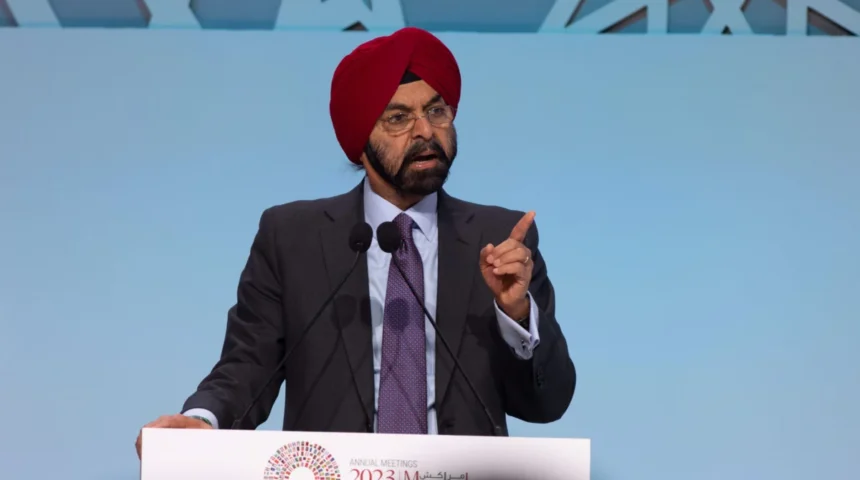
World Bank President Ajay Banga sought to calm financial anxieties on Tuesday, asserting that global capital remains readily available despite growing concerns across international markets that the rapid expansion of artificial intelligence could drive interest rates higher. Speaking during an interview on CNBC’s "Squawk Box," Banga addressed the macroeconomic implications of the global artificial intelligence boom, signaling confidence in the resilience of financial flows even as markets navigate a period of unprecedented technological transition.
"It’s not really an issue," Banga stated, directly addressing worries that the massive infrastructure demands of artificial intelligence might strain global liquidity or permanently elevate borrowing costs.
To underscore the robustness of the institution’s funding capacity, Banga highlighted the World Bank’s recent financial performance. He noted that the multilateral development bank successfully mobilized $112 billion over the past year. That figure represents a striking expansion, standing at approximately three times higher than the funding levels recorded just three years prior, demonstrating that significant capital continues to flow through major international financial channels despite shifting market sentiments.
Investors and market analysts have increasingly voiced concerns regarding the financial architecture underpinning the artificial intelligence sector. These apprehensions often center on circular financing arrangements and the viability of long-term business models tied directly to heavy AI expenditures. Such anxieties have occasionally sparked broader macroeconomic jitters, leading some market participants to fear that the capital-intensive nature of the technology could create broader pressures on global interest rates and financial stability.
However, Banga pointed out a notable divergence in how different parts of the world are approaching and financing technological integration. According to the World Bank chief, emerging markets are not encountering the same level of investor hesitancy or structural friction. This difference largely stems from the nature of the investments being made in developing economies, which tend to focus more heavily on foundational infrastructure projects such as bridges, roads, and basic civic systems rather than speculative or hyper-concentrated technology plays.
Furthermore, Banga explained that emerging economies are actively exploring smaller-scale, highly targeted applications of artificial intelligence that align with their immediate developmental needs. This contrasts sharply with their developed counterparts, which often require immense, upfront funding to support massive, resource-heavy AI use cases, data centers, and large-scale computational models. By focusing on practical, localized implementations, emerging markets are sidestepping some of the valuation and financing concerns currently being debated on Wall Street and in other major financial hubs.
Despite acknowledging the complexities and debates surrounding the sector, Banga remains fundamentally optimistic about the long-term trajectory of the technology. "In general, I still believe that AI is going to be transformative and profitable," Banga said during the CNBC interview. At the same time, he offered a pragmatic assessment of the path ahead, adding, "But everybody sees bumps in the road from here to there, and no one knows when the next bump will come."
The World Bank, founded in 1944 in the wake of the Bretton Woods conference, operates as a vital international financial institution dedicated to providing loans and grants to the governments of low- and middle-income countries. Its overarching mission is to end extreme poverty and promote shared prosperity through sustainable global partnerships, technical assistance, and substantial financial backing.
Before assuming the leadership of the World Bank, Banga built an extensive career in the private sector, serving as the chief executive officer of Mastercard and subsequently as vice chair at General Atlantic, a prominent global growth equity firm. His transition from global finance and payments infrastructure to leading the world’s premier development institution has frequently brought a unique market perspective to discussions surrounding global capital allocation, technological development, and economic growth in both developed and emerging nations.

Related News