Jio Platforms Surges 21% in Spectacular Stock Market Debut Following India’s Largest-Ever IPO
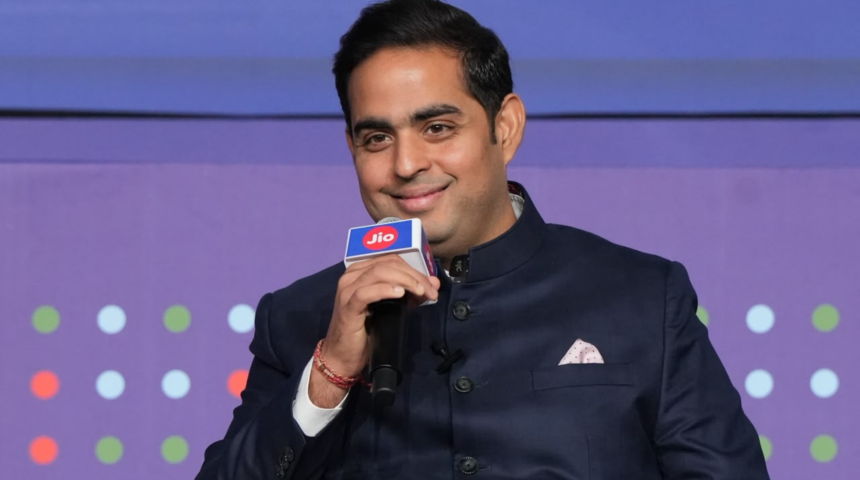
Jio Platforms, the digital services and telecom powerhouse controlled by billionaire Mukesh Ambani and backed by tech giants Meta and Google, made a triumphant entrance onto the public markets on Wednesday. The company’s stock surged 21% in its debut following an initial public offering that raised $3.2 billion, cementing its status as India’s largest and most heavily subscribed stock market offering on record.
The shares opened at ₹1,358, equivalent to approximately $14, marking a substantial increase from their IPO price of ₹1,119, or roughly $12. This explosive market debut propelled Jio Platforms to a valuation of approximately ₹12.5 trillion, or roughly $131.9 billion. With this staggering market capitalization, Jio instantly secured its position as India’s second-most valuable listed corporation, trailing only its parent conglomerate, Reliance Industries, which commands a valuation of about ₹16 trillion, or approximately $168.6 billion. For perspective on its meteoric rise, when Meta and Google made their landmark strategic investments in Jio back in 2020, the company was valued at up to ₹4.91 trillion, which was about $65 billion at the time.
The public offering, which ran from October 21 to 22, captured the imagination of institutional and retail investors alike, drawing bids for an astonishing 22.19 times the shares on offer, according to official exchange data. More than 13.8 million individual applications flooded the system, driving the total investor bids past the $77 billion mark. This overwhelming response made it India’s most subscribed stock offering in history, reflecting an insatiable investor appetite for shares in the nation’s premier telecommunications and digital infrastructure operator.
The roots of Jio’s market dominance trace back to 2016, when it entered what was then a fiercely crowded and heavily saturated Indian telecom landscape. By introducing disruptive pricing models featuring free data and ultra-low-cost services, Jio rapidly dismantled the competitive landscape, capturing millions of subscribers from established legacy operators, including Bharti Airtel, Vodafone Idea, and state-owned BSNL. Through this aggressive customer acquisition strategy, it steadily climbed the ranks to become India’s largest telecom operator.
Speaking at Wednesday’s celebratory listing ceremony, Akash Ambani, Jio Platforms’ managing director and Mukesh Ambani’s eldest son, highlighted the staggering scale of the enterprise, noting that its platforms currently serve a user base exceeding 540 million customers. While Jio’s tariff pricing has evolved over the years and is now broadly aligned with those of its primary market rivals, the company has successfully diversified far beyond basic voice and data connectivity. Today, its expansive business ecosystem encompasses high-speed broadband services, advanced cloud infrastructure, and cutting-edge artificial intelligence initiatives.
Akash Ambani has progressively assumed a larger leadership role within Jio as his father, Mukesh Ambani, systematically transitions management responsibilities to the next generation of Reliance executives. During the listing event, the younger Ambani articulated an ambitious global vision for the firm, stating his desire to see Jio transform into a preeminent global technology player.
"My dream is that one day, when the world counts its great technology companies, one of them will be from India, and that company will be called Jio Platforms Limited," he told the audience gathered for the ceremony.
Financial metrics accompanying the public offering underscore the underlying strength of the business. Jio reported a net profit of ₹300.5 billion, or about $3.2 billion, on total revenues of ₹1.47 trillion, approximately $15.5 billion, for the fiscal year that concluded in March 2026. Both top-line revenue and bottom-line profit figures registered a robust growth rate of about 15% compared to the previous fiscal year. This positive financial momentum persisted into the subsequent reporting period, with Jio’s revenue climbing nearly 12% and its profit expanding by 9% during the June quarter alone.
A significant portion of the capital raised through the historic IPO has been earmarked for balance sheet optimization. Jio intends to channel up to ₹275 billion, roughly $2.9 billion, of the IPO proceeds toward paying down existing debt at its principal telecom subsidiary, Reliance Jio Infocomm. Any remaining funds will be allocated toward general corporate purposes to support ongoing expansion efforts. As of June 30, Jio carried total borrowings amounting to ₹613.7 billion, or around $6.5 billion.
The foundation for Jio’s modern digital ecosystem was significantly bolstered during the COVID-19 pandemic in 2020, when the company secured multi-billion-dollar investments from prominent American technology and private equity heavyweights. Meta, operating at the time under the name Facebook, injected $5.7 billion into the platform, while Google followed closely with a $4.5 billion investment. Additional financial backing came from institutional heavyweights including General Atlantic, Silver Lake, and Vista Equity Partners. Notably, none of these early institutional backers elected to sell their stakes during the IPO, which consisted entirely of newly issued shares designed to fund the company’s next phase of growth.

Related News