Venture Capital’s "Money Behind the Money" Navigates Uncharted AI-Driven Territory
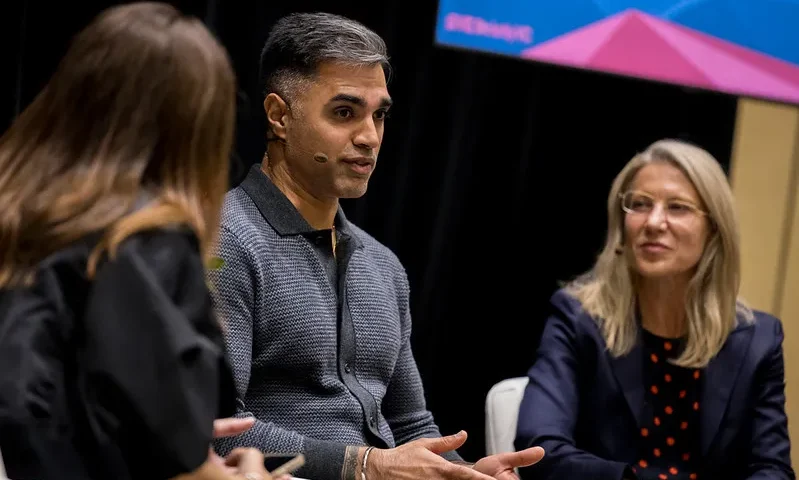
The limited partners who provide the capital to venture firms—often referred to as the "money behind the money"—are feeling great right now. They find themselves in uncharted territory in many ways, but also in potentially exceedingly lucrative positions as the artificial intelligence boom reshapes the private equity landscape.
Normally, limited partners (LPs) typically spread their bets across many firms to diversify their own portfolios. They write checks to emerging managers and established ones, dividing capital between generalist firms and specialized funds. The traditional goal has always been twofold: to secure a strong return while actively minimizing risk through broad asset allocation.
That is the typical playbook for institutional investors, endowments, and foundations. But in the current market environment, the typical playbook is completely out the window. The valuations of generative artificial intelligence leaders OpenAI and Anthropic have shot up so quickly that nearly everyone in the venture ecosystem has piled into the same two companies on the way up. This frequently occurs inside the same venture firm, defying the longstanding venture convention of avoiding investments that directly conflict with one another. Yet, remarkably, no one is complaining. The LPs currently speaking about the market seem unbothered by this massive concentration of risk, given the extraordinary potential returns on the horizon; instead, they are actively expecting a financial bonanza.
Even so, these institutional backers do perceive danger ahead. They describe the current climate as a "yellow light" situation and express growing uneasiness about how quickly venture capitalists are returning to the market to raise new funds.
To better understand these dynamics, industry observers recently spoke with Beezer Clarkson of LGT Capital Partners, a Zurich-based diversified asset manager, and Amit Bhatti of TrueBridge, a Chapel Hill firm that focuses solely on venture capital.
Navigating Strange and Exciting Days in the Startup Ecosystem
Reflecting on the current market atmosphere, Clarkson and Bhatti emphasize that while the pace is frenetic, the prevailing sentiment is one of opportunity rather than fear.
"It’s very busy, but I wouldn’t say it’s scary," Clarkson notes, drawing on decades of industry experience. "There’s a lot of change and a lot of variables at play. I love venture, so I find the chaos fun. I’ve been doing this for a couple of decades, so seeing the cycles makes it less scary. You appreciate that these things happen, and that we should enjoy the upside, because sometimes there’s downside, and the up is a lot more fun than the down."
Bhatti shares a similarly optimistic outlook, pointing out that venture capital is finally commanding the spotlight. "If anything, it’s exciting," Bhatti says. "Venture is sometimes looked at as a niche, and now that AI is all-consuming, all the attention is on venture. This feels like our moment more than it is like, ‘Oh gosh, what’s going to happen?’ The pace of investing and the valuations may be different, but really meaningful stuff is happening, and all the attention is focused on this corner of private equity."
Portfolio Concentration and the Power Law
With venture funds across the board holding stakes in the exact same breakout brands—OpenAI and Anthropic—multiplied across numerous portfolios, a natural question arises regarding institutional diversification. If market conditions were to turn downward, this concentration could pose serious challenges.
However, Bhatti argues that concentration is a natural byproduct of how venture capital has always functioned. "Venture has always been a power law business, so I actually view the concentration as a good thing," Bhatti explains. "If we were getting to the maturity of one of our funds and there were still lots of tiny positions, something’s gone wrong. Our funds that are 10-plus years old are starting to consolidate into a few names. There’s a lot of Databricks, a lot of SpaceX, a lot of Stripe. In this generation of funds, I would hope there’s a lot of Anthropic and a lot of OpenAI. That’s a feature, not a bug. Not every one of these companies is going to work out, but that consolidation is typical. What’s different is how quickly it’s happened. I don’t view it as an immediate panic signal."
Clarkson adds that differentiation still exists further down the capital stack. At the early stage, investors continue to see a wide diversity of opportunities with smaller capital requirements. While those early bets ultimately aggregate into the same massive late-stage companies, early-stage funds avoid the largest transactions, preserving a degree of underlying diversity for portfolios seeking it.
The Acceleration of Fund Pacing and Rising Check Sizes
Historically, venture funds operated on reliable four-year investment cycles. Over time, that window shrunk to three years, then two, and now frequently sits at 18 months or even a single year. This rapid deployment pace has become a primary topic of discussion among institutional backers.
"We’re seeing funds come back on one-year pacing, which is fast," Clarkson observes. "The norm was probably two to two and a half years. Some funds are deploying much faster because they’re taking concentrated, big-check positions. That could be a worrisome sign. It could work out, we don’t know, but it’s typically harder to do a one-year vintage and get it right."
Bhatti echoes these concerns, noting that while a 24- to 36-month deployment window used to be standard, 12 to 18 months has become common for fast-moving funds. Furthermore, many managers are bumping up their fund sizes mid-cycle—an unusual practice driven largely by ballooning round sizes. When giants like Anthropic raise unprecedented quantities of capital, an investor allocating 20 percent of a fund to the round will naturally race ahead of its original deployment schedule. Seed round sizes have also nearly doubled, requiring managers to write much larger checks just to secure a lead position.
Despite these yellow-light indicators, Bhatti notes a crucial difference between this cycle and past frenzies. The last time the market experienced accelerated pacing, capital heavily funded zero-revenue cryptocurrency ventures. Today, many companies are scaling rapidly from zero to $100 million in revenue—a velocity previously unheard of in the private markets.
Managing LP Relationships Amid Fast Fund Vintage Cycles
When high-performing managers return to the market every year while their returns remain largely on paper, LPs face delicate decisions. Walking away from a trusted manager risks losing access to top-tier deal flow, but funding every accelerated cycle strains institutional capital allocation plans.
"It’s very hard to leave a manager and then come back," Clarkson explains. "It happens, but it’s more typical to downsize your check. In 2021, a lot of LPs said, ‘If I was going to give you $10 million, I’ll do $5 million, because $10 million was for two years.’ In our portfolios, the pacing gets pulled through, so we think about our pacing as well as yours."
Bhatti notes that TrueBridge maintains a detailed calendar mapping out anticipated commitments to ensure capital availability. Sitting out entirely is rarely an option because it compromises an institution’s status as reliable capital. This reality also explains why some managers upsize existing funds rather than launching entirely new ones prematurely. However, Clarkson points out the underlying strain: continuous capital calls without accompanying liquidity distributions place immense pressure on operational commitments for university endowments, hospitals, and philanthropic foundations.
Vintages, Liquidity, and the Evolution of Secondaries
As the market looks back at the high-valuation pandemic-era vintages of 2021, LPs acknowledge that those portfolios face a challenging path. While some funds will benefit from early positioning in generative AI pioneers like OpenAI or code-generation tools like Cursor, high initial valuations make generating outsized returns more difficult.
Nevertheless, liquidity has begun to flow more broadly across the ecosystem. Beyond traditional IPOs, the market has seen monumental M&A exits, including transactions exceeding $10 billion and massive multi-billion-dollar deals involving companies like Cursor.
Secondary markets have also matured significantly over the past five years, providing a vital third pillar of liquidity alongside initial public offerings and strategic acquisitions. Previously viewed as a sign of financial distress, secondary transactions are now utilized judiciously by top-tier managers.
"It’s the third leg of liquidity now: IPOs, M&A, secondaries," Bhatti says. "Private equity has always had a well-developed secondaries market, and venture didn’t. It was kind of a dirty word. You were only selling if you were distressed. Then people were holding the bag in 2021 and thought, ‘I should have sold.’ Now more managers use it as a tool, and more judiciously. If you still believe it’s the power law company, you’re probably not exiting the whole position. But if you can sell 20% of your position and return your fund, you should probably do it."
Clarkson adds that secondary activity has expanded to multiple levels within the ecosystem, allowing LPs to sell stakes in general partners or portfolio strips, thereby reducing the historical stigma attached to liquidity sales before a traditional exit.
The Talent Cycle and the Future of San Francisco
Employee tenders and founder liquidity have likewise evolved, with lessons learned from previous market cycles where immediate liquidity detached talent incentives from long-term company success. While mature companies with clear financial performance, such as Stripe and Databricks, routinely offer structured liquidity to their workforces, lead investors maintain strict oversight to ensure alignment.
When these mature startups eventually go public, their newly enriched employees frequently reinvest their capital and expertise back into the ecosystem. Clarkson notes that successful technology waves consistently spawn new generations of emerging managers and angel investors, much like the post-Google era. While the soaring cost of living and real estate in San Francisco presents practical hurdles, industry veterans believe the unmatched density of talent will keep the Bay Area at the center of the technology world for the foreseeable future.
Emerging Managers Find Paths Forward
Even as a handful of massive venture firms secure the lion’s share of institutional capital commitments, emerging managers continue to find pathways to launch new funds. While fundraising has grown undeniably more difficult, investors maintain an appetite for differentiated perspectives and specialized strategies.
Rather than attempting to raise massive debut funds, successful emerging managers are often starting smaller—raising $5 million to $50 million funds to prove their thesis, build track records, and demonstrate investment judgment. Institutional backers emphasize that this measured approach creates a much more sustainable foundation for long-term venture success, ensuring that the foundational "money behind the money" continues to fuel the next wave of industry innovation.

Related News