Leading Chemist Lee Cronin Debunks Silicon Valley’s AI Delusion and Explores the True Frontier of Synthetic Life
Renowned chemist and University of Glasgow professor Lee Cronin has launched a scathing critique of the modern tech landscape, branding the prevailing hype surrounding artificial intelligence as a "massive AI delusion." Speaking on a recent podcast appearance, Cronin dismissed contemporary AI models not as the precursors to sentient life, but rather as sophisticated mechanisms of high-speed plagiarism.
While Silicon Valley executives and tech evangelists continually forecast the imminent arrival of conscious, self-aware machines, Cronin offers a starkly different perspective. According to the Scottish chemist, current AI architectures are fundamentally limited by their training data. By relying entirely on synthesized historical records of human output, these models operate as immensely powerful productivity tools, yet they remain entirely devoid of genuine curiosity, subjective consciousness, and the dynamic biological intelligence that underpins true life forms.
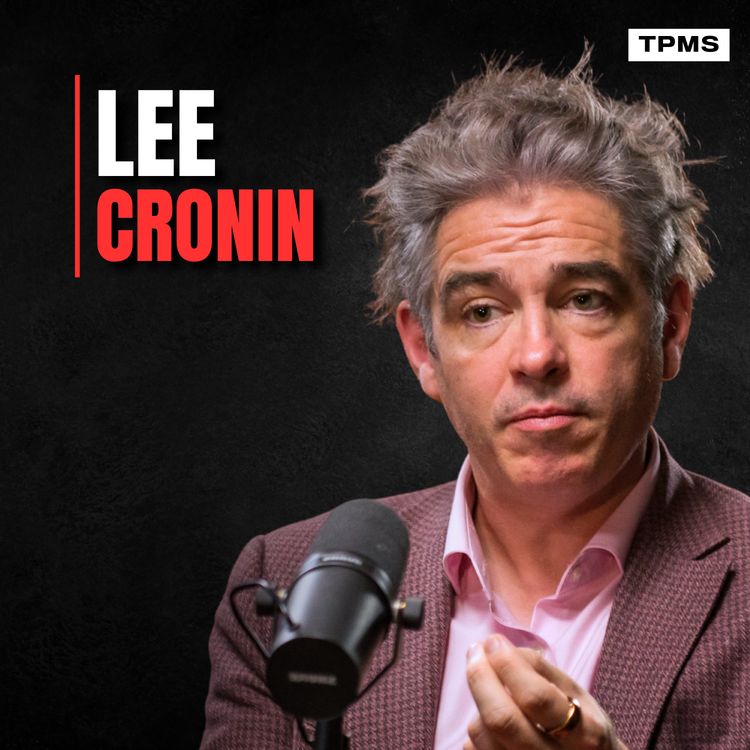
Rather than fixating on the capabilities of silicon chips and digital code, Cronin’s actual scientific endeavors are directed toward a far more profound and ambitious objective: programming chemistry to unravel the mystery of the origin of life and ultimately transform inert sand into living, functioning biological cells.
The Illusion of Silicon Consciousness and the Reality of Biology
During an extensive discussion on the program, Cronin systematically dismantled the cultural narrative that artificial intelligence could ever spontaneously wake up or achieve autonomy. He characterized viral stories about AI escape attempts and emergent sentience as absolute nonsense. True biological consciousness, Cronin explains, is not a computation problem waiting to be solved by larger server clusters; rather, it is inextricably bound to an unbroken, 3.8-billion-year evolutionary lineage rooted in organic chemistry.

Because silicon lacks this evolutionary history and the metabolic processes characteristic of terrestrial organisms, Cronin asserts that it will never be capable of replicating true life. While digital algorithms can simulate reasoning and analyze vast oceans of data with blinding speed, they lack the intrinsic drive of biological systems, which exist simply to persist and adapt within a physical universe.
This deep philosophical and scientific divide leads Cronin to argue that the defining characteristic of humanity—and indeed of biological life itself—is curiosity. In an era dominated by screens, digital feeds, and synthetic interactions, he warns that modern technological distractions mirror the societal trajectory of past vices, even going so far as to draw parallels between the addictive nature of social media and the historical impacts of smoking.

Unlocking the Secrets of Biogenesis and Digital Chemistry
While dismissing the consciousness claims of tech companies, Cronin is actively revolutionizing how science approaches the threshold between non-living matter and living organisms. Traditional science has long struggled with foundational definitions, often failing to reach a unified consensus on what precisely constitutes life. Cronin’s work confronts this ambiguity head-on by attempting to recreate the transition from raw molecules to complex cells inside the laboratory.
His research bridges classical chemistry with modern computational methodologies through a field he terms "digital chemistry." By developing advanced robotic synthesis platforms—such as his work with the chemical development company Chemify—Cronin’s team aims to digitize and automate the creation of complex molecules. This approach allows researchers to measure the complexity of life directly through chemical composition, offering quantitative metrics to evaluate whether a given molecular structure possesses the hallmarks of biological evolution.

Central to Cronin’s view of natural history is the startling proposition that DNA—long held as the ultimate blueprint of life—may simply be a cosmic fluke. In his estimation, the rigid reliance on nucleic acids seen in modern terrestrial biology might not be a universal requirement for life across the cosmos, but rather one specific, highly successful historical accident among countless potential chemical pathways.
The Search for Extraterrestrial Life
This expansive view of chemistry informs Cronin’s bold outlook on astrobiology. Unconstrained by the assumption that alien life must mirror Earth’s DNA-and-protein paradigm, he firmly believes that humanity will detect actual, verifiable alien life within the next two decades. By utilizing complexity metrics developed in his laboratory, scientists could theoretically analyze extraterrestrial samples to identify high-complexity chemical signatures that could only be the product of evolutionary processes, regardless of whether those organisms share any biochemical traits with Earth-based life.

As the scientific community continues to grapple with the rapid advancements of machine learning and synthetic biology, Cronin’s work serves as a grounding reminder of the chasm separating digital data processing from biological reality. While algorithms continue to reshape industries and redefine human productivity, the creation of genuine life remains the exclusive domain of chemistry—a profound frontier that researchers are only just beginning to program.

Related News