Rubio says Trump wants to end Iran war ‘peacefully’ even as both sides prepare for strikes
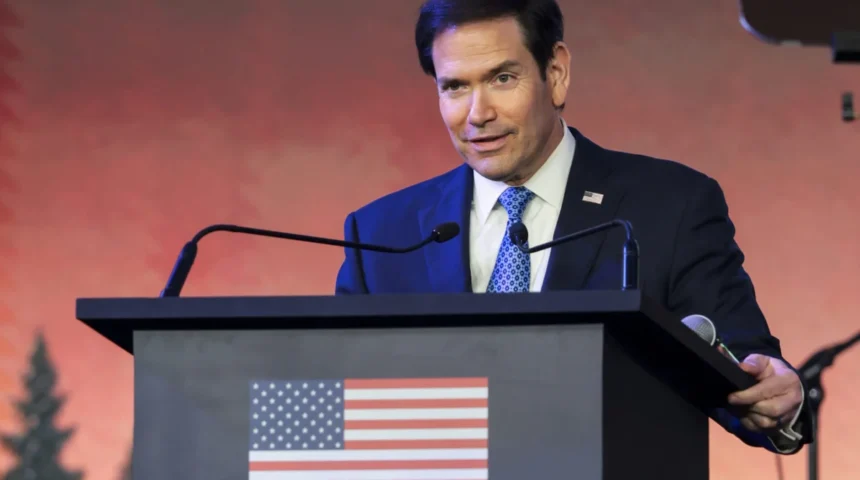
Speaking over the weekend during a diplomatic visit to Mumbai, India, where he attended the Freedom 250 reception at the Jio World Convention Centre, Rubio addressed reporters regarding the administration’s current stance on the confrontation. While outlining the administration’s willingness to pursue peace, Rubio also conveyed a strong sense of military readiness.
"He hasn’t made a decision… what the president expresses to you is incredible confidence that if we needed to do something militarily, we would have the ability to do it, and we really have everything we need to be successful," Rubio told reporters. "Pero would prefer to do it peacefully."
The remarks from the top U.S. diplomat come at a delicate geopolitical juncture, arriving amid widespread reports that both Washington and Tehran are preparing for potential escalations and additional military strikes following the conclusion of the upcoming U.S. midterm elections. The intersection of domestic political calendars and international conflict has heightened global anxiety over the trajectory of the war.
In Tehran, the rhetoric has similarly intensified. On Saturday, Iranian Supreme Leader Mojtaba Khamenei issued a stark directive to the nation’s armed forces, calling on them to meet "any level or type of threat" with "an immediate, impactful, and geographically unrestricted response."
Furthermore, the Iranian leadership has taken tangible steps to posture its military forces for a wider confrontation. Khamenei reportedly ordered an immediate update to the country’s military databases and strategic mapping systems. The explicit goal of this directive is to ensure that "all kinds of physical and non-physical assets of the U.S.-Zionist enemy are brought within the reach of the Armed Forces," a phrasing Tehran frequently uses to describe both United States and Israeli military installations, personnel, and allied assets across the region.
While Washington has not explicitly confirmed or announced plans to resume direct offensive operations or major airstrikes against Iran, prominent investigative reporting from outlets such as The Wall Street Journal and The New York Times suggests that the United States military is actively positioning assets and preparing contingency plans for possible renewed military actions. According to these reports, any significant escalation or new phase of operations is widely anticipated to unfold in the immediate aftermath of the November 3 midterm elections.
Adding to the administration’s public messaging, President Donald Trump addressed the situation during an exclusive interview over the weekend with the Right Side Broadcasting Network. Reflecting on the conflict and the administration’s overarching objectives, Trump expressed optimism that the crisis would soon be brought to a close.
"We’ve had such a victory, and we’ll put it away very soon, one way or the other," Trump told the network on Sunday. "Either they’ll make a deal, or we’ll just end it."
Iran targets U.K. intelligence
The geopolitical fallout from the broader conflict continues to widen, drawing in key Western allies of the United States. On Sunday, the Iranian Ministry of Foreign Affairs escalated diplomatic and security tensions with London by officially designating the United Kingdom’s Military Intelligence Services as a "hostile group." In the same announcement, Tehran leveled severe accusations against the British Royal Navy and Royal Air Force, alleging that they have actively supported what the Iranian government termed "terrorist organizations."
The formal designation was communicated publicly via a statement published on the ministry’s official Telegram channel. According to Tehran, the move was executed in direct retaliation for what it characterized as London’s "malicious" anti-Iran policies and actions. Specifically, the Iranian government pointed to the U.K.’s recent decision to formally designate the Islamic Revolutionary Guard Corps (IRGC) as a terrorist organization, a move that severely strained bilateral diplomatic ties between London and Tehran.
Beyond the tit-for-tat intelligence designations, Tehran has increasingly accused the United Kingdom of acting as a direct belligerent in the broader U.S.-Iran war. Iranian officials argue that the British government has facilitated American military operations by granting U.S. forces unrestricted access to strategic British military installations and logistics hubs located both domestically and overseas.
Publicly available reports from international media organizations, including the BBC, have corroborated that the U.K. government permitted the United States military to utilize sensitive facilities such as RAF Fairford in Gloucestershire and the strategically vital Diego Garcia base in the Indian Ocean. According to those reports, these bases were made available to support what London and Washington initially described as strictly "defensive" military strikes directed against Iranian targets, a justification that Tehran has vehemently rejected as it broadens its diplomatic and security measures against Western nations participating or cooperating in the regional campaign.

Related News