Global Markets Weigh Shift in U.S. Midterms,
Oil Volatility, and Central Bank Interest Rate Paths
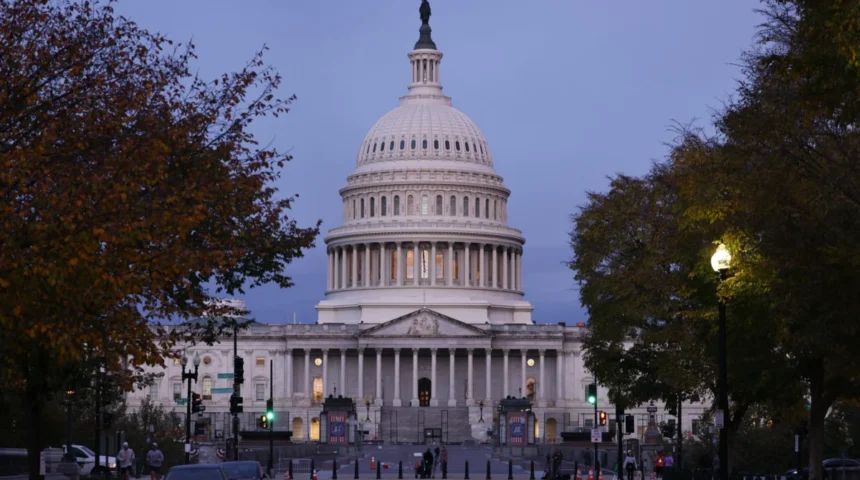
The decisive victory of the Democratic Party in the U.S. midterm elections has sparked a wave of optimism across global financial markets, with investors and analysts suggesting that the political shift could help curb aggressive interest rate hikes next year. However, market watchers caution that the ultimate trajectory of monetary policy remains heavily tethered to the volatile path of international oil prices, broader U.S. economic growth, and shifting fiscal policies.
Central banks around the world have recently returned to monetary tightening mode, struggling to contain inflationary pressures. Institutions such as the U.S. Federal Reserve, the Bank of England, the European Central Bank, and the Bank of Japan have all implemented interest rate hikes over recent months.
This global shift toward tighter monetary policy has been driven in large part by the ongoing war involving the U.S., Israel, and Iran, which has severely disrupted energy markets and sent crude oil and natural gas prices climbing. Furthermore, the conflict has exacerbated an acute squeeze in global refining capacity, driving the costs of essential refined products—including diesel, gasoline, and jet fuel—to soaring heights.
Traders had largely anticipated significant Democratic gains in the midterms after pre-election polls pointed in their favor. Yet, a degree of uncertainty persisted right up until election day regarding whether the party would successfully capture both chambers of Congress. Securing both the House and the Senate dramatically increases the ability of lawmakers to challenge and constrain President Donald Trump’s policymaking agenda.
Following the clear-cut Democratic victory across both legislative chambers, crude oil prices experienced a sharp tumble. International benchmark ICE Brent crude fell 8.7% on Wednesday, closing below the $100-a-barrel threshold for the first time since September.
This dramatic market reaction was largely attributed to growing expectations that the election outcome might compel President Trump to seek a diplomatic resolution or strike a deal to end the war in Iran. Such a development could help restore vital Gulf refinery capacity and dramatically improve export conditions in the region. These views were further amplified when Vice President JD Vance released a lengthy statement explicitly blaming Republican losses on the ongoing war in Iran.

Dan Coatsworth, head of markets at AJ Bell, pointed to the political fallout visible in Washington following the vote. He noted that there had been "an admission from the Republican camp that the Iran war cost them a clean sweep in the election, which the market has taken to indicate that a swift resolution to the Middle East conflict could help them save face."
"Trump might relish the opportunity to take all the credit if an end to the war leads to a big drop in energy costs," Coatsworth added.
Andrew Slimmon, senior portfolio manager and head of Applied Equity Advisors at Morgan Stanley, echoed similar sentiments regarding the broader macroeconomic transmission mechanism. If the election result "pushes for a resolution of the conflict in the Middle East, that might bring oil down, and that’s been an issue for the Fed and inflation, and part of the reason why rates are higher," Slimmon said.
Historical data demonstrates a tight, persistent correlation between oil prices and global interest rates, according to Ralph Axel, a rates strategist at Bank of America. In a research note published on Thursday, Axel warned that sustained higher oil prices over the next three to six months would likely translate into "significantly higher interest rates" in the United States, with particularly pronounced effects in the United Kingdom and Germany.
"If oil prices rise, we think rates will too, especially at the front end where long-end term premium is less of a factor and monetary policy expectations play a larger role," Axel added.
No Off-Ramp for Republicans
Despite the initial market enthusiasm and the sharp drop in crude prices earlier in the week, subsequent market movements underscored that a resolution to the nearly nine-month-long conflict is far from guaranteed. An uptick in crude prices on Thursday, followed by choppy trading on Friday, served as a reminder of the fragility of the current geopolitical environment.
"For now, oil has begun to climb back up again, and interest rate expectations have not radically changed from pre-election levels," AJ Bell’s Dan Coatsworth noted.

Money markets late in the week indicated only a moderate shift in expectations compared to the previous week in both the U.S. and Europe, with traders pricing in a slightly higher probability of monetary easing on a one-year horizon. According to CNBC analysis of LSEG data, the impact on a two-year timeframe was more pronounced in the euro area than in the United States, with rate pricing down 8.7 basis points on the week for the European Central Bank, compared to a modest 4.6-basis-point decline for the Federal Reserve.
"Republicans don’t really have an off-ramp here at this stage," said Laurel Rapp, director for the U.S. and North America Program at Chatham House. "We know the Democrats will seek to take votes in the House and the Senate to constrain the Republicans, to restrain the administration on Iran war powers. But whether that will bind the administration is another matter."
Meanwhile, Clayton Allen of Eurasia Group told CNBC’s "Squawk Box Asia" that while the war with Iran is deeply unpopular domestically, exiting the Middle East region without tangible strategic wins would also carry significant political liabilities. Consequently, Allen noted he expects potential escalations within weeks.
Andrew Bailey, governor of the Bank of England—which enacted a 25-basis-point rate hike on Thursday—emphasized to CNBC that current energy price pressures stem from a complex confluence of factors. These include ongoing obstructions in the Strait of Hormuz, shortages in global refining capacity, and critically low European gas storage levels.
"A peace process in the Middle East will not shift all of those elements," Bailey told CNBC’s Steve Sedgwick on Thursday. "Let’s wait and see, because we have seen that fall in energy prices over the last 48 hours, but it is a very volatile situation, as we’ve learnt over the last seven, eight, nine months."
Ken Egan, head of European Sovereign Credit at KBRA, added that the future trajectory of interest rates will primarily be dictated by whether national economies possess sufficient underlying momentum for existing inflationary pressures to take deeper root.
Europe is "heading into winter after months of elevated energy prices, and the full impact is still feeding through to the wider economy," Egan said in an email. "The concern for central banks is whether these pressures start to push up wages and prices more broadly, or whether weaker demand limits that pass-through."
Growth Outlook

A central question facing the Federal Reserve moving forward is whether the newly empowered Democratic majority "could lead to more fiscal prudence in the U.S. and thus less inflation," Jane Foley, head of FX strategy at Rabobank, noted via email.
"It is very early, however, to be sure of the fiscal outlook, not least because many Democrats were voted in to soften cost of living pressures … so it is very difficult to come to a firm conclusion at this point as to how the outlook for rates will change next year," Foley added.
James Sullivan, managing director and head of Asia Pacific equity research at J.P. Morgan, described the high level of U.S. fiscal stimulus and the question of whether it is set to change as the "million dollar question" currently confronting global markets.
"The reasons why you’re seeing inflation running high is a combination of a range of factors, from the war in Iran, to tariffs, to significant tightness in particular areas of the energy complex," Sullivan told CNBC’s "Squawk Box Asia."
"But it’s also important to recognize the U.S. government has continued to spend at very high levels, into an economic expansion with low unemployment, and that’s driving very specific macroeconomic implications. If that changes, you potentially take the pressure off the rate environment in a way that gives the Fed significantly more forward flexibility."
Daniel Clifton, head of policy research at Baird Strategas, pointed to the ongoing data center buildout in the United States as another critical variable for investors to monitor closely in the coming months.
"In 2025, we had major fiscal headwinds, and it really didn’t matter because we had such a big capex boom in the AI build-out last year. This year was driven a lot by stimulus," Clifton told CNBC’s "Squawk Box Europe."
"If you have an environment where you have tighter fiscal policy—the Fed is raising rates right now—and you have a slowdown in the AI capex build out, you’re probably going to reach a policy mistake at some point in mid-2027," he warned. "That’s what happened in 2000 during the Y2K tech boom, the Fed was raising rates, we had higher oil prices, and they just went too far, and eventually it had a recession. Our forecast is not for a recession in the United States. Our forecast is that we’ll have a mid-cycle slowdown in 2027."

Related News