Airlines Prioritize High Fares Over Full Flights as Jet Fuel Costs Soar and Passenger Numbers Slip
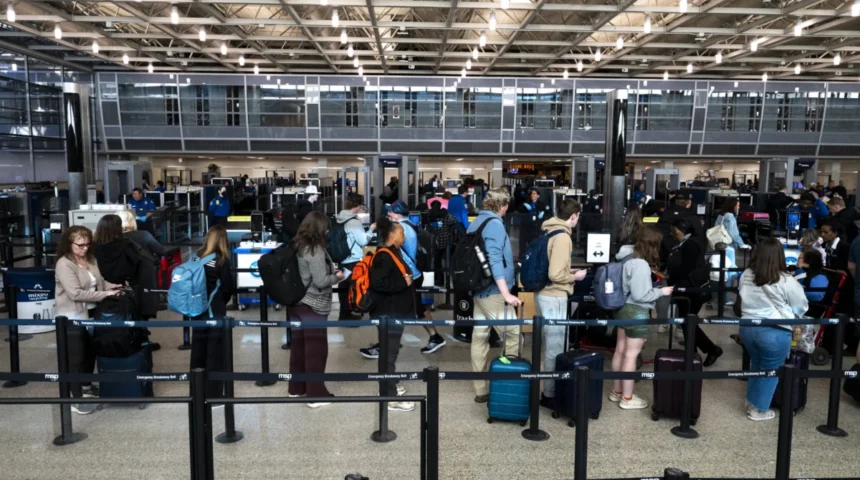
Fewer people are taking to the skies this year, but with airfare prices climbing rapidly and remaining stubbornly high, major U.S. airline executives say that dynamic is entirely acceptable as they shift their strategic focus toward profitability over sheer passenger volume.
The number of travelers passing through security checkpoints at airports across the United States is currently on track to record its first annual decline since 2020. Rather than chasing record-breaking passenger numbers or aggressively fighting to keep every aircraft fully occupied, major U.S. carriers have openly stated that capturing higher fares is far more important to their bottom lines.
This deliberate pivot represents a fundamental shift in how airlines manage capacity and pricing in a high-cost operating environment. By prioritizing revenue per available seat mile over high load factors, carriers are attempting to insulate themselves from mounting macroeconomic pressures.
"We’re actively prioritizing yield versus load factor and really happy as we see it. It fits right in with the premium investments that we’re making," American Airlines Chief Commercial Officer Nat Pieper said during the company’s earnings call.
Reflecting this intentional strategy, American’s load factor—a closely watched industry metric that gauges how full planes are flying—fell to 83.4% in the third quarter, down from 86% during the same period in 2025. Fewer seats were filled, but the passengers who did board paid significantly more for the privilege.
Fares keep climbing
The price of commercial plane tickets has skyrocketed in recent months as major airlines grapple with a sharp and sustained spike in jet fuel prices. Jet fuel traditionally represents an airline’s single largest operational expense after labor, and carriers are increasingly passing those heavy cost burdens directly on to consumers.
According to the latest inflation readings, passenger fares in September were up more than 22% compared to the same month a year earlier. Meanwhile, prominent fare tracker Hopper has indicated that it expects the upcoming holiday travel season to bring some of the most expensive ticket prices seen in years.
The impact of this pricing strategy is visible across multiple carriers. The average Southwest Airlines fare in the third quarter, for instance, climbed to $231.69, representing an increase of nearly $50 from a year earlier. Crucially, that baseline figure does not even account for Southwest’s newly introduced fees, which include extra charges for checked bags and fees to secure a seat closer to the front of the aircraft.
Despite those escalating costs and additional fees, Southwest’s total count of revenue passengers fell by 3.2% from a year ago, dropping to approximately 33.5 million people.
Even with that reduction in overall volume, both ticket fares and total passenger counts managed to exceed the carrier’s internal expectations.
"Passenger fares came in about $3 above what our forecast was and the more important thing is that passenger volumes also exceeded our expectations," Southwest CEO Bob Jordan told analysts and reporters during an earnings call.
The broader cooling trend across the national transportation network is well-documented by federal data. Since April—the crucial timeframe when major airlines began issuing serious warnings about corporate profits taking a direct hit from the spike in jet fuel—through Thursday, approximately 9.3 million fewer individuals were screened at airport checkpoints compared to the exact same period in 2025, according to statistics from the Transportation Security Administration. While that reduction amounts to a relatively modest drop of less than 2% from the previous year, it nevertheless marks a stark departure from the steady, multi-year recovery and expansion that followed the pandemic disruptions.
This cautious consumer behavior comes as jet fuel prices have more than doubled compared to levels seen a year ago. U.S. Gulf Coast spot prices have surged to $4.63 a gallon, according to data published by the U.S. Energy Information Administration. Faced with this steep inflationary pressure, airlines have maintained an intense focus on recovering as much of the fuel price spike through ticket sales as possible.
Despite some localized dips in passenger volume, airline executives emphasized during recent earnings calls that overall travel demand remains remarkably robust. This resilience is particularly evident within premium cabins, such as business class and first-class seating, which continue to attract lucrative corporate and high-net-worth leisure travelers willing to pay top dollar for enhanced comfort and service.
Furthermore, not every major carrier is experiencing a contraction in volume. United Airlines actually flew 2.4% more passengers in the third quarter than it did during the same period a year ago, reporting that its unit revenue rose by 16%, marking the largest increase the company has seen since the pandemic upended the global aviation sector.
"I’ve been pleasantly surprised at the industry’s ability this year to raise yields and pass through much of the increase in fuel prices," United CEO Scott Kirby said during the company’s earnings call. "So it’s possible that airlines will continue to focus on yields at the expense of load factor and that alone could get us to double-digit margins next year."
Profit hit and future outlook
Even as management teams express confidence in their ability to price tickets aggressively, most major airlines are anticipating that elevated fuel costs will continue to squeeze profit margins in the near term.
United, for example, stated that it expects to pay an average of $4.80 a gallon for jet fuel during the fourth quarter, representing a notable increase from the average price of $3.90 a gallon it paid in the third quarter.
Reflecting these ongoing financial headwinds, American Airlines, United Airlines, Delta Air Lines, and Southwest Airlines all lowered their full-year profit forecasts for 2026 during the month’s earnings reporting cycle. Among those four legacy and major carriers, American stands out as the only one expecting to post a net financial loss for the year.
In response to the shifting economic landscape, American and several of its industry peers have already scaled back their growth plans or explicitly warned that the broader industry may soon dial back its aggressive goals for expanding operational capacity. Industry analysts note that maintaining reduced capacity can make remaining bookable seats scarcer, which in turn drives ticket prices even higher if consumer demand holds steady.
The robust demand for premium seating has provided a vital cushion for these carriers. Premium cabins routinely command hundreds or even thousands of dollars more than standard coach tickets, offering airlines a dependable stream of high-margin revenue even as budget-conscious travelers hesitate to book trips amid high inflation.
As the earnings season progresses, attention is shifting toward smaller airlines, including Frontier Airlines and Allegiant Air, both of which are scheduled to report their financial results in the coming weeks. Because these low-cost carriers have traditionally catered to more price-sensitive leisure customers, their upcoming reports will provide a clearer picture of whether budget travelers are pulling back significantly on travel expenditures.
Another critical wild card influencing the current market dynamic is the structural aftermath of the demise of Spirit Airlines, which officially went out of business in early May. The sudden exit of a major ultra-low-cost competitor has reshaped domestic route networks and capacity equations.
"Some of its customers have likely stopped flying," Bank of America analysts observed in a research note, highlighting how the reduction in ultra-low-cost capacity has altered the broader competitive landscape for budget-conscious flyers across the country.

Related News