American Express Cuts Thousands of Jobs in Major Restructuring Linked to Artificial Intelligence Integration
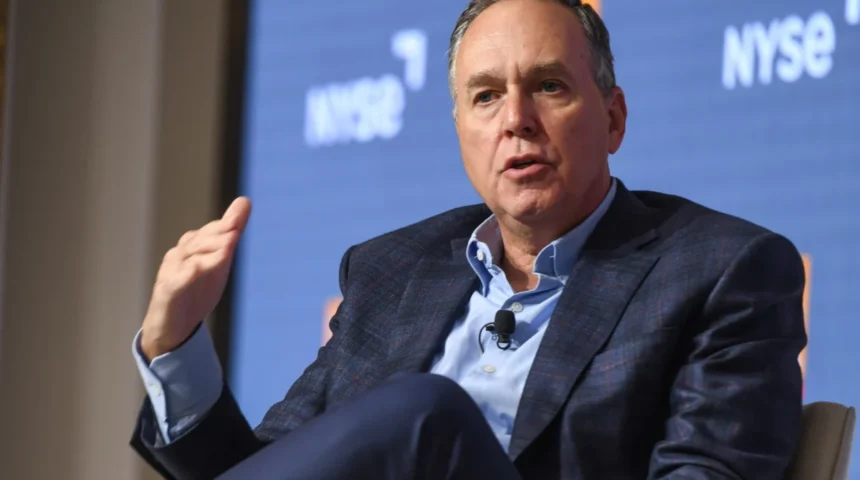
American Express Co. is eliminating thousands of employees as the leading global credit card and financial services company prepares for artificial intelligence to take over a significantly larger share of its internal operational processes.
Chairman and Chief Executive Officer Stephen Squeri announced the major workforce reduction during the company’s third-quarter earnings call with analysts, revealing that the firm is eliminating 5% of its global workforce. The restructuring is accompanied by a substantial $336 million restructuring charge. American Express closed out 2025 with a global headcount of nearly 77,000 employees, meaning the 5% reduction will impact roughly 3,850 workers across various departments and international locations.
In an exclusive interview with CNBC following the earnings announcement, American Express Chief Financial Officer Christophe Le Caillec provided further insight into the strategic rationale behind the restructuring charge, explaining that the financial move was designed to make American Express leaner, more agile, and fundamentally prepared for the widespread integration of artificial intelligence technologies.
Le Caillec emphasized that the company deliberately chose to restructure its organizational hierarchy before deploying advanced automation tools. He noted that a company should not attempt to automate processes that are not already structured in the most optimal manner possible. According to the CFO, the current operational redesign is focused heavily on reducing management layers and widening spans of control. By flattening the corporate structure and streamlining operational workflows, American Express aims to position itself to successfully automate tasks and harness the full capabilities of artificial intelligence in the coming quarters and years.
The sweeping announcement from American Express reflects a much broader and rapidly accelerating trend across the modern financial services sector, where major banks, credit card issuers, and financial institutions are actively working to replace repetitive, routine administrative roles with sophisticated AI automation. This wave of tech-driven labor adjustments highlights a paradox in the current economic landscape: companies are moving aggressively to trim headcount even while enjoying robust corporate profits driven by healthy consumer spending and remarkably resilient credit performance.
The trend was underscored just a day prior when British banking giant Barclays confirmed its own plans to trim 5,000 jobs—also amounting to roughly 5% of its total staff—in a parallel technology-driven cost and efficiency initiative. As financial institutions face mounting pressure to deliver superior digital experiences, reduce operational overhead, and maintain competitive margins, artificial intelligence has swiftly transitioned from an experimental emerging technology to a core pillar of corporate strategy and workforce planning.
During the analyst conference call, CEO Squeri elaborated extensively on the financial and operational motivations behind the restructuring charge, framing the move as an essential step toward long-term organizational efficiency and accelerated innovation.
Squeri told the assembled analysts that while the company currently enjoys solid business momentum, maintaining that trajectory and winning market share over the coming years required American Express to transform into a fundamentally more agile and efficient enterprise. He expressed confidence that the rigorous restructuring exercise would ultimately enable the company to operate and execute its strategic vision far more effectively. Furthermore, Squeri noted that the operational streamlining would unlock greater financial capacity, freeing up crucial resources that can be redirected directly toward key business priorities, technology investments, and growth initiatives.
The sweeping organizational changes mark a pivotal chapter for American Express as it navigates the intersection of traditional financial services and cutting-edge digital automation. As the company moves forward with its multi-million-dollar restructuring plan and works to flatten its corporate hierarchy, industry observers will be watching closely to see how effectively the credit card titan integrates artificial intelligence into its day-to-day operations and whether other major financial institutions follow suit with similar workforce transformations.
This story is developing. Please check back for updates.

Related News