Barefoot Mining Scales Off-Grid Operations with Braiins OS to Overcome Environmental and Power Constraints
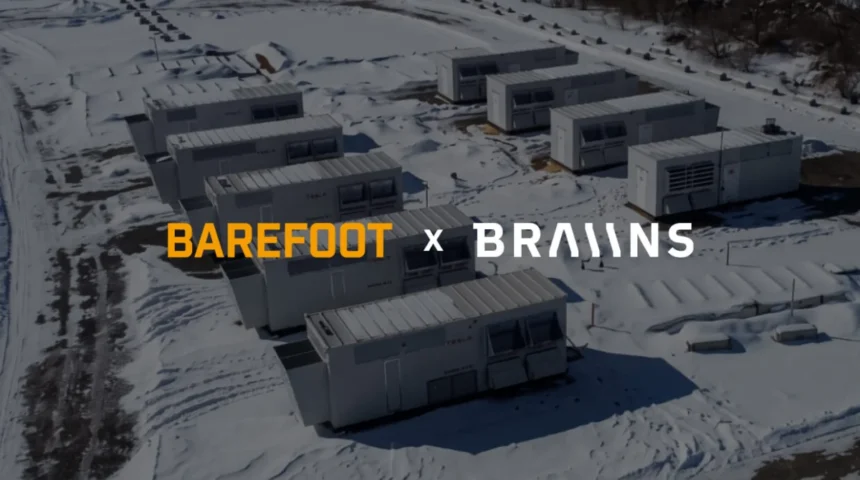
In the evolving landscape of Bitcoin mining, large industrial facilities connected to major electrical grids typically command the most attention. However, a different breed of operation is quietly carving out a resilient niche on the fringes of the traditional energy grid. Barefoot Mining, a specialized firm operating out of South Dakota, has built its business model around decentralized, highly mobile, and self-powered sites. Unlike their grid-tied counterparts that benefit from stable municipal power supplies and climate-controlled brick-and-mortar facilities, Barefoot deploys compact mining rigs directly onto off-grid and small-to-medium commercial sites, utilizing energy sources they generate themselves.
This sovereign approach gives the company distinct operational advantages, but it also exposes its infrastructure to punishing environmental conditions. Operating in remote regions means facing sharp day-to-night temperature swings and extreme seasonal shifts. To survive and remain profitable under these volatile circumstances, Barefoot has spent years refining its operational playbook. Recently, the company adopted Braiins OS firmware across its entire fleet, a strategic shift that has fundamentally changed how its hardware handles extreme heat, strict power budgets, and unexpected hardware faults.
The philosophy behind Barefoot’s operations is captured in its "Wild Horse Mining" strategy. By looking for sites between 0.5 megawatts and 10 megawatts, the company can establish operations rapidly, pivot or pack up entirely when economic or environmental conditions change, and sidestep much of the local regulatory friction and heavy resistance that often accompanies multi-hundred-megawatt facilities. This model inherently distributes risk across multiple independent locations rather than concentrating capital and vulnerability in a single massive installation. Summarizing their operational sweet spot, the team at Barefoot describes their scale concisely: they are big enough to not be small, but not big enough to be big. Remaining nimble is the ultimate goal, allowing them to adapt where corporate-scale operations would be bogged down by bureaucracy and fixed infrastructure.
Facing the Elements: The Heat Problem
For years, Barefoot ran its mining machines on stock firmware, occasionally experimenting with alternative builds to eke out extra performance. However, off-grid and rural sites sit entirely out in the open, completely exposed to the elements. During the scorching summer months, ambient temperatures climb to levels that force stock firmware to react aggressively to protect the silicon. Under standard manufacturer software, rising temperatures trigger massive hashrate throttling or drop machines offline entirely to prevent hardware damage.
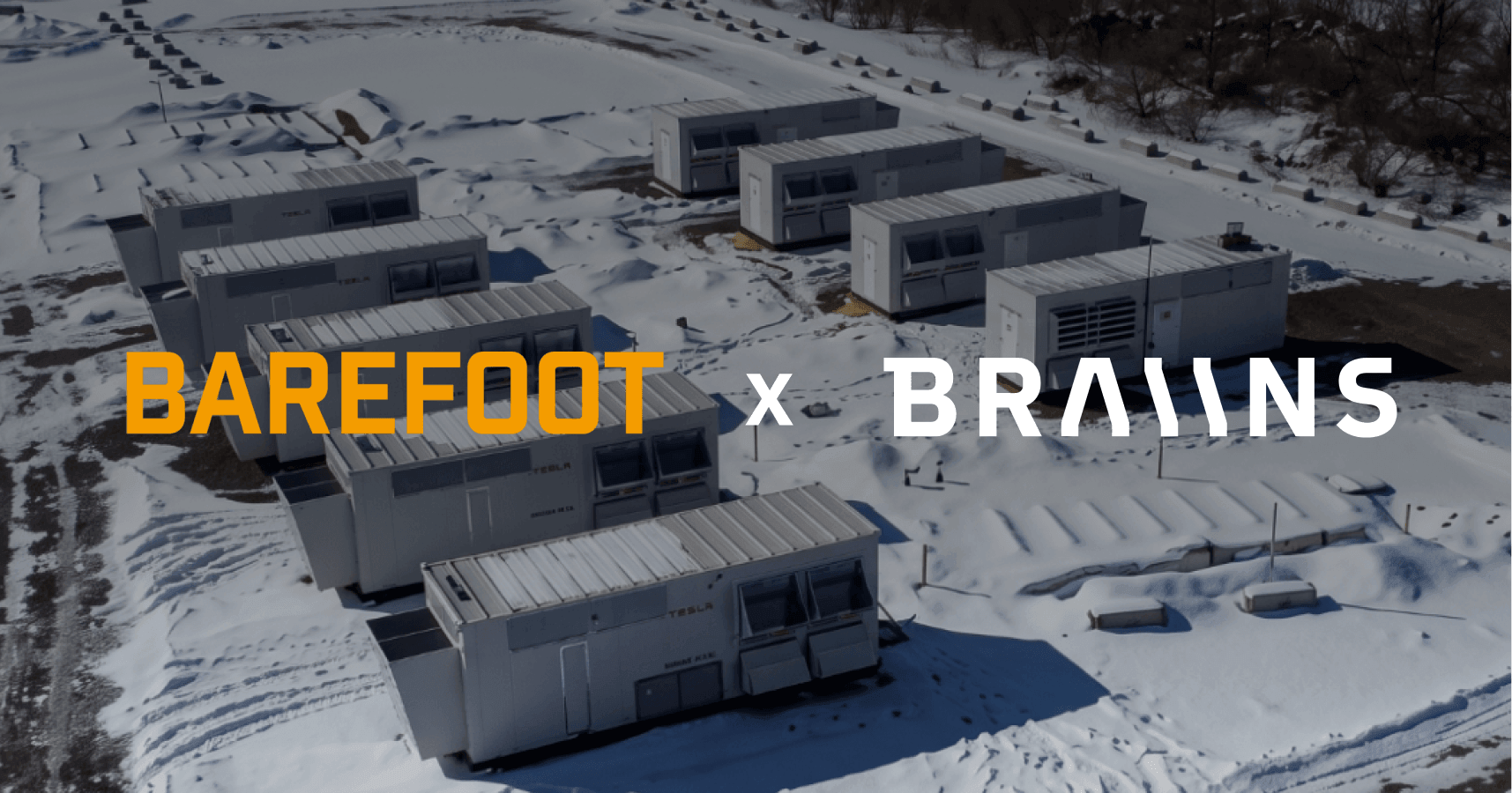
Every instance of dropped hashrate or forced downtime translates directly into lost revenue—a luxury that a lean, self-powered operation cannot easily absorb. Barefoot needed a smarter way to manage its hardware thermal limits without sacrificing production hours simply because the sun was beating down on an unshaded container in the middle of a field.
The transition to Braiins OS began with a controlled test at Barefoot’s South Dakota headquarters using Bitmain Antminer S19J Pro Plus hardware. The primary objective was to see if the alternative firmware could help machines stay online longer when ambient temperatures spiked. Within a few months, the operational data provided a clear verdict, prompting the company to greenlight a fleet-wide rollout across all of its remote locations.
The core difference between stock firmware and Braiins OS lies in thermal management and precision tuning. Stock firmware typically applies a uniform voltage and frequency profile across every single chip on a hashing board, leading to clumsy, heavy-handed throttling steps whenever a thermal threshold is crossed. In contrast, Braiins OS tunes each individual chip and employs Dynamic Performance Scaling to step power down gradually and gracefully as thermal headroom shrinks. Instead of cutting a machine’s production back aggressively or shutting it down entirely, Braiins OS keeps the miner online and hashing at the absolute highest level that current environmental conditions will permit.
Daily Applications for Constrained Sites and Aging Hardware
Operating off-grid means living strictly within a finite power budget dictated by whatever local generation sources are deployed. For Barefoot, one of the most transformative features of Braiins OS is direct wattage control, which grants operators the ability to precisely dictate how much power each individual machine consumes.
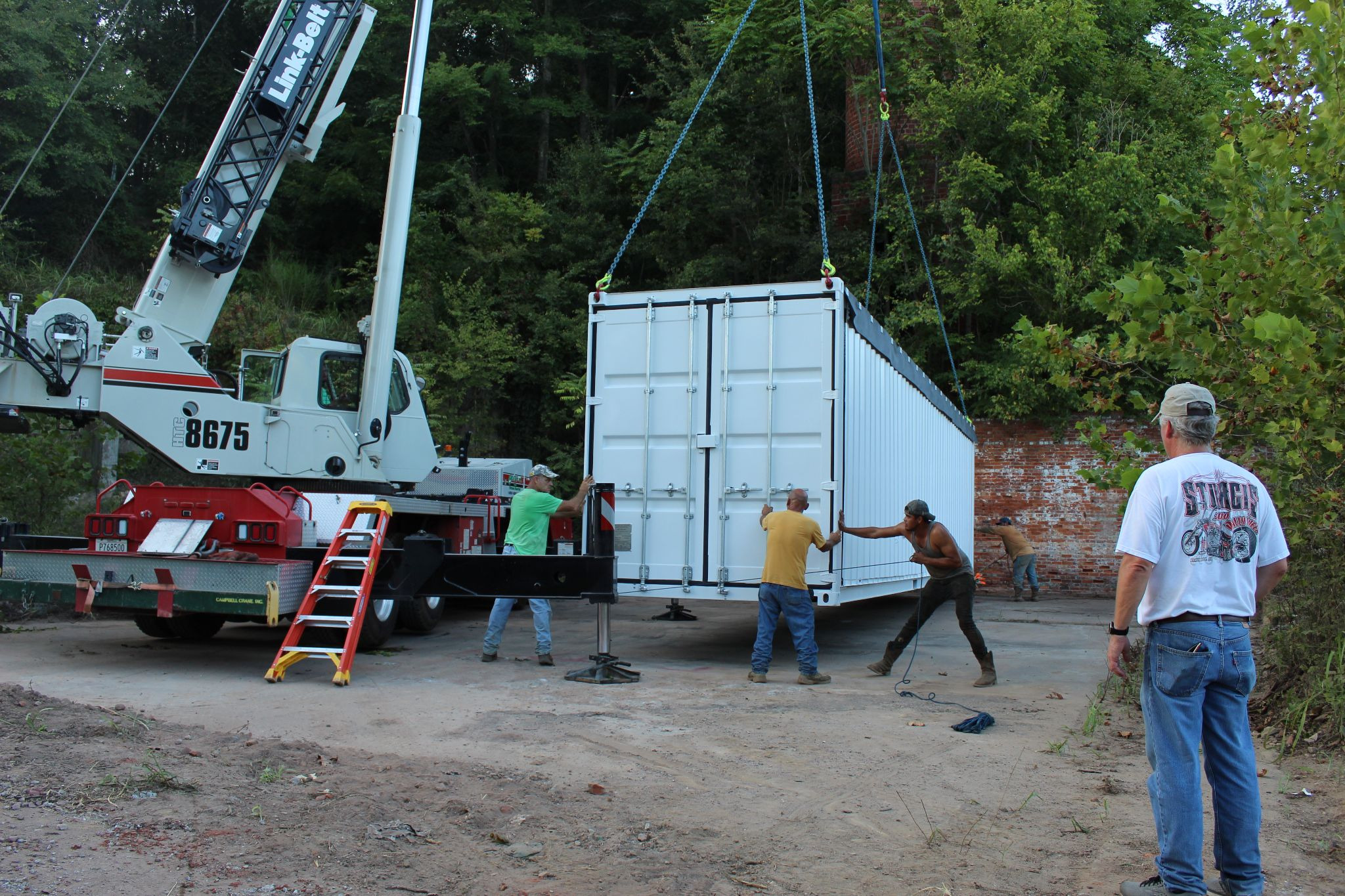
According to the Barefoot team, the ability to control the wattage of units running on Braiins OS is invaluable when navigating strict power constraints. This capability serves a dual purpose across their fleet. On power-constrained sites, it allows operators to cap machines so they never exceed the available generation capacity. On older units, it enables technicians to dial the hardware into a more efficient operating point, squeezing out more satoshis per watt from equipment that might otherwise be destined for retirement in a rapidly evolving hardware market.
Furthermore, the automatic throttling feature proved to be an unexpected economic savior in the field. When ambient temperatures soar during peak summer afternoons, machines running Braiins OS intelligently throttle back rather than tripping offline. Across a distributed fleet of exposed off-grid sites, those saved hours of continuous operation accumulate into substantial production gains over the course of a season.
Another major operational headache solved by the firmware is the management of partially defective hardware. Traditionally, a mining rig with a single bad hashboard would sit completely idle on-site until a technician could travel to the location, diagnose the fault, and pull the board for repair. In remote areas, logistical delays can leave a machine offline for days or weeks. Braiins OS allows the remaining healthy boards in the machine to keep hashing while the defective board is bypassed, ensuring that a partial hardware fault does not result in a total loss of revenue while waiting for maintenance.
Practical Playbooks for Mid-Size Operations
The experiences of Barefoot Mining offer a clear blueprint for mid-size operators who often find themselves underserved by firmware developers catering primarily to massive industrial facilities. While large-scale miners rely on massive transformers, industrial HVAC systems, and grid-tied stability, off-grid operators must rely on software agility to bridge the gap.
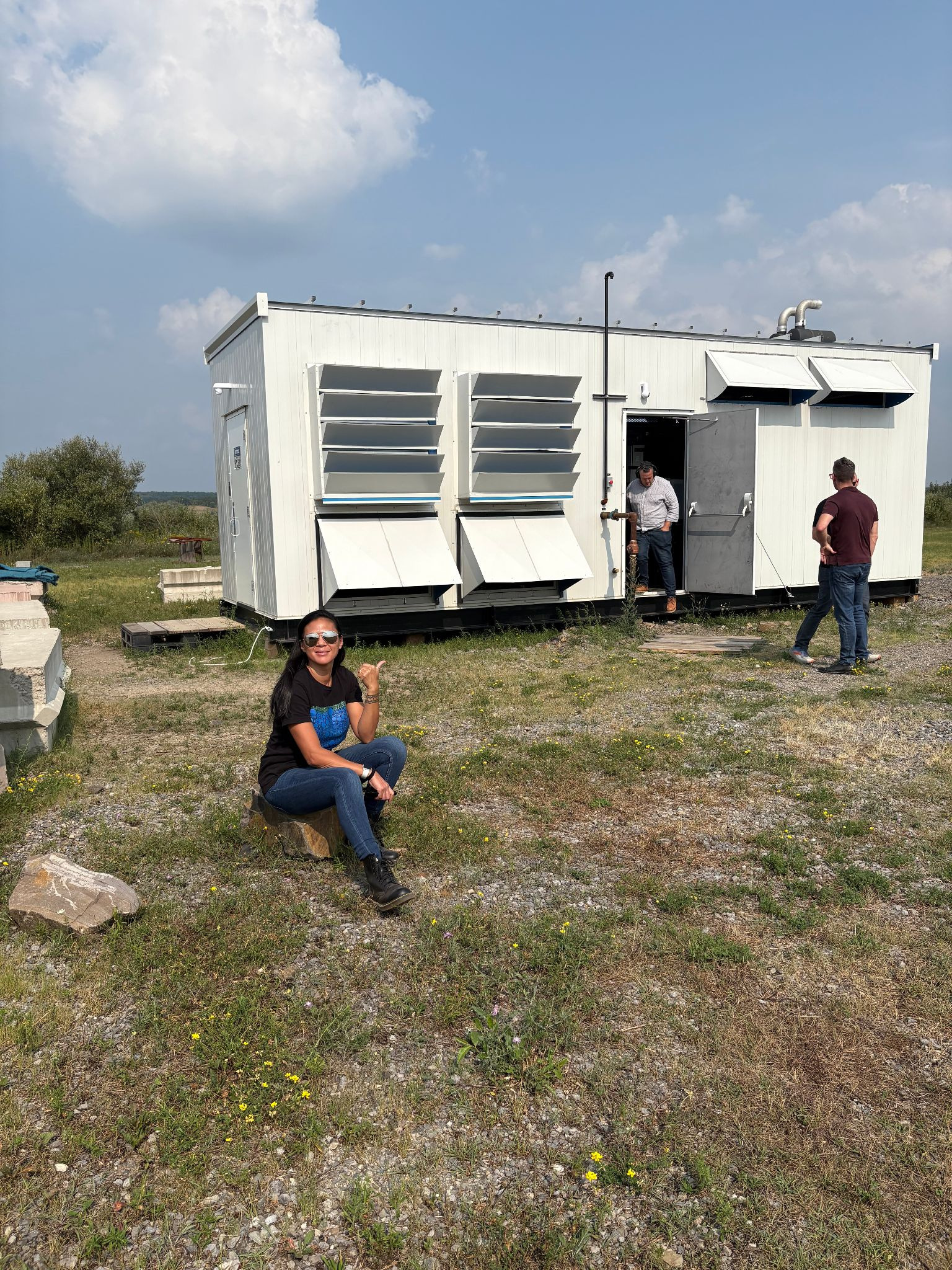
For operations of a similar scale, Braiins OS provides practical levers that require zero capital expenditure on new transformers, expensive liquid cooling infrastructure, or expanded physical facilities. By maximizing the efficiency and output of the hardware already deployed in the field, mid-size operators can drastically improve their bottom line through software optimization alone.
However, for remote operators, the quality of the software vendor extends far beyond the lines of code. When a site is located hours away from the nearest town, communication and technical support become critical lifelines. Barefoot emphasizes that support is very much a part of the product, giving Braiins high marks for partnership and responsiveness. When remote hardware encounters unexpected hurdles, the speed at which a support team responds can mean the difference between a minor hiccup and a costly operational outage.
As Barefoot looks toward the future, the company continues to provide candid feedback to help shape the development of the tools it relies on. The firm has expressed interest in firmware capable of even greater autonomy, specifically requesting advanced self-healing behaviors that can automatically manage complex field issues without human intervention. Additionally, as the company evaluates hardware manufacturers beyond Bitmain for future expansions, broader cross-manufacturer compatibility for advanced firmware will remain a key consideration to maintain fleet flexibility.
By testing innovative software solutions in some of the harshest environments the industry has to offer, operations like Barefoot Mining continue to demonstrate how independent, agile miners can thrive outside the traditional parameters of the grid.

Related News