Meta’s AI App Muse Surpasses 10 Million Users as High-Value Shopping and Strong Retention Captivate Mark Zuckerberg
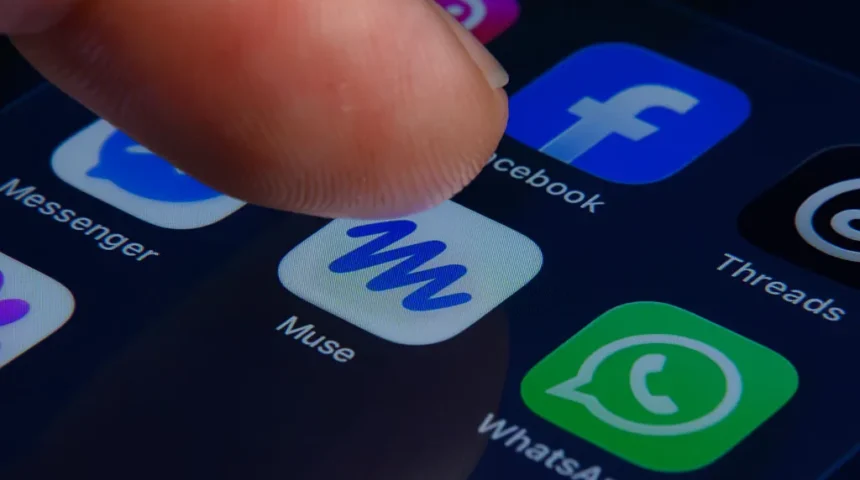
Meta confirmed during its third-quarter earnings call on Wednesday that its standalone artificial intelligence application, Muse, has officially crossed the threshold of 10 million users. The announcement validates estimates released earlier in the week by market intelligence firm Sensor Tower, which highlighted the rapid consumer uptake of the application shortly after its initial launch. While reaching the 10-million-user mark is a notable milestone in a crowded consumer AI landscape, it is the underlying user behavior, engagement metrics, and spending habits that have captured the primary attention of Meta CEO Mark Zuckerberg and other company executives.
During the earnings discussion with financial analysts and bankers, Zuckerberg revealed that approximately 25% of individuals who set up Muse return to use the application on a daily basis. This high frequency of interaction has resulted in strong retention rates that outpace many typical early-stage consumer applications. Even more striking to leadership and industry observers alike is the monetization and commercial activity occurring within the platform. Zuckerberg shared that over a quarter of Muse’s engaged users who utilized the AI agent for shopping activities recorded an average purchase size exceeding $200 per transaction—a figure that surprised even seasoned retail and financial technology insiders.
The high-value transactions are facilitated in part by financial technology infrastructure provided by Plaid, which connects payment applications directly to consumers’ bank accounts. Muse leverages Plaid’s connector to power its agentic shopping capabilities, allowing users to execute purchases seamlessly through conversational AI. Commenting on the scale of adoption and transaction volume, Zuckerberg noted that Plaid executives had informed Meta they had never witnessed activity quite like what they are observing with their connector on the Muse service.
Beyond Commerce: Productivity and Security
While commerce has emerged as an unexpectedly lucrative vertical for the platform, shopping is far from the only use case driving daily engagement. Zuckerberg outlined that personal productivity tasks represent another major pillar of Muse’s popularity. Users are increasingly connecting the AI agent to their personal email accounts and calendars to automate scheduling, manage correspondence, and streamline daily organizational workflows.
The integration of such sensitive personal data naturally raises critical questions regarding data protection and user privacy. To address these concerns, Zuckerberg emphasized that Muse was built upon a robust security architecture. The platform currently utilizes a feature known as "Muse Secure VM" to safeguard user data. Furthermore, he announced that the forthcoming rollout of "Muse Confidential VM" will introduce an even higher standard of privacy, ensuring that even Meta itself will be unable to view the content handled by users within the system. This structural security framework, executives argue, is what instills the necessary trust for consumers to delegate high-trust tasks like email and calendar management to an autonomous AI agent.
Scaling, Compute Costs, and Monetization Strategy
Having achieved what Zuckerberg described as definitive "product-market fit," Meta’s strategic priorities for Muse are shifting toward scaling the agent, expanding revenue streams, and aggressively optimizing compute costs. The economic projections shared during the earnings call were remarkably bullish. Meta forecasts that Muse will eventually generate more revenue per user than the company’s traditional "family of apps"—encompassing Facebook, Instagram, WhatsApp, and Messenger. Currently, the average revenue per user across those legacy social platforms stands at several hundreds of dollars annually.
Meta’s long-term monetization framework for Muse is designed around a hybrid model. The company intends to keep the core application free for the vast majority of users while capturing a percentage of the underlying commerce transactions that take place through the platform’s agentic shopping features. Additionally, power users who demand access to the most advanced underlying AI models or require higher token limits will be subjected to a paid subscription model.
Running advanced conversational and autonomous AI agents at scale requires immense computational power, a reality that heavily impacts near-term financial margins. However, Zuckerberg expressed confidence that Muse will transition into a highly profitable enterprise once adoption scales further. He explained to analysts that while the application is currently very compute-intensive to run, the company expects to improve its cost efficiency by more than ten times over the coming year. This anticipated reduction in operational expenditure, coupled with maturing revenue streams, is expected to drive profitability. To support this trajectory, Meta is actively building out data center infrastructure capable of serving more than a billion people over the next few years.
Integration with Smart Glasses and the "Muse Network"
Muse is also positioned to serve as a foundational software layer for Meta’s broader hardware initiatives, particularly its smart glasses strategy. The company’s Reality Labs division—which oversees augmented reality, virtual reality, metaverse development, and wearable hardware—continues to operate at a multi-billion-dollar loss. However, financial guidance indicates that Reality Labs’ losses are narrowing, improving from $19.1 billion in 2025 to an expected $15 billion for the current year, with software ecosystems like Muse playing a critical role in driving the utility of future hardware releases.
Looking further ahead, Zuckerberg offered a glimpse into Meta’s long-term vision for the ecosystem, teasing plans for what he termed the "Muse network." This conceptual evolution aims to transform Muse from a solitary digital assistant into a collaborative, interconnected environment. Instead of functioning as a single-player experience, the network will allow individual user agents to communicate and coordinate with the AIs belonging to friends and family members.
This interconnected agent framework is also set to redefine digital commerce interactions. Zuckerberg concluded that as the ecosystem matures, buying a product will no longer involve traditional web navigation to a business website, but will instead rely entirely on direct agent-to-agent communication, fundamentally altering how consumers discover, evaluate, and purchase goods and services online.

Related News