Blackstone Positions Itself at the Heart of the AI Infrastructure Boom as Capital Demands Mount
Private equity giant Blackstone is cementing its role at the center of the artificial intelligence boom, deploying massive financial strategies that range from multi-billion-dollar data center loans to direct investments in frontier AI models and enterprise applications.
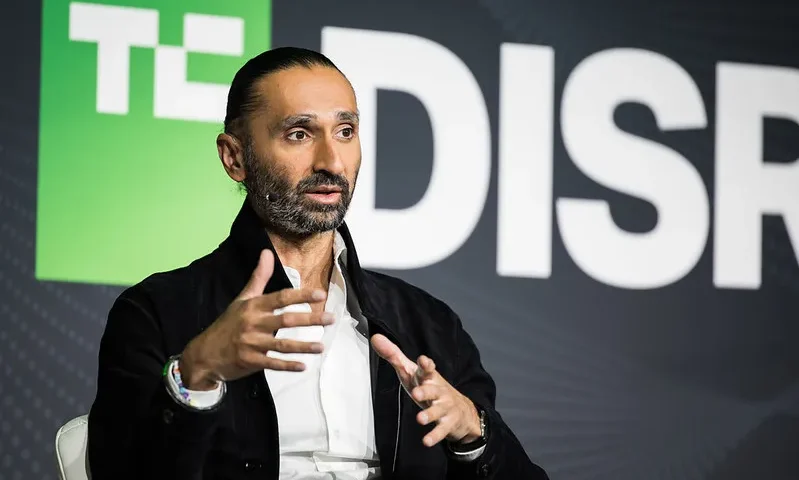
Jas Khaira, a senior veteran at the firm, detailed Blackstone’s expanding footprint in the sector during an appearance on stage at TechCrunch Disrupt. Earlier this year, Blackstone established Blackstone N1 (BXN1), a San Francisco-based central hub dedicated entirely to steering the firm’s diverse AI initiatives. Khaira relocated from New York to lead the group, positioning himself at the literal and figurative epicenter of the global tech shift.
Unlike prior technology cycles like mobile computing or software-as-a-service (SaaS)—which allowed startups to scale efficiently with moderate amounts of venture capital—the transition to artificial intelligence requires staggering, unprecedented levels of capital investment. That massive appetite for funding is precisely why Blackstone, backed by its $1.3 trillion in assets under management, has become a pivotal player in the ongoing technological transformation.
Khaira emphasized during the event that Blackstone separates itself from traditional venture capital firms through an intense focus on compute financing and the unique ability to offer flexible capital structures, ranging all the way from debt to equity. The firm has been backing its strategy aggressively.
“We’re the largest owner of compute outside of the hyperscalers today, whether it’s investments in neo clouds, investments in data centers, and being able to use that compute strategically to support companies,” Khaira told the audience.
Financing the Neocloud Revolution
The firm’s aggressive posture is visible across several high-profile compute-related deals. Among them is Crux AI, a neocloud launched in partnership with Google to commercialize its custom Tensor Processing Units (TPUs), to which Blackstone committed $5 billion as a lead investor. Blackstone has also backed Etched, a four-year-old specialized chip startup whose rapid developmental progress has steadily drawn intense investor attention. Neoclouds function as specialized cloud providers that rent out heavy-duty AI GPU infrastructure to developers and enterprises.
Blackstone pioneered a groundbreaking financing structure that enabled the firm to lend massive sums of money to venture-backed neoclouds. The framework operates by analyzing committed customer contracts while simultaneously utilizing high-value GPUs pledged directly as collateral.
This model was first tested in 2023 with CoreWeave, a neocloud that experienced an overnight explosion in demand following the public rollout of ChatGPT. At the time, CoreWeave had generated only about $30 million in revenue and posted minimal profitability, according to Khaira. Nevertheless, the company approached Blackstone seeking a staggering $2.3 billion loan.
CoreWeave was effectively borrowing against the substantial market value of its rapidly expanding inventory of Nvidia GPUs, with chipmaker Nvidia itself participating as an investor. Blackstone grew comfortable structuring the loan because CoreWeave had already secured binding contracts with stable, blue-chip enterprise customers like Microsoft.
That initial transaction swiftly established the baseline financial model that Blackstone and various other credit institutions subsequently used to pour billions of dollars in follow-on debt into CoreWeave and its growing roster of competitors.
“One of the primary things that we’re looking to is the nature of the customer,” Khaira explained. “And if the customer is an investment-grade customer—let’s say it’s Microsoft or let’s say it’s Meta—the risk gets priced relative to that customer.”
Building directly on its early success with CoreWeave, Blackstone engineered subsequent neocloud financing pacts. Earlier this year, the firm co-led a massive $10 billion credit facility alongside Coatue to help scale Firmus, an Australian GPU provider focused on energy-efficient AI infrastructure.
Market Jitters and Rising Borrowing Costs
Despite the rapid expansion of these financial vehicles, Khaira acknowledged that in recent weeks, the sheer weight of the debt accumulated by neocloud operators has begun raising red flags across the broader financial community. CoreWeave’s accumulated debt burden alone has ballooned to roughly $50 billion.
The mounting leverage recently prompted Altimeter Capital founder Brad Gerstner to remark during a CNBC interview that the collateral being put up by operators—heavily concentrated in specialized GPUs—may no longer be sufficient. “The collateral that CoreWeave is putting up, which is really only GPUs, is not good enough anymore. They used that in the past to get cheap debt,” Gerstner noted.
Khaira observed that current market jitters on the credit side stem from a confluence of macroeconomic pressures. Interest rates ticked upward, while hotter-than-expected inflation metrics signal that central bank borrowing costs could remain elevated for longer. At the same time, the sheer volume of new AI infrastructure debt offerings hitting the market has added further strain.
“We’re also seeing higher credit spreads,” Khaira said, noting that lenders are demanding higher risk premiums on top of already elevated base interest rates to finance the sweeping AI buildout. “The cost of capital to price in debt for a Meta or a Microsoft has widened out,” he added, pointing out that even premier technology giants boasting massive balance sheets and robust earnings are presently paying more to borrow money.
These growing concerns over the rising cost of debt have begun spilling over directly into public equities and private funding markets. Shares of CoreWeave dropped more than 20% in recent trading sessions, while Firmus was forced to scrap its highly anticipated initial public offering on the Australian Securities Exchange, which had targeted a valuation of roughly $30 billion.
“Ultimately, the market wasn’t there at that valuation, and so I think as a result, that deal didn’t get done,” Khaira said regarding Firmus’s canceled listing. “The market is thinking what is the right price for neoclouds, what is the right price for these businesses in this moment when interest rates are moving up.”
Managing Risk and Driving Enterprise Implementation
Even as financial pressures weigh on select infrastructure providers, artificial intelligence companies continue to face an insatiable appetite for compute capacity to train and run their increasingly complex models. That fundamental demand continues to propel long-term investments in data center construction.
Addressing doomsday predictions from skeptics who fear that the accumulation of AI infrastructure debt could spark a widespread credit crunch or trigger broader economic fallout, Khaira pushed back firmly.
“This doesn’t feel like something where you’ve got 2008 banks that are shaky credits,” he said, emphasizing that the vast majority of physical data centers are ultimately commissioned and backed by the world’s most stable, highly creditworthy technology hyperscalers.
Beyond direct investments in physical hardware and data centers, Blackstone is actively working to help traditional businesses integrate and adopt artificial intelligence. Earlier this year, the firm teamed up with Anthropic and Hellman & Friedman to launch "Ode with Anthropic," a $1.5 billion joint venture.
Ode deploys forward-deployed software engineers to help enterprises adopt AI tools and weave them directly into everyday business operations, beginning with Blackstone’s vast network of 280 portfolio companies.
Asked whether companies within the Blackstone portfolio are already realizing tangible financial returns from these deployments, Khaira conceded that while value is emerging, the path forward is complex.
“There is definitely ROI, but it is uneven,” he said, describing the broader curve of enterprise technology adoption as moving in a sawtooth-type pattern—a trajectory that, to outside skeptics, can sometimes mistakenly look like a temporary oversupply of compute before actual adoption catches up.

Related News