Nirva Secures $25M Pre-Series A for Jewelry-Like AI Pendant That Listens Exclusively to the Wearer
Ambient artificial intelligence is experiencing a monumental surge across the consumer technology landscape, marked by a wave of novel form factors and hardware experiments. Companies are racing to integrate computing seamlessly into daily life, moving beyond the traditional screen-and-keyboard paradigm. Amazon recently debuted a new wrist-worn device dubbed Bee, while a former Plaud executive introduced background-listening ambient apps through a new startup called Ambi, which has signaled plans to develop its own proprietary hardware. Meanwhile, Apple rolled out advanced Voice Intelligence features during its major iPhone launch cycle, further normalizing the cultural acceptance of technology that is constantly listening to its environment.
Amid this booming sector, a startup called Nirva is carving out a distinct niche by betting on a jewelry-like pendant designed to listen exclusively to the wearer. The company announced today that it has successfully closed a $25 million pre-Series A funding round. This fresh capital injection builds upon an earlier $8 million seed-stage investment secured earlier in the year from prominent venture capital firms including Lightspeed and South Park Commons, bringing Nirva’s total cumulative fundraising to an impressive $33 million.
Nirva was established in 2025 by a founding trio combining deep technical expertise and consumer fashion insight. The startup was co-founded by Wei Lyu and Jason Chen, both former employees of Meta Reality Labs, alongside Hanying Hu, an entrepreneur who previously founded an independent fashion and jewelry brand. This cross-disciplinary foundation heavily influences the company’s hardware strategy, driving an emphasis on aesthetic integration rather than traditional gadget design.
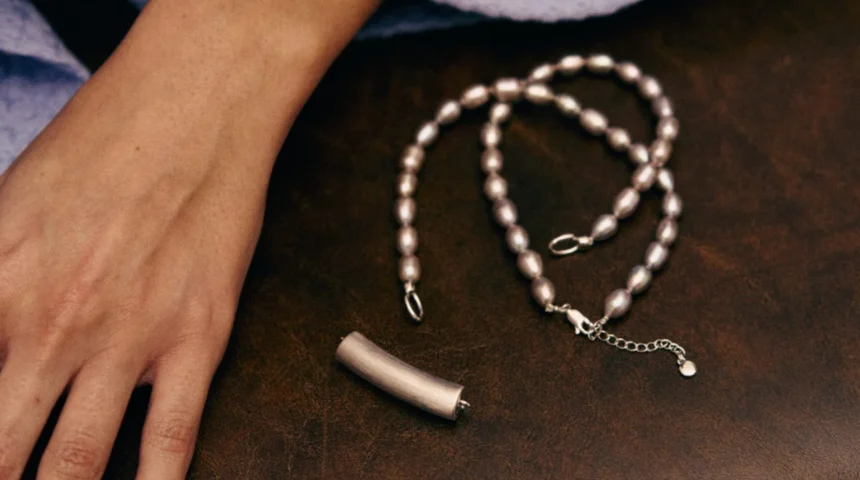
The startup’s flagship device takes the form of a delicate pendant that can also be conveniently worn as a bracelet. Weighing in at a mere eight grams, the hardware is engineered for effortless, all-day wearability without causing physical fatigue or drawing unwarranted attention. Furthermore, the device boasts a robust battery life capable of lasting up to three days on a single electrical charge. Looking ahead over the longer term, Nirva aims to expand its hardware portfolio by releasing additional wearable devices tailored to different personal styles and use cases.
During a detailed discussion with TechCrunch, Nirva CEO Wei Lyu explained that the company’s primary motivation was to engineer a wearable that harmonizes seamlessly with contemporary fashion while delivering tangible, meaningful value to the end user.

"This is a piece of jewelry that only focuses on listening to your own speech," Lyu noted during the conversation. "We are not like a voice recorder or like a meeting note taker. One key difference between us, Taya, Vocci, or Sandbar Ring is that we’re always passively listening to your own speech. So it’s always on. It keeps modeling the user and modeling your mind."
In the broader discourse surrounding ambient computing and always-on hardware, privacy remains a central concern. Consumers are increasingly wary of continuous recording, a fear that has been exacerbated by products like the Ray-Ban Meta smart glasses, which have occasionally fostered anxiety among bystanders who worry they are being inadvertently captured on camera or audio.
Nirva addresses this critical privacy hurdle through a specialized onboarding process and targeted audio filtering. During the initial setup, users are required to record several distinct snippets of their own voice, allowing the device’s underlying machine learning models to construct a unique acoustic fingerprint of the wearer. During active, day-to-day use, the device intelligently filters out background conversations, ambient noise, and dialogue captured from other individuals in the immediate vicinity. Consequently, the hardware exclusively processes the speech of the wearer.
In addition to this speaker-isolation technique, Nirva maintains a strict data policy: by default, the company does not retain any raw audio data or permanent transcripts once the conversational processing phase is complete.
Rather than positioning itself strictly as a workplace productivity tool, Nirva is marketing its technology as a personal insights company. However, the accompanying mobile application does feature functional utility, displaying contextual reminders, actionable items, and practical ways for users to follow through on them. Lyu explained that through the application interface, the startup ultimately seeks to help users show up more thoughtfully and effectively for other people in their lives.
"I think there’s no universal way to help everyone to solve their problems," Lyu said. "We are building a tool to help people to improve their self-understanding, self-compassion, and self-awareness."

The companion smartphone application parses the user’s speech patterns and translates them into psychological insights inferred to reflect aspects of the user’s personality. This includes identifying behavioral patterns, recognizing the individuals who tend to be physically present around the user, mapping the geographical places they frequent, and logging other daily reflections. Lyu emphasized that the app surfaces nuanced insights regarding a user’s emotional states, their distinct communication style, and actionable pathways for personal improvement.
Offering a concrete illustration of how the technology operates in everyday life, Lyu shared a personal anecdote about an incident when she forgot to express gratitude to her mother. The app subsequently recognized the conversational gap and gently nudged her with a helpful reminder to address the oversight.
The company also highlighted that during the brief window before audio data is permanently discarded, the system tracks specific vocal characteristics such as tone, pitch, volume, and speech speed. These acoustic metrics prove essential for deriving emotion-related understandings, which are then synthesized and presented clearly within the app interface.
Nirva is scheduled to begin accepting commercial orders for its wearable devices in November, with commercial shipments slated to reach early adopters by the end of the year. The device will carry a retail price of $249 and will be offered in four distinct color finishes: silver, brushed silver, black, and gold.
The young startup enters a competitive and rapidly evolving marketplace for artificial intelligence hardware. It faces various contenders in the AI wearables space, including Taya—a venture founded by former Apple employees that is similarly developing intelligent jewelry centered around voice capture—as well as other companion gadgets like Friend and Bee, all vying for consumer attention in the burgeoning ambient computing era.

Related News