Beyond the Hashrate: How Optimized Uptime Is Redefining Profitability in Bitcoin Mining
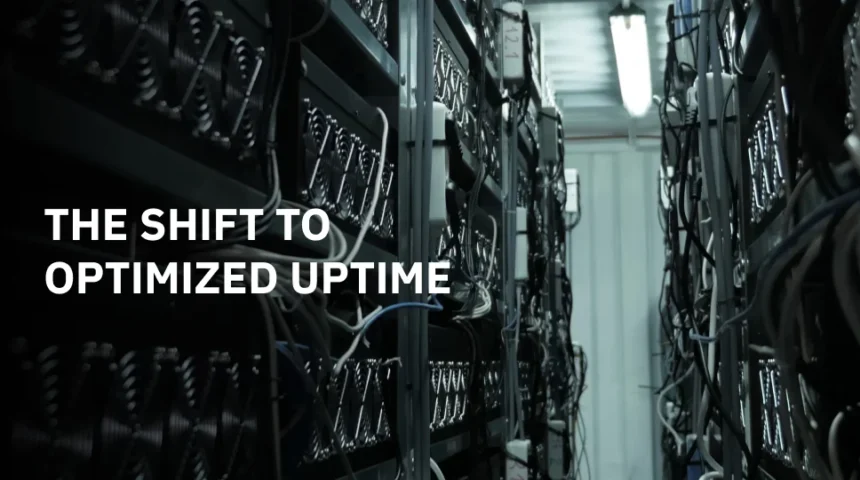
In the intensely competitive global landscape of Bitcoin mining, profitability is rarely determined by grand strokes or sheer luck; instead, it is a game of razor-thin margins. For years, the prevailing obsession across the industry has been total hashrate. Miners and facility operators alike have poured capital into acquiring the latest generation of application-specific integrated circuit (ASIC) hardware, scaling up infrastructure, and pushing electrical transformers to their absolute limits in pursuit of raw computational power. Yet, behind the headline-grabbing metrics of exahashes per second lies a silent, often overlooked metric that dictates whether that massive hashrate actually converts into bottom-line revenue: uptime.
At its core, industrial-scale Bitcoin mining is a relatively straightforward business model. It is the industrial process of converting electricity and time into cryptographic hashes, which in turn yield block rewards and transaction fees. However, as operational scales have grown, industry veterans have come to realize that uptime is rarely a simple, binary metric. A mining rig might appear to be fully online from a distance, humming away in a container while producing zero hashes due to a silent firmware crash, an unhandled mining pool connection error, or aggressive thermal throttling. This stark reality has made distinguishing between simple connectivity uptime and true hashing uptime a critical priority for modern operators.
The gap between a machine being connected to a network and a machine actively solving blocks reveals the true health of a mining operation. When analyzed correctly, this delta can highlight lost revenue stemming from technical glitches, firmware instabilities, and cooling failures. Conversely, it can also confirm that a mining fleet is successfully participating in modern demand response programs by curtailing operations precisely when local energy grids are under stress and it makes more financial sense to stay dark. Ultimately, managing and understanding that gap has emerged as the primary operational challenge for modern mining optimization. As the Bitcoin mining industry integrates more deeply with regional energy grids and faces increasingly harsh environmental challenges across various geographies, the definition of success is shifting away from raw, relentless runtime toward a more nuanced concept: optimized uptime.
The Strategic Balance: Why More Uptime Isn’t Always Better
Historically, the overarching goal for any Bitcoin miner was uncomplicated and absolute: keep the machines running twenty-four hours a day, seven days a week, without exception. The logic was simple—if the chips are not hashing, they are not earning. Today, however, sophisticated operations view downtime not as a catastrophic failure, but as a strategic tool. Modern mining profitability is an intricate mathematical function governed by three moving variables: miner efficiency measured in joules per terahash, the prevailing hashprice, and local energy prices. When regional energy costs spike unpredictably, maintaining maximum uptime can instantly turn a profitable facility into a bleeding asset. Under these market conditions, it may be far more economical to pause operations temporarily and buy power back or avoid high spot-market tariffs entirely.

This realization has fundamentally transformed how operators manage their fleets, giving rise to advanced operational methodologies that balance continuous production with macroeconomic reality. Chief among these innovations is the shift toward managing thermal and electrical limits dynamically rather than reactively. Traditionally, when a mining rig began to overheat due to extreme ambient temperatures or cooling system degradation, it relied on a blunt, hard shutdown mechanism to protect the delicate silicon hashboards from permanent thermal damage. While this prevented catastrophic hardware failure, it came at a steep cost, resulting in total production loss for the duration of the thermal event.
To combat this inefficiency without sacrificing 100% of production capacity during heatwaves, Braiins introduced Dynamic Performance Scaling in June 2020. Instead of forcing a complete, abrupt shutdown when internal temperatures rise past safe thresholds, DPS iteratively downclocks the miner, reducing its power draw and heat output until it reaches a stable, safe operating temperature. Once environmental conditions improve and ambient temperatures drop, the system automatically scales the performance back up. This ensures that the facility continues mining, even if temporarily operating at a lower capacity, rather than suffering complete downtime and zero revenue generation. This pioneering feature proved so effective that it has since become an industry standard, emulated by numerous other firmware providers across the global mining ecosystem.
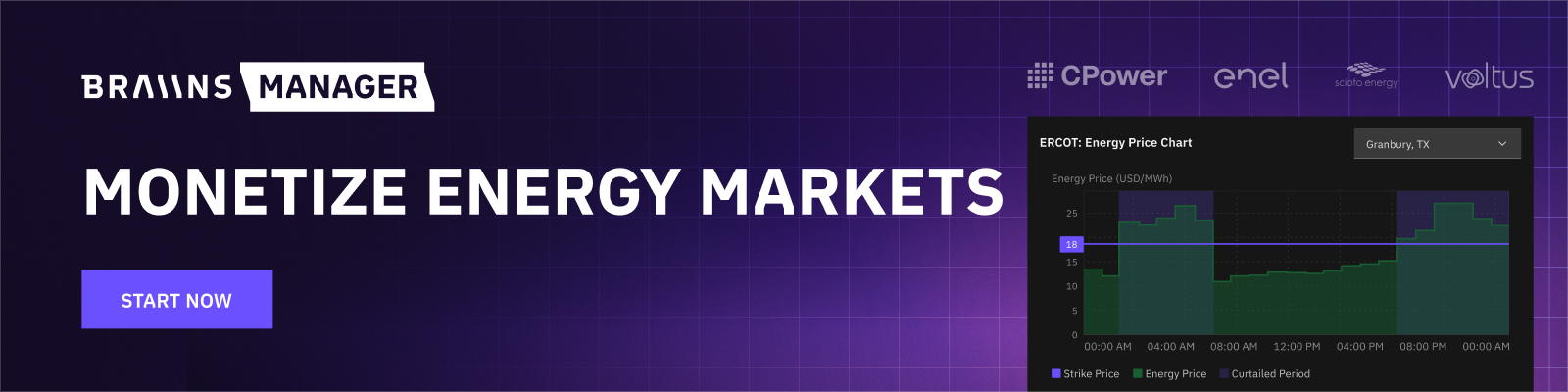
While device-level innovations like DPS handle micro-environmental challenges on the mining floor, modern operations require macro-level solutions to navigate volatile power markets. To address these industry-wide challenges at a global operational level, tools like Braiins Manager provide the necessary energy intelligence. To remain competitive and profitable in today’s mature market, modern miners cannot afford to operate in an informational vacuum; they must actively participate in energy markets, aligning their computational output with grid demands and price fluctuations in real time.
Visualizing Uptime Metrics in Braiins Manager
To help industrial miners navigate this complex operational landscape, advanced management platforms like Braiins Manager provide high-granularity uptime tracking. These metrics are built to be filter-aware, allowing operators to analyze performance data by specific geographical locations, energy providers, or custom worker groups. By breaking down system health into distinct categories, facility managers can pinpoint exact points of failure or inefficiency across thousands of individual machines.
The platform calculates two vital layers of operational health that separate basic network connectivity from actual hashing productivity. The first layer focuses on worker system uptime at the connectivity level. This fundamental metric measures basic network reachability, answering the straightforward question of whether a given miner is accessible by the local network and communicating with management infrastructure.
The second, more revealing layer focuses on worker hashing uptime at the hashing level. This is the classic uptime metric that the industry has relied on for years, answering the critical question of whether the machine is actually doing the computational work it was deployed to do. By continuously monitoring both layers simultaneously, operators can instantly spot instances where a machine is powered on and reachable on the network, yet failing to produce hashes due to software errors, pool disconnects, or hardware degradation.
Take Control of Your Fleet
Whether facility managers are successfully mitigating thermal limits through dynamic performance scaling or navigating volatile regional energy markets with advanced energy intelligence features, modern management platforms provide the analytical depth needed to evaluate hardware utilization accurately. Having clear visibility into how effectively physical assets are being utilized is only half the battle; operators also require advanced management tools to act on those insights in real time. These granular metrics have become fundamental for understanding overall system health and ensuring that an industrial-scale operation remains resilient and profitable across any market condition, regardless of how wild hashprice fluctuations or energy tariffs might become.
Operators looking to stay ahead of the curve frequently connect with the broader mining community to share uptime optimization strategies, discuss how different facilities are successfully navigating complex energy markets, and keep abreast of emerging software features. The conversation continues within specialized practitioner networks, including the official Braiins Manager Telegram community, where miners gather to exchange insights and technical expertise.

Related News