Industrial Bitcoin Mining Firmware Optimization: How GDA and Braiins Unlocked a 40% Performance Boost Under Peak Summer Heat
In the high-stakes world of industrial-scale cryptocurrency mining, operators constantly face a grueling economic and engineering balancing act: how to maximize performance from deployed capital without accelerating hardware degradation. For large-scale operations managing tens or hundreds of megawatts across global jurisdictions, this challenge is magnified during the grueling summer months when peak ambient temperatures threaten to fry application-specific integrated circuit (ASIC) chips.
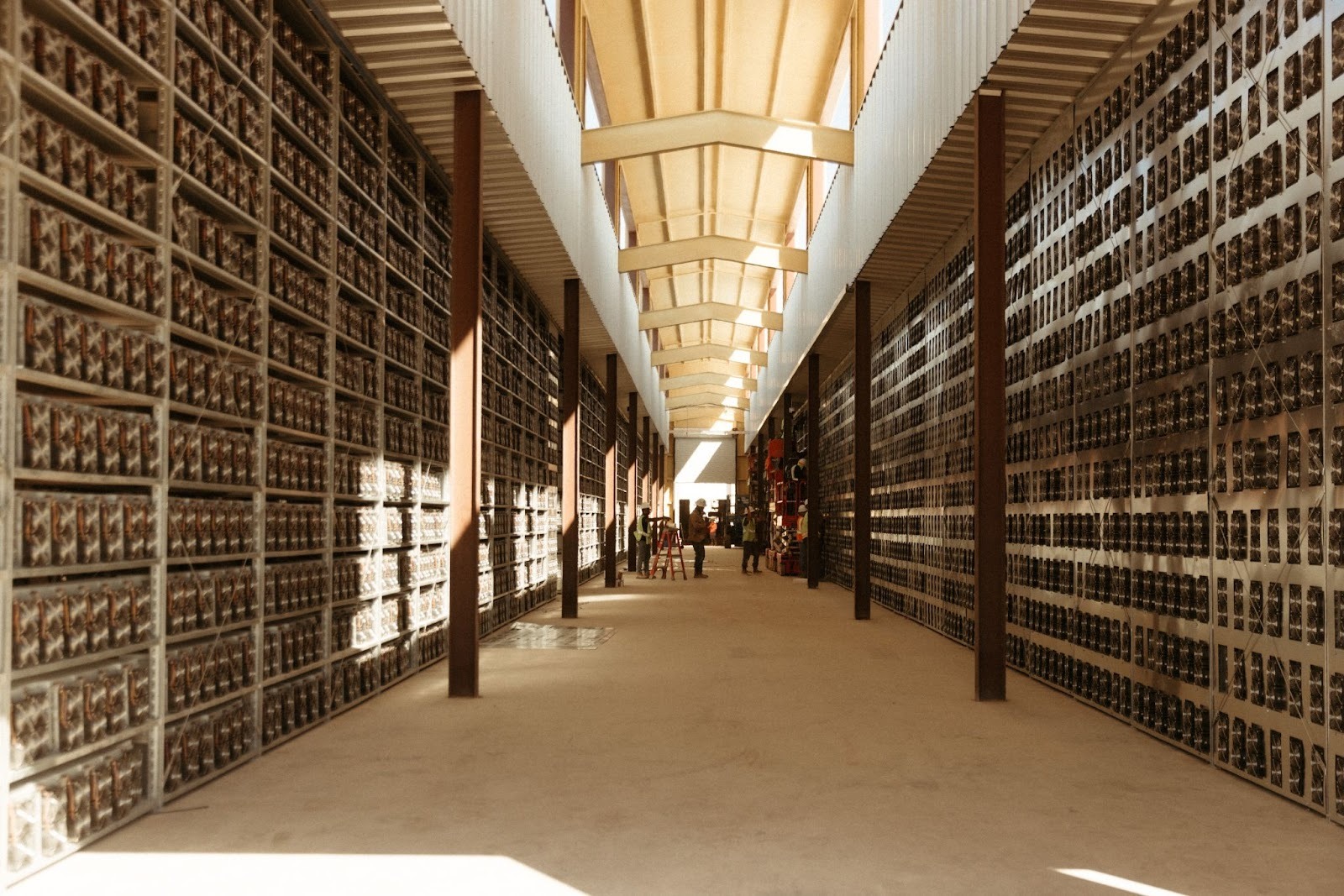
A comprehensive new case study released by Braiins, a pioneer in bitcoin mining software, illustrates what industrial-scale optimization looks like in practice. The report details a rigorous, real-world comparison conducted by global mining giant GDA across a 40MW deployment during the peak heat of summer 2024. By replacing stock firmware with Braiins OS, the GDA team managed to achieve a staggering 40% performance delta on identical hardware, unlocking the equivalent of 16MW of additional effective capacity through software optimization alone, without expanding physical infrastructure or purchasing new machines.
Executive Summary and the Core Mining Dilemma
Braiins has historically focused its engineering efforts on helping mining operations extract more performance from the capital they have already deployed. Rather than relying on laboratory theories, this latest case study examines large-scale bitcoin mining firmware optimization under actual, punishing operating conditions.
During the summer of 2024, GDA’s 40MW deployment was subjected to severe ambient temperatures, bringing a familiar industry-wide tradeoff to the forefront. Facility operators were forced to choose between maximizing short-term hashrate—which often invites accelerated hardware degradation and catastrophic thermal failure—or operating conservatively to protect expensive equipment at the direct cost of reduced daily mining revenue.

Stock firmware packages typically rely on aggressive, uniform performance profiles. Under sustained heat conditions, this one-size-fits-all approach leads to volatile hashrate behavior and repeated thermal cycling, which places immense structural stress on the silicon over time. Braiins OS was engineered to combat this exact vulnerability by utilizing Dynamic Performance Scaling (DPS). Instead of enforcing hard, binary throttling steps when temperatures rise, DPS adjusts performance in small, continuous increments as thermal headroom fluctuates. To determine whether these software innovations could truly improve both performance and stability at full facility scale, GDA initiated a controlled comparison.
Philip Salter, Chief Technology Officer at GDA, emphasized the rigor behind the evaluation. Operating over 500MW of capacity globally, the company treats performance testing with utmost seriousness. According to Salter, GDA values its working relationship with Braiins precisely because the software developer brings genuine technical rigor to mining software optimization.
Controlled Mining Firmware Comparison Under Identical Conditions
To ensure absolute scientific fairness, GDA structured a controlled test by dividing a portion of its mining fleet within the same 40MW deployment into distinct groups. All machines in the test operated on identical hardware specifications under identical ambient conditions within the same facility. The evaluation ran from late August through early September, capturing the height of the summer heatwave, with the firmware configuration serving as the sole variable introduced into the environment.
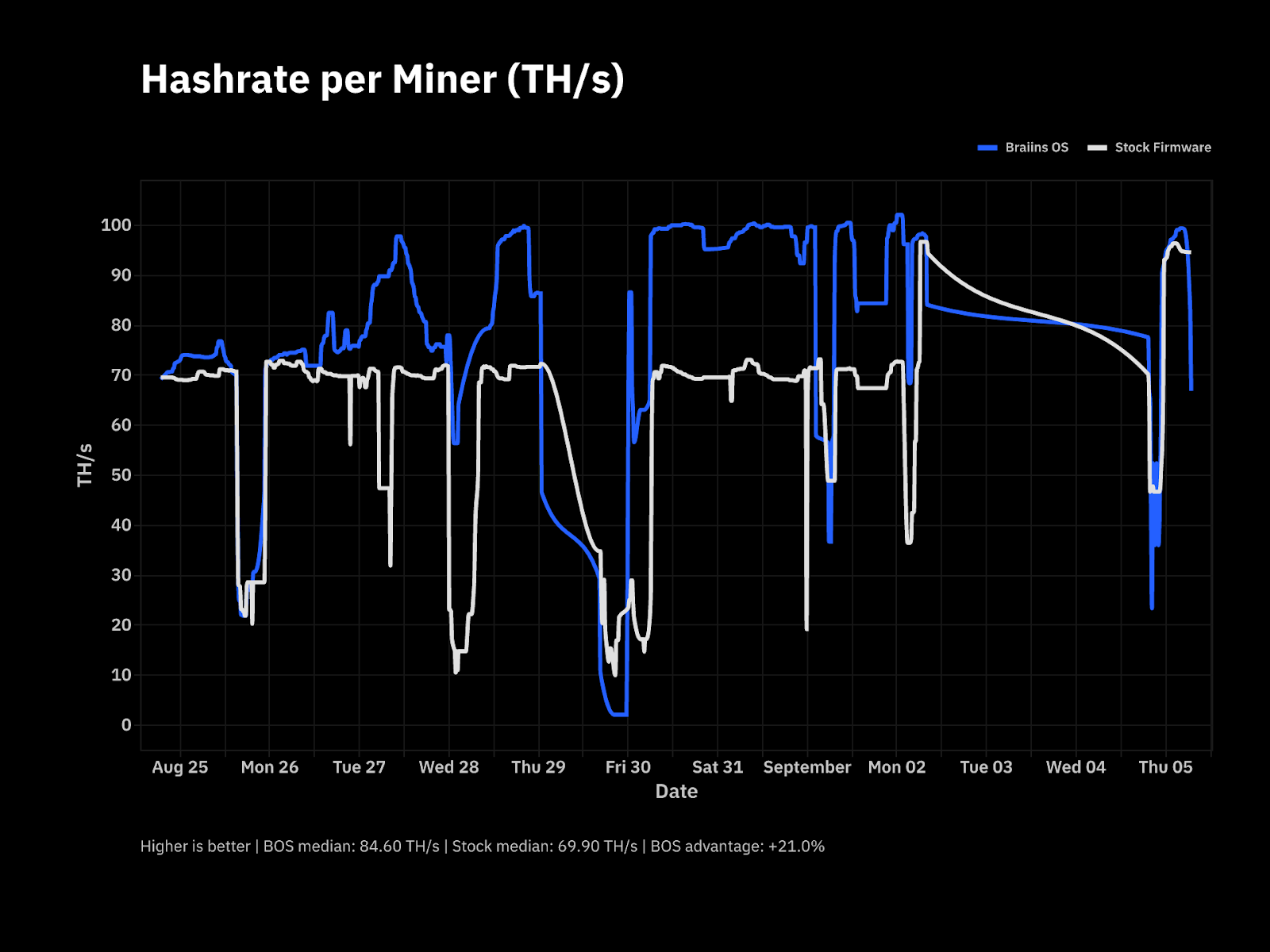
The operational differences became apparent almost immediately. While stock firmware configurations plateaued near 70 TH/s per miner throughout the evaluation window, Braiins OS immediately ramped output to approximately 84 TH/s during its initial tuning phase. Once the system’s automated chip profiling completed, output stabilized significantly higher, ranging between 97 and 98 TH/s.
During the most intense peak period of the test from August 30 to September 1, Braiins OS maintained an average of 97.1 TH/s per miner. In stark contrast, the machines running stock firmware averaged just 69.6 TH/s. This represented a consistent 40% performance delta across identical hardware setups. Temperature limits and fan parameters were applied uniformly across all groups to maintain a level playing field, confirming that the performance gap was driven entirely by firmware-level optimization and per-chip voltage and frequency tuning rather than external environmental factors.
Salter noted that the results conclusively confirmed that Braiins OS optimization alone materially improved performance under sustained heat, without requiring any physical modifications to the underlying hardware.
Thermal Management Behavior and Per-Chip Auto-Tuning
The core engineering differentiator between stock firmware and advanced custom firmware lies in how individual hardware components are managed under load. Stock firmware applies uniform voltage and frequency settings blindly across every chip on a hash board. When ambient temperatures rise or dust accumulates, this blunt-force approach causes widespread performance volatility and forces the miner into aggressive low-power throttling modes.
This dynamic creates severe thermal cycling. Every temperature spike and subsequent throttle event induces physical stress on the silicon, degrading long-term stability and causing stock firmware to lose efficiency much faster as chips heat up.
Braiins OS approaches thermal management through sophisticated per-chip auto-tuning. Rather than applying a blanket configuration, the software profiles individual ASIC chips, tailoring voltage and frequency parameters to each specific piece of silicon. Stronger chips are permitted to operate at higher capacities, while weaker chips are kept securely within stable thermal limits. This granular control allows the miner to deliver a much steadier hashrate while strictly adhering to safety temperature boundaries.
To validate these findings under laboratory controls, Braiins previously subjected its firmware to rigorous testing supervised by TÜV in a German laboratory, further substantiating how per-chip optimization yields superior performance at any given power limit.
Performance Analysis at Comparable Thermal Conditions
A critical question raised by industry engineers during the evaluation was whether Braiins OS achieved its higher hashrate simply by pushing the hardware to run at dangerously elevated temperatures.
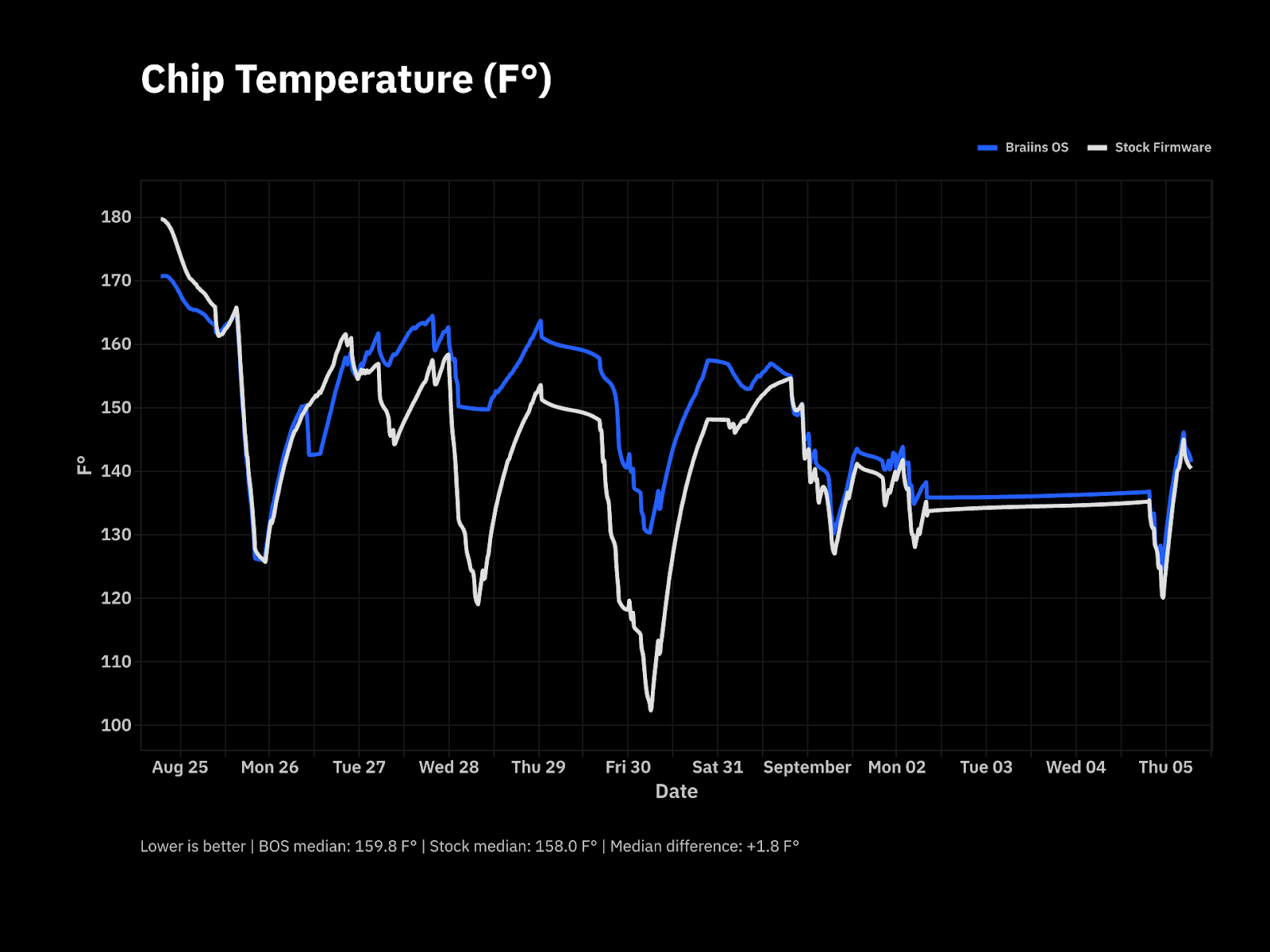
Data gathered during the GDA deployment definitively disproved this hypothesis. Throughout the test, both firmware configurations operated at nearly identical average chip temperatures. The stock firmware averaged 156°F (69°C), while Braiins OS averaged 159°F (71°C)—a negligible variance of approximately 2°F (1°C). Despite this minimal thermal difference, the hashrate delta between the two configurations hovered persistently around 32% during the peak comparison window, and reached up to 40% overall.
This evidence confirmed that the performance gains were the direct result of intelligent software optimization rather than running hardware outside of safe, normal thermal limits. By dynamically matching voltage and frequency to the unique characteristics of each individual chip, the firmware extracted maximum productivity from the thermal headroom available.
Consistent Hashrate Stability in Extreme Environments
Achieving a high average hashrate is only economically viable if that output can be maintained predictably over time. Operational interruptions and wild hashrate swings disrupt revenue forecasting and strain power management systems.
The GDA deployment data highlighted a dramatic difference in operational consistency. Braiins OS operated above 80 TH/s per miner 88% of the time. Conversely, the stock firmware managed to exceed that threshold during only 2% of the evaluation period. To put the stability gap into perspective, the 90th percentile output for stock firmware peaked at 72.5 TH/s, while the 10th percentile output for Braiins OS sat at 79.0 TH/s. This meant that the absolute lowest performance levels recorded under Braiins OS were still comfortably higher than the best sustained output levels achieved by the stock firmware.
By utilizing Dynamic Performance Scaling to adjust power incrementally instead of resorting to binary, disruptive throttling, Braiins OS ensured predictable, sustained hashrate under punishing environmental conditions. Salter pointed out that Braiins OS maintains significantly better performance than stock firmware even when both systems are downclocked, a capability that makes a tangible financial difference during the hottest hours of the day.
Unlocking Hidden Capacity Without Capital Expenditure
Expanding a bitcoin mining operation by 16MW of effective capacity typically demands immense financial and logistical commitments. It requires acquiring new land, constructing substations, securing complex power contracts, building advanced cooling infrastructure, and importing thousands of brand-new ASICs—a process spanning many months and substantial capital expenditure.
Through this large-scale deployment, GDA demonstrated that sophisticated firmware optimization can fundamentally alter this equation. At its 40MW site, GDA achieved the equivalent of 16MW of additional effective capacity entirely through software upgrades, avoiding infrastructure expansion and additional capital outlays while squeezing maximum efficiency out of its existing asset base.
As mining operations continue to navigate tightening margins and harsh operating environments, the deployment of advanced custom firmware equipped with dynamic scaling and per-chip tuning has transitioned from a niche luxury to a core pillar of industrial mining strategy. Concluding the evaluation, Salter reiterated that custom ASIC firmware solutions remain vital tools for maximizing performance optimization in challenging real-world climates.

Related News