The Illusion of the Bridge: How Fossil Gas and US Exports Threaten Mexico and Central America’s Energy Transition
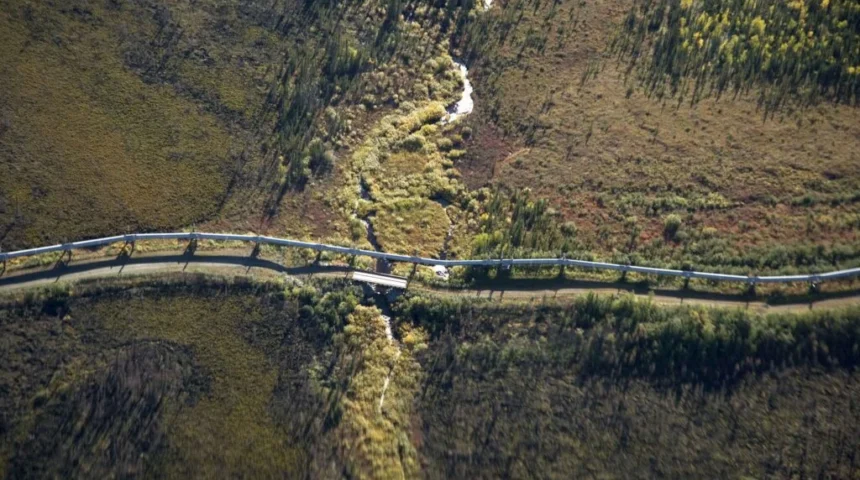
In recent years, natural gas—increasingly rebranded by the energy industry as "fossil gas"—has gained prominent footing across Mexico and Central America under the banner of a supposed "transition fuel." Proponents of this narrative argue that natural gas can serve as a temporary, cleaner replacement for more polluting fossil fuels like coal and oil, thereby facilitating a gradual, manageable shift toward fully renewable energy systems. Yet, this framing is facing increasingly sharp challenges from environmental organizations, energy analysts, and affected local communities. Critics argue that the rapid expansion of gas infrastructure does not lead to a green future; instead, it establishes a deeply entrenched geopolitical and environmental dependency, tying the region tighter than ever to the United States. As the US consolidates its position as the world’s largest exporter of liquefied natural gas (LNG), its widening influence over regional energy systems is reshaping national strategies and compounding local vulnerabilities, writes Marco Pernavarre.
Advocates of natural gas frequently emphasize that its combustion yields lower carbon dioxide emissions compared to traditional coal and oil. Several prominent energy studies highlight that gas-fired electricity can help reduce short-term emissions while supporting electrical grid stability as the penetration of variable renewable sources, such as wind and solar, increases over time. Governments in nations like Mexico and Panama have routinely leaned on these technical arguments to justify the authorization and construction of new cross-border pipelines, LNG export and import terminals, and gas-fired power plants. Notably, Mexico accounts for nearly 30 percent of total US natural gas exports, while Panama serves as a strategic maritime corridor between oceans for global energy trade.
However, critical environmental and economic analyses warn that natural gas remains a fundamentally non-renewable and climate-altering fossil fuel whose extensive infrastructure locks importing nations into decades of future consumption. Furthermore, pervasive methane leaks occurring throughout the entire gas supply chain severely undermine any claims of long-term climate benefits. Because methane possesses a global warming potential significantly higher than carbon dioxide over a short-term horizon, these fugitive emissions neutralize the purported environmental advantages of gas over coal.
Mexico and Central America: A (Near) Future with Multiple Threats
In Mexico, policymakers across successive administrations have described natural gas as an indispensable bridge toward a modernized, cleaner energy architecture. Yet, the nation’s structural dependence on US gas imports has expanded sharply over the past decade, driven heavily by the proliferation of cross-border pipeline networks. Today, more than 70 percent of Mexico’s domestic gas supply originates from the United States, creating a profound structural vulnerability. This high level of reliance exposes the Mexican economy to sudden price volatility, shifting foreign political decisions, and even the pressures of criminal influence from drug cartels seeking territorial control over vital infrastructure corridors.
Simultaneously, the state-owned oil and gas giant, Petróleos Mexicanos (PEMEX), remains central to Mexico’s continued bet on fossil gas. PEMEX still controls substantial portions of upstream production, midstream infrastructure, and domestic supply contracts. The company’s sprawling network of pipelines, field projects, and fiscal contributions heavily shape national energy planning. Rather than pivoting toward a distributive, community-led clean energy transition, the state continues to lean on PEMEX to boost gas output and substitute for costly imports, effectively prioritizing a traditional extractivist business model. Additionally, the development of new LNG import terminals along the Pacific coast has drawn intense fire from conservationists. Critics argue these projects divert critical financial investments away from a genuine energy transition while posing severe threats to delicate marine ecosystems, epitomizing the concept of a false climate solution.
As a complex and fractured region, Central America faces its own formidable hurdles in pursuing a sustainable energy transition. The region’s power systems are largely fragmented and aging, while persistent grid and transmission bottlenecks severely limit the successful integration of variable renewable resources. Furthermore, uneven policy frameworks, limited domestic financing, and constrained institutional capacities make large-scale project deployment and cross-border energy coordination exceptionally difficult.
While Costa Rica has pursued a more consistent roadmap toward national decarbonisation despite a turbulent political landscape, the rest of Central America remains severely obstructed by structural violence, political instability, and high levels of corruption. Driven by urgent energy demands, nations such as El Salvador and Nicaragua have explored and established LNG import operations as a practical means to diversify their energy matrices and reduce heavy reliance on diesel fuel within industry and transportation.
However, by embracing these technologies, these nations risk subordinating their long-term energy security to foreign suppliers and multinational gas conglomerates. This growing energy dependence is especially problematic given Central America’s limited fiscal capacity to absorb future global price shocks or to successfully renegotiate long-term gas contracts operating within the context of fragile democratic institutions.
The Usual Dilemma: Impacts of the "Energy Transition" Under Economic Schemes
The persistent notion that fossil gas functions as a clean or sustainable option is increasingly discredited within contemporary scientific literature. Environmental health studies demonstrate that the combustion of natural gas continues to release nitrogen oxides and fine particulate matter into the atmosphere, directly contributing to rising rates of respiratory and cardiovascular diseases among nearby populations. Furthermore, extensive infrastructure such as pipelines, compression stations, and storage facilities poses ongoing leak risks and safety hazards that directly impact local communities. In both Mexico and proposed sites across Central America, planned LNG terminals located near coastal and densely populated zones raise severe concerns regarding environmental degradation, heavy air pollution, and potential long-term harm to local, tourism-dependent economies.
Beyond immediate local health repercussions, natural gas infrastructure generates what experts term "carbon lock-in," a phenomenon that systematically delays the broader adoption of true renewable energy sources. Economic analyses warn that once capital-intensive gas pipelines and combined-cycle power plants are constructed, governments and international investors face powerful financial incentives to maintain their operations for decades to come, thereby sidelining competing wind, solar, and geothermal alternatives.
In Mexico, the consistent prioritization of gas-fired power plants by the Federal Electricity Commission (CFE) has directly constrained the expansion of domestic renewable projects, despite the country’s world-class potential in solar and wind power. Similar troubling patterns are visible across Central America, where ambitious regional renewable agendas risk being completely undermined by short-term political enthusiasm for imported LNG.
From a broader ecological perspective, the impacts of gas extraction and transportation extend far beyond the point of final combustion. Methane leakage across US shale fields—where the vast majority of exported gas destined for Latin America originates—contributes substantially to accelerating global climate change. As Mexico and Central America continue to import this fuel, they indirectly sustain severe environmental degradation throughout North American extraction zones. Furthermore, the energy-intensive processes required for LNG liquefaction, transoceanic shipping, and regasification emit considerable volumes of greenhouse gases, meaning the apparent cleanliness of gas rapidly diminishes once full life-cycle emissions are factored into the equation.
There are also profound concerns regarding biodiversity loss and escalating socio-environmental conflicts. The coastal zones, mangrove forests, and marine habitats typically designated for large-scale gas infrastructure are ecologically fragile environments that often serve as home to vulnerable populations. Indigenous and Afro-descendant communities, who have historically faced marginalization within their own ancestral territories, warn that new fossil gas projects replicate patterns of exclusion, a persistent lack of prior consultation, and systematic land dispossession, directly undermining the core principles of a just energy transition.
Ultimately, the deepening reliance on US fossil gas threatens to reproduce historical dynamics reminiscent of past energy dependencies in Latin America, where nations relied heavily on foreign oil companies or externally controlled supply chains, significantly slowing down any real opportunity for a sovereign energy transition. A transition heavily anchored in fossil gas risks delaying the vital shift toward decentralized renewable systems that could otherwise empower local communities and enhance genuine energy sovereignty. Scholars and civil society organizations are increasingly calling for a comprehensive re-evaluation of regional energy policies to prevent the repetition of old extractivist models under the guise of cleaner fossil fuels.
A genuinely sustainable and just energy transition for Mexico and Central America must therefore prioritize the rapid deployment of renewable energy, community-centered governance, and the gradual dismantling—rather than the reinforcement—of regional fossil fuel infrastructure. Without a decisive and courageous shift in policy, the region risks locking itself into a precarious new era of US-controlled energy dependence at the exact historical moment when national autonomy and ecological resilience are most urgently required.
The views and opinions expressed in this article do not necessarily reflect those of the Heinrich-Böll-Stiftung European Union | Global Dialogue.

Related News