Canva Enters the Image Generation Arena with "Canva Craft" to Rival Tech Giants
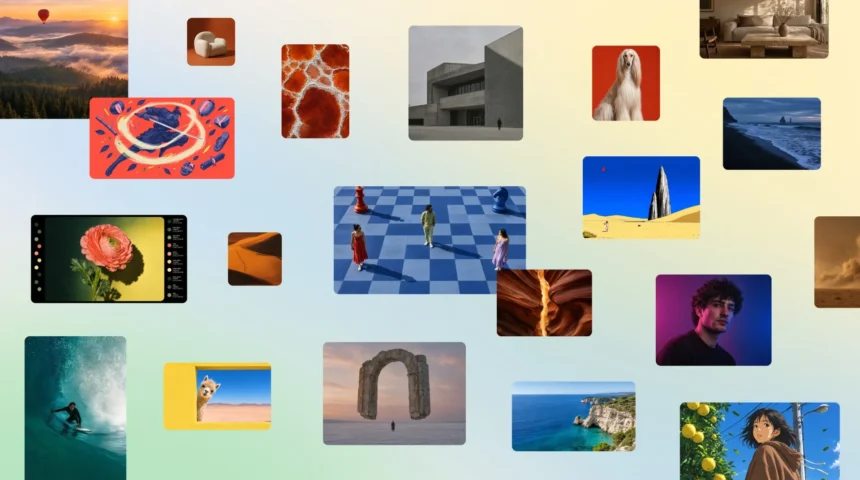
Design platform Canva has officially entered the highly competitive generative artificial intelligence image market with the release of its first in-house image generation model, named Canva Craft. Developed entirely by the company’s dedicated research team, the new model is designed to go head-to-head with established category competitors from tech heavyweights including Google, OpenAI, ByteDance, and Meta.
The launch marks a significant strategic milestone for Canva as it continues to expand its proprietary artificial intelligence ecosystem. For years, the popular graphic design platform has integrated a wide array of third-party and external image models to power its generation features. By introducing Canva Craft, the company is not only reducing its reliance on outside technology and cutting down on API costs, but it is also gaining granular control over both the visual quality and the operational speed of its creative tools.
According to the company, Canva Craft operates through a unique, two-stage generation process designed to overcome some of the common flaws found in standard text-to-image systems. In the first stage, the model deeply interprets user prompts and formulates a comprehensive internal blueprint. This plan meticulously details critical design parameters such as the spatial relationships between various elements, relative scale, visual hierarchy, and the specific structural information required for accurate text generation.
During the second stage, the model renders the final image at up to 2K resolution, supporting a versatile array of up to 30 different aspect ratios tailored for various digital and print platforms. Canva explains that this deliberate, structured approach enables the model to produce images featuring highly accurate object details and remarkably legible text—an area where many traditional AI image generators have historically struggled. Furthermore, this architectural design allows users to make precise, targeted edits to specific parts of an image without inadvertently altering or disrupting the surrounding visual components.
Unlike many contemporary image models that are primarily trained on vast libraries of unfiltered photographs scraped from the internet, Canva Craft took a fundamentally different pedagogical route. The company noted that the model was trained using professional design principles rather than raw photography. Specifically, the training corpus consisted of human-designed templates sourced directly from Canva’s extensive library, encompassing posters, social media posts, presentations, infographics, menus, and typography-rich layouts.
This design-centric training methodology yields practical operational advantages within the platform. Images generated using Canva Craft can be seamlessly converted into fully editable, layered designs through Canva Magic, the company’s proprietary image-to-design transformer. This builds upon previous technological strides made by the platform, including the release last year of a dedicated model capable of natively understanding complex designs and structural layers.
The development of Canva Craft was also significantly bolstered by last year’s acquisition of Leonardo.ai, a specialized media generation platform that Canva brought into its corporate fold in 2024. Company representatives confirmed that research talent and technological insights from Leonardo.ai directly contributed to the creation of the new image model.
At launch, Canva Craft is accessible on the company’s platform to all users, who can locate and utilize the model directly from the Dream Lab tab. In addition to its web and desktop availability, the model is being distributed through the Canva API. The company also has broader integration plans to support image generation within prominent third-party conversational AI chatbots like ChatGPT and Gemini by leveraging Canva’s Model Context Protocol (MCP).
Looking ahead, Canva is already working on expanding the family of models. The company revealed that it is currently developing two additional, highly cost-efficient versions of the technology, named Craftfast and Craft-ultrafast, which are scheduled for release in the near future. These upcoming iterations are expected to further optimize performance and resource management for high-volume users.
The introduction of Canva Craft arrives at a time of significant financial and strategic readjustment for the Australian-headquartered tech company. Last year, Canva demonstrated immense financial momentum, tracking toward $4 billion in total revenue, bolstered in part by rising referral traffic from large language models. However, the company recently encountered economic headwinds, prompting it to cut its growth forecast for 2026. Industry analysts report that these elevated financial pressures and adjusted forecasts have temporarily impacted the private company’s market valuation, causing it to shift from an estimated $42 billion down to $35 billion as it navigates the high costs associated with scaling artificial intelligence infrastructure.

Related News