Fusion Startup Helion Scores $175 Million in Federal CHIPS Act Funding to Build Advanced U.S. Semiconductor Line
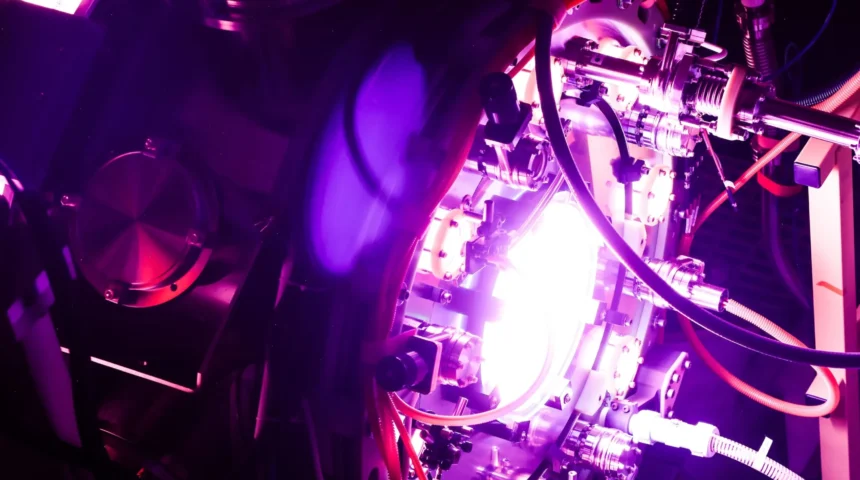
Nuclear fusion startup Helion Energy has secured $175 million in federal funding to research, develop, and manufacture advanced semiconductors and power electronics destined for its commercial fusion power plants. The company made the announcement on Thursday, marking a significant milestone in its race to commercialize fusion energy and meet a stringent 2028 deployment target.
The substantial capital infusion comes via a three-year award granted by the Department of Commerce under the CHIPS Act, the landmark legislation designed to bolster domestic research, development, and manufacturing capabilities for critical microelectronics within the United States. In tandem with the federal award, Helion also disclosed a fresh $50 million private investment from an undisclosed backer, pushing its total historical fundraising past the $3.2 billion mark. This milestone solidifies Helion’s standing as the second-best-funded fusion startup in the rapidly growing sector.
The federal grant will enable Helion to establish automated semiconductor module, packaging, and testing capacity right in Washington State, where the company is currently constructing its flagship fusion power plant, known as Orion. According to Helion co-founder and CEO David Kirtley, the forthcoming production line will represent the first facility of its kind in the United States dedicated to manufacturing a specialized class of high-voltage semiconductors. These components are essential not only for cutting-edge fusion energy systems but also for advanced manufacturing, industrial wastewater treatment, medicine, and defense applications.
"There are no U.S. manufacturers right now that do it," Kirtley said in an interview. "This is absolutely enabling going from zero to 100 for advanced, high-voltage, and pulsed semiconductors here in the United States."
Fresh Funding and Strategic Partnerships
Of the $175 million federal award, more than $100 million will be allocated directly toward semiconductor and advanced packaging research and development in Washington State. Meanwhile, approximately $80 million will support specialized R&D efforts in Vermont, focusing on advanced semiconductor tooling, design, and process development in collaboration with semiconductor foundry GlobalFoundries.
This partnership builds upon separate federal funding previously awarded to GlobalFoundries, which received more than $80 million from the U.S. government to advance the manufacturing of gallium-nitride semiconductors—a critical material widely utilized in high-performance power electronics.
Kirtley noted that while the research and development funded by this new award will not make it into the initial Orion facility in time for its scheduled launch—largely due to the lengthy negotiation timelines typical of federal contracts—the innovations promise to drastically improve the efficiency of subsequent Helion power plants. Enhancing these systems will be crucial for maintaining competitiveness in volatile and demanding commercial electricity markets.

The funding arrives as Helion races to complete the Orion power plant in Washington State to fulfill a high-profile agreement signed with Microsoft in 2023. Under that pact, Helion is committed to providing electricity from its fusion-powered grid connection to the tech giant before the close of the decade.
Efficiency is Everything
The intense focus on semiconductor technology is rooted in Helion’s unique approach to generating fusion power. Unlike traditional nuclear power plants or experimental fusion concepts that use heat from reactions to generate steam and spin heavy turbines, Helion’s technology is designed to harvest electricity directly from the fusion reactions themselves.
The startup’s proprietary reactor design relies on a configuration known as a field-reversed configuration. During operation, fusion fuel is injected into both ends of an hourglass-shaped chamber and heated until it transforms into a high-energy plasma. Powerful magnetic fields then accelerate these plasmas toward each other at extreme speeds.
When the two plasmas collide within the center of the chamber, an additional magnetic field compresses the resulting ball even further, driving temperatures up to an astonishing 100 million degrees Celsius. At such extreme temperatures and pressures, atoms within the fusion fuel begin to fuse together, releasing immense amounts of energy and violently pushing the plasma outward.
This outward expansion exerts tremendous pressure against the surrounding magnetic field. Helion’s system captures that dynamic energy directly via its magnets and capacitors, converting it instantly into usable electricity. The mechanism shares conceptual similarities with how modern hybrid electric vehicles and fully electric cars recover energy and recharge their onboard batteries by using electric motors to decelerate the vehicle.
Helion refers to this method as direct energy conversion. Company executives maintain that this streamlined approach will allow future commercial reactors to consistently produce significantly more power than they consume to operate—a fundamental threshold that any viable fusion power plant must cross to achieve long-term commercial success.
Because the process relies heavily on the rapid capture and delivery of massive electrical currents, highly efficient power electronics are indispensable.

"One of the enabling parts of our technology that allows us to do this direct electricity recovery—putting electricity into fusion and at a very high efficiency, recovering it at high speed—is the modern semiconductor," Kirtley explained. "We’re going to take that to the next level here, increase the efficiency."
Broad Industrial and Defense Applications
The impact of advancing high-voltage semiconductor technology extends far beyond the clean energy sector. Power electronics of this caliber have become foundational to the electric vehicle industry, which represents the largest commercial consumer of such devices today. Consumer electronics could also benefit over time, though their specific size constraints and power demands differ vastly from the heavy industrial scale required by fusion reactors.
Additionally, the defense industry stands to gain significantly from domestic manufacturing capabilities in advanced power electronics. Directed-energy weapons and modern defense systems have drawn renewed interest and urgency from military planners as low-cost drones increasingly swarm modern battlefields, frequently straining or overwhelming conventional air defense arsenals.
Bill Frauenhofer, who leads semiconductor investment and innovation at the Department of Commerce, noted in a recent press release that the federal award will ultimately help convert and deliver power to critical applications spanning national defense, electrical grid transmission, and advanced energy generation.
Despite the obvious alignment with defense applications and the potential for lucrative military contracts, Kirtley emphasized that Helion remains firmly committed to its primary commercial mission: supplying clean, baseload power to the civilian electrical grid.
"Domestic energy supply, national security through energy dominance, and energy security—that’s our main focus," Kirtley said.

Related News