Rights Groups Urge Zambian Authorities to Guarantee Unfettered Internet Access Ahead of 2026 General Elections
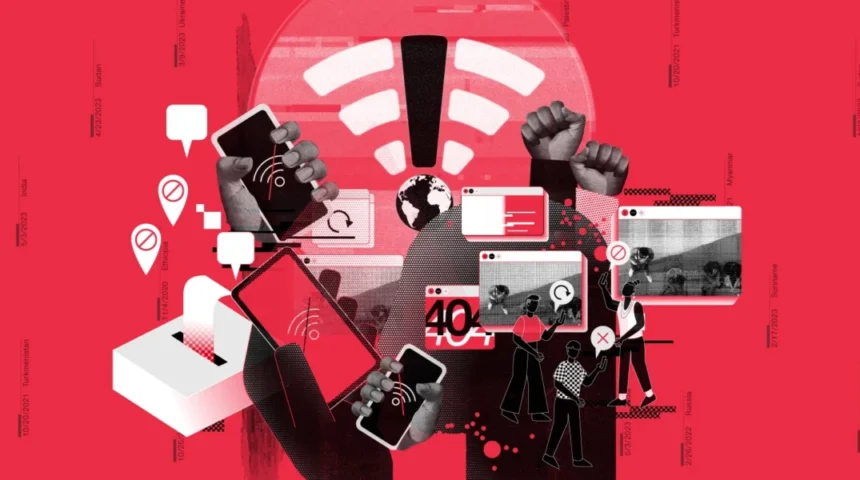
As Zambia prepares for its high-stakes general elections on August 13, 2026, a broad international coalition of digital rights advocates has issued a resounding call to action, demanding that the government guarantee uninterrupted, open, and secure internet access for all citizens. Access Now, alongside the #KeepItOn coalition—a formidable global network uniting more than 370 organizations across 106 countries—has spearheaded an open letter directed at the highest levels of the Zambian government. The coalition is pressing President Hakainde Hichilema to take definitive steps to ensure that the digital channels millions of Zambians rely on remain fully functional throughout the electoral cycle and well beyond.
The stakes for the upcoming ballot are exceptionally high, with millions of eligible voters gearing up to cast their ballots. In their urgent appeal, Access Now and the #KeepItOn coalition are calling directly on President Hichilema to issue an unequivocal directive to all pertinent state institutions and private actors. This includes the Zambia Information and Communications Technology Authority (ZICTA), the Ministry of Technology and Science, and every internet service provider (ISP) operating within the nation’s borders. The directive demands that these entities completely refrain from intentionally disrupting access to the internet, social media networks, and various digital platforms, thereby safeguarding the free flow of information during a critical juncture in the country’s democratic journey.
The campaign comes on the heels of recent assurances provided by the Zambian government. In June 2026, the Ministry of Technology and Science formally reassured the citizens of Zambia that the state has no intention of deliberately shutting down the internet during the electoral period. While Access Now and the #KeepItOn coalition have publicly welcomed this encouraging commitment from state officials, they have also made it clear that rhetoric must be matched by enforceable policy and vigilant oversight, noting that the global digital rights community will be watching closely as election day approaches.
Felicia Anthonio, the #KeepItOn Global Campaign Manager at Access Now, emphasized the gravity of the situation and the necessity of learning from past mistakes. “History must not repeat itself in Zambia,” Anthonio stated, highlighting the fundamental principles at stake. “Access to information and freedom of expression are rights that must be exercised freely. During elections, these rights play a critical role in advancing transparency and credibility. President Hichilema must publicly affirm and enforce the commitment made by the Ministry of Technology and Science assuring the people of Zambia that internet shutdowns will not be tolerated before, during, or after the elections.”
The apprehension surrounding potential communication blackouts is rooted in recent historical precedent. During the contentious general elections in 2021, Zambian authorities famously flipped the digital kill switch, imposing widespread disruptions that severely hindered access to major social media platforms, including Facebook, Twitter, and Instagram, across the entire country. Such restrictive measures were not isolated incidents limited to a single electoral cycle; similar digital disruptions and network throttling were documented by civil society organizations and researchers during the general elections in 2020 and 2016. These recurring tactics have consistently drawn sharp domestic and international condemnation, leaving a legacy of distrust between the electorate and regulatory bodies.
Digital rights defenders continually stress that the internet and social media platforms are no longer mere luxuries or secondary communication tools; rather, they are foundational infrastructure that enables citizens to effectively exercise their constitutionally protected right to freedom of expression. In the context of a modern democracy, digital connectivity ensures that voters can maintain access to vital, timely, and sometimes lifesaving information. It allows them to engage in robust public discourse, debate political platforms, and actively and meaningfully participate in democratic governance.
For the people of Zambia, enjoying these fundamental rights free from arbitrary interference or state-sponsored restriction is essential for a credible vote. An open, resilient, and secure internet contributes significantly to advancing transparency at every phase of the democratic process. Furthermore, digital platforms provide a crucial avenue for everyday citizens, independent observers, and journalists to sound the alarm in real-time, document irregularities, and hold political authorities accountable for any potential human rights abuses, censorship, or violations during the electoral period.
Local civil society leaders have echoed these sentiments, pointing out that the responsibility for maintaining an open civic space rests squarely on the shoulders of state institutions. Richard Mulonga, Chief Executive Officer at Bloggers of Zambia, underscored the legal and moral obligations binding the nation’s leaders. “Authorities in Zambia have a duty to uphold human rights online and off,” Mulonga remarked, addressing the delicate balancing act required of governance bodies. “There has to be a clear balance between dealing with online harms and upholding rights and freedoms during elections so that there is no further deterioration of human rights and shrinking of civic space.”
Mulonga further stressed that the government must move beyond verbal assurances and take concrete, measurable steps to protect the fundamental rights enshrined not only in the Constitution of Zambia but also within various regional and international human rights frameworks to which the country is a party. He also reiterated the vital necessity for state institutions to strictly adhere to the legal provisions established under the landmark 2021 consent judgment, an agreement that explicitly includes binding commitments to maintain an open and unrestricted internet during electoral periods.
As the August 13, 2026 general elections draw nearer, the global and domestic coalition of human rights defenders continues to monitor the political and technological landscape in Zambia. The open letter serves as both a reminder of the government’s previous promises and a firm warning against any backsliding into authoritarian digital interference. Stakeholders across the spectrum are watching to see whether the administration will honor its pledge to keep the digital doors open, ensuring that every Zambian citizen can cast an informed vote and make their voice heard in a transparent democratic environment.

Related News