Apple Changes How It Warns Users of Mercenary Spyware Attacks as Digital Threats Escalate
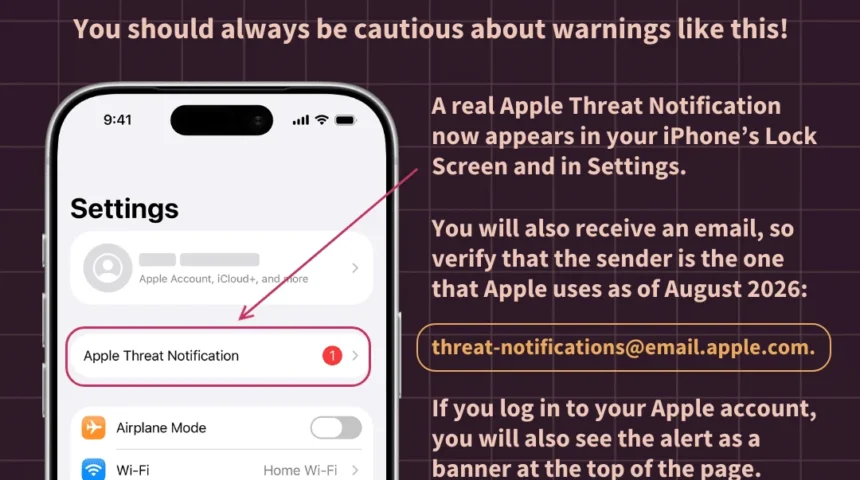
For more than two decades, tech giant Apple has issued warnings to device owners when sophisticated indicators suggested they might be targeted by state-sponsored or commercial surveillance operations. Since 2001, these alerts have been transmitted through traditional digital channels, including direct emails, iMessage alerts, and prominent notification banners within user accounts. However, as the global spyware landscape has evolved into a multi-million-dollar industry, the methods used to alert potential victims have also shifted. Apple altered its long-standing notification protocol by embedding these critical threat alerts directly onto device lock screens and within the primary system settings menu, ensuring that targeted individuals can no longer easily miss or overlook the warnings.
The urgency surrounding these notifications highlights a growing international crisis involving the commercial surveillance market. When an Apple device triggers one of these alerts, it signifies that the company’s threat-detection infrastructure has identified activity consistent with targeted mercenary spyware. This terminology refers to highly complex, expensive, and invasive commercial surveillance technology developed by private entities such as the NSO Group, Paragon, or Cytrox. These corporations routinely market their proprietary intrusion tools exclusively to government clients, intelligence agencies, and law enforcement bodies around the globe, often operating under strict secrecy and minimal regulatory oversight.
Despite the high-stakes nature of the warning, a threat notification comes with distinct limitations. The system alert does not function as an absolute confirmation that a spyware attack successfully breached the device, nor does it disclose the identity of the perpetrator, the specific state actor behind the operation, or the underlying motives driving the espionage. Recognizing that a warning has been issued is merely the first step in a complex process, and further technical analysis is universally required to paint a clearer picture of what transpired during the incident.
When users receive an authentic alert, security experts routinely compare the notification to a smoke detector or a fire alarm in a building. The alarm successfully draws attention to the imminent possibility of danger, but it cannot extinguish the fire or identify the source of the combustion. Consequently, individuals who receive a verified Apple threat notification are strongly advised to seek immediate, professional support from trusted digital security organizations capable of executing a comprehensive digital forensic investigation.
Navigating this terrain requires extreme caution. Because high-profile security alerts frequently attract malicious actors, targets must rigorously authenticate any warning they receive to avoid falling victim to secondary phishing schemes, digital scams, or sophisticated impersonation tactics. A forensic examination of a compromised device demands substantial time and specialized technical capabilities, but it remains an indispensable tool for helping targets assess the gravity of their situation and regain control over their digital infrastructure.
For members of civil society, including investigative journalists, human rights defenders, and prominent political activists who frequently find themselves in the crosshairs of state surveillance, specialized assistance is available through dedicated channels like the Digital Security Helpline operated by the non-profit advocacy organization Access Now. Acknowledging the complexity of these attacks, Apple’s official support documentation explicitly encourages notified users to enlist expert help, specifically highlighting the rapid-response emergency security assistance provided by the specialists at Access Now.
A proper digital forensic investigation serves a vital function in mitigating the aftermath of a suspected intrusion, beginning with the immediate preservation of volatile evidence. Because operating systems constantly overwrite temporary files, logs, and process histories as devices remain powered on, time is always of the essence. Security investigators work closely with affected individuals to secure system logs and artifacts while intentionally minimizing access to deeply personal data, such as private photographs, personal contacts, and confidential communications.
Once the evidence is safely preserved, investigators dive into system files, crash logs, and background process histories to search for subtle traces left behind by commercial surveillance software. If tangible indicators of compromise are discovered, analysts work to contextualize these technical findings by correlating them with real-world events and circumstances in the target’s life. This phase often involves examining dates corresponding to international travel, sensitive investigative work, confidential conversations, or unusual device behavior. However, security researchers emphasize that many of the most sophisticated mercenary spyware campaigns are engineered to operate silently, meaning the complete absence of observable anomalies or suspicious device activity does not guarantee that a device is safe.
To maintain scientific rigor, professional investigators frequently submit their anonymized technical findings to peer organizations for independent analysis. This collaborative practice helps validate the accuracy of an investigation while identifying areas that may require deeper research. Nevertheless, even the most thorough forensic examinations occasionally fail to uncover definitive evidence of an infection. A competent investigator is always mindful of their technical limitations and will rarely issue a blanket statement or an absolute guarantee of safety. Because commercial spyware evolves at a rapid pace and is purposefully designed to erase its own footprints, absolute certainty is rarely attainable in the realm of advanced digital forensics.
The limitations of automated software also extend to consumer security applications and commercial scanning tools. The market is saturated with digital products and downloadable utilities that promise to scan mobile phones and reassure users that their device is clean. In reality, these consumer-facing apps typically only verify that the device contains no signatures matching a very small, publicly known set of threat indicators. Relying on these seemingly simple solutions can easily cultivate a dangerous sense of false security, leading users to neglect the fundamental, foundational steps required to harden their devices against advanced threats.
While certain security services can be useful for flagging known malware or prompting users to install critical system updates, they suffer from inherent structural limitations. Leading mercenary spyware vendors routinely test their proprietary intrusion tools against popular consumer detection utilities before deploying them in the field, ensuring that their software remains invisible to standard commercial scanners. Furthermore, operating system security sandboxing prevents consumer apps from accessing the deep system directories where advanced surveillance tools typically lodge themselves.
Choosing to install a third-party security application also introduces distinct privacy considerations. Granting an unknown app deep authorization to examine a mobile device effectively hands the developer a comprehensive, highly detailed portrait of the user’s personal life. If the organization or company behind a security tool is not universally known and trusted, experts advise avoiding the service entirely to prevent expanding one’s digital attack surface.
Faced with an escalating frequency of sophisticated digital attacks, individuals who receive verified warnings from major technology platforms must approach recovery methodically. Beyond Apple, similar threat notification programs are maintained by major technology providers including WhatsApp, Facebook, and Google. Once the legitimacy of an alert is firmly established, users should carefully follow the specific security recommendations outlined by the platform provider.
Engaging expert technologists to perform a forensic assessment remains the most reliable path toward containing a threat and restoring device integrity. Individuals who suspect they have been targeted by unlawful cyber attacks sometimes consider reporting the incident to governmental authorities or specialized law enforcement agencies. However, due to potential conflicts of interest or legal complexities, security advocates strongly recommend consulting with a qualified attorney beforehand to determine whether engaging with authorities is safe and prudent.
Even when immediate forensic testing is unavailable, users can protect future investigative efforts by creating a complete, encrypted backup of the affected device to preserve potential digital evidence. For those seeking proactive defense against future intrusions, implementing a few straightforward security habits can significantly elevate the barrier to entry for attackers. These measures include installing software updates immediately upon release and activating high-security device configurations, such as Apple’s Lockdown Mode or Google’s Advanced Protection program on compatible hardware. Platforms like WhatsApp also offer strict privacy settings designed to limit account exposure. Additionally, users can minimize their overall attack surface by strictly separating personal and professional devices and paring down the number of active applications and accounts maintained on a single phone.
Ultimately, cybersecurity professionals stress that digital security is never a static destination that can be permanently achieved through a single setting or application, but rather an ongoing daily practice. Because every individual possesses a unique threat profile dictated by their profession, location, and public visibility, tailored assessments and continuous education remain essential components of modern digital hygiene. While system notifications and professional security tools provide critical early warnings, maintaining constant situational awareness and knowing when to reach out to trusted support networks represent the most effective defenses in an increasingly hostile digital landscape.

Related News