The Power of Nostr: Decentralized Social Media, Open Identity, and the Evolution of the Web
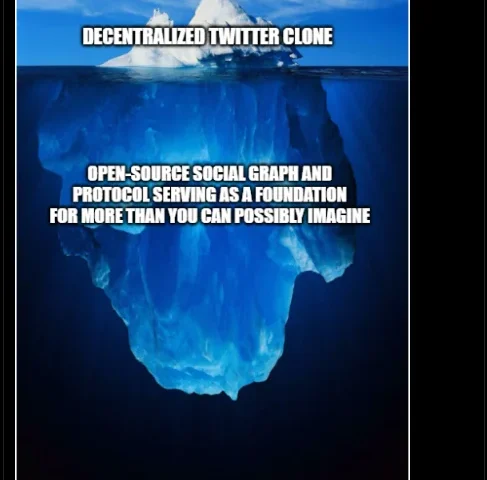
The digital landscape has long been defined by walled gardens. For years, users have built digital identities, accumulated followers, and generated content within isolated ecosystems such as Twitter, LinkedIn, Instagram, and Substack. Moving from one platform to another has traditionally meant starting entirely from scratch, leaving behind established audiences and personal publication histories. However, an open-source, public-domain communication protocol known as Nostr is emerging as a credible mechanism to introduce true interoperability across digital networks, reshaping how users think about identity, social media, and data ownership.
Standing for "Notes and Other Stuff Transmitted by Relays," Nostr provides a foundational set of simple building blocks designed to enable decentralized social media and much more. While long-term concepts for decentralized communication networks have existed in theory for years, Nostr has successfully bootstrapped a real-world experiment. It is currently being built upon by developers and utilized by everyday users globally. Rather than forcing users into separate, corporate-controlled silos, the protocol points toward a future where power is dispersed back to content creators and audiences, diminishing the centralized control of corporate intermediaries.
Even with modest adoption, Nostr serves as a powerful alternative for those seeking autonomy over their digital presence. Many active digital commentators and developers now utilize Nostr alongside mainstream platforms, finding that its integrated social graph structures enhance adjacent technologies, such as Bitcoin and Lightning network wallets. Originally highlighted in broader discussions surrounding open monetary and information networks in early 2023, development has continued at a rapid pace, clarifying the protocol’s core value propositions.

Understanding the Communication Protocol Layer
To understand how Nostr functions, it is helpful to examine how email operates at a structural level. When sending an email, users interact with a webmail client application like Gmail, Apple Mail, Outlook, or Yahoo. Underneath the interface lies a public-domain communication protocol called Simple Mail Transfer Protocol, or SMTP.
Created in 1981, SMTP is owned by no one. It acts as a shared linguistic standard enabling different webmail providers to interoperate. A user on Yahoo can message someone on Gmail, and a Gmail user can message someone on Outlook, without requiring the underlying corporations to merge their internal networks. Complexity and user interface customization are pushed to the edges of the network, leaving the core protocol robust, simple, and virtually impossible to obsolete.
Corporate webmail clients maintain centralized control over their specific user experiences, spam filtering, and service terms. They can ban users, comply with regional jurisdictional demands, or alter their interfaces. Yet, users cannot be banned from SMTP itself, much as an individual cannot be banned from speaking a spoken language, because no single entity owns the protocol.

Traditional Web 2.0 social media ecosystems—such as Facebook, Instagram, Twitter, and TikTok—do not operate like email. They function as walled gardens. A Facebook user cannot directly message a Twitter account, and departing one platform means abandoning accumulated followers and historical data.
Nostr applies the architectural philosophy of SMTP directly to social media and digital communication. Instead of relying on corporate servers that control user identity, Nostr users generate a unique public and private cryptographic key pair. The public key serves as a permanent, verifiable digital identifier, while the private key is utilized locally on user devices to sign events, verify authorship, read direct messages, and interact with the network securely.
The ecosystem itself relies on a decentralized network of application clients and independent relay servers. Users employ client applications—such as Primal, Damus, Amethyst, and Snort—to publish events, update profiles, and read content. These events are broadcast to multiple relay servers around the world for redundancy and public accessibility. Because every piece of content is cryptographically signed by the user’s private key, malicious relay servers cannot forge posts or alter published history. Users retain the freedom to switch between different clients or use multiple interfaces simultaneously while preserving their exact digital identity, follower lists, and publication history.

The Technical Sweet Spot and Content Discovery
Centralized social media companies offer efficient, streamlined experiences, but they operate as permissioned ecosystems. Central servers allow platform operators to dictate sorting algorithms, determine account bans, read private messages, and alter or remove user content. Furthermore, corporations can be legally compelled by governments to hand over user data or restrict access based on geographic and regulatory friction. Conversely, expecting every individual social media user to host their own independent server is highly impractical due to redundancy and cost.
Nostr occupies a strategic middle ground on the spectrum between complete centralization and unmanageable decentralization. By utilizing application clients and distributed relay servers, regular users enjoy the efficiency of managed applications while retaining absolute ownership of their cryptographic keys. Storing content across dozens of independent relays provides high network redundancy. If a specific relay refuses a post, the content remains accessible through alternative servers, offering a resilient alternative to previous decentralized efforts like Mastodon.
However, the protocol’s open nature also introduces initial user experience friction, particularly regarding interface speed and private key management. Users must secure their private keys offline, much like a critical password, ensuring they retain control over their accounts even if a specific client application ceases operations.

Beyond the debate over platform censorship, industry figures have increasingly emphasized the critical role of content discovery algorithms. During a discussion at the Oslo Freedom Forum, former Twitter CEO and Block co-founder Jack Dorsey argued that the primary societal debate surrounding social media centers on free agency and cognitive programming rather than traditional free speech alone. Closed algorithms act as black boxes, subtly shaping human behavior and preferences through continuous optimization for engagement.
Nostr addresses this challenge by decoupling the discovery mechanism from the communication protocol. Users are not locked into a single corporate algorithm; instead, they are given the choice to select, build, or plug in third-party algorithms and interfaces they trust. This marketplace of discovery mechanisms allows individuals to curate their digital environments freely without relinquishing personal agency to a centralized intermediary.
Social Media Tipping via Zaps and the Public Payment Directory
While Nostr is not a blockchain, it seamlessly integrates with the Bitcoin network and its Layer-2 Lightning network for instant micropayments. In addition to traditional social media engagements like likes and reposts, Nostr clients feature "zaps"—micro-tips paid in fractional bitcoin units known as sats that flow directly from a reader’s wallet to a creator’s wallet.

Zaps introduce an economic dimension to content interaction. They enable direct monetization for creators while functioning as a proof-of-work voting mechanism for readers. Because zaps carry a real, albeit fractional, financial cost, clients and algorithm developers can utilize transaction data to highlight relevant content and combat spam. These open-source transactions are fully interoperable, allowing users to connect various custodial and non-custodial wallets across borders without traditional financial friction.
This integration transforms Nostr into a powerful global public payment directory. Historically, digital payments required a bilateral process where both parties exchanged specific account details, phone numbers, or cryptographic addresses. Nostr combines a social graph with an open payment discovery layer, effectively functioning as an international, open-source equivalent to applications like Venmo.
Users can look up acquaintances, content creators, or public figures through their verified Nostr profiles and send unilateral payments with attached messages. This capability eliminates the coordination friction traditionally associated with cross-border or informal financial settlements.

To prevent impersonation and spam within this public payment directory, Nostr relies on a decentralized web of trust. Users follow authentic profiles and cross-reference identities using real-world anchor points, such as personal websites linking to public keys. This organic social validation allows participants to distinguish genuine accounts from impostors, creating a secure environment for both communication and financial transactions.
The Expansion of Open Applications and Parallel Networks
As an open communication protocol, Nostr extends far beyond microblogging and payment directories. Dozens of applications have integrated the protocol to support short-form writing, long-form publishing, Reddit-like forums, image sharing, podcasting, and digital marketplaces. Because the foundational architecture is simple, developers can quickly integrate Nostr to tap into an existing network effect, utilizing established user identities and social graphs without needing to bootstrap an audience from scratch.
The parallel growth of the Bitcoin and Nostr protocols highlights the complementary nature of decentralized money and decentralized data. Blockchains maintain a strict, globally synchronized consensus state regarding financial transactions, requiring rigorous trade-offs in complexity and data throughput to remain verifiable by everyday participants.

Communication networks and social media, however, do not require a single, universally agreed-upon global consensus state. Much like email, where individual servers do not index every message sent worldwide, Nostr operates efficiently without forcing every relay to store all historical data universally. Users and relays maintain the information relevant to their communities and interests, ensuring high flexibility and low operational costs.
Through this combination of sovereign digital identity, customizable content discovery, interoperable micro-payments, and decentralized data relays, Nostr provides a resilient foundation for the next phase of the web. As development continues across independent client applications and global relay networks, the protocol demonstrates how open standards can successfully return control of digital life to the individual.

Related News