Beating the Heat: How Bitcoin Miners Are Preparing Their Operations for Summer Thermal Challenges

As summer approaches and external temperatures begin to climb across the globe, industrial and independent Bitcoin mining operations alike are facing a familiar yet escalating operational hurdle. While Application-Specific Integrated Circuit (ASIC) miners can serve as efficient and cost-effective space heaters during the bitter cold of winter, rising ambient temperatures push traditional cooling infrastructures to their absolute limits. Industry experts emphasize that without rigorous preparation for summer conditions, mining facilities risk frequent thermal shutdowns, lower operational uptime, reduced mining efficiency, and a severely shortened hardware lifespan. Because continuous uptime directly correlates with daily profitability in the competitive world of cryptocurrency mining, adjusting facility setups and firmware configurations for hot weather is no longer a luxury—it is an absolute operational necessity.
If Heat Is Your Enemy, Uptime Is Your Edge
The economic equation governing Bitcoin mining is fundamentally straightforward: when mining hardware overheats, the internal safety protocols force the machines offline. When those machines are offline, they are not hashing, and when they are not hashing, they are generating zero revenue. For any serious mining operation, the core strategic focus through the hottest months of the year must be maximizing uptime. Achieving this resilience requires proactive planning, rigorous infrastructure maintenance, and a heavy reliance on smart automation tools that can react to environmental shifts much faster than human operators ever could.
Among the most common yet entirely preventable causes of summer thermal shutdowns is simple dust accumulation. Hashboards quickly become caked in airborne particulates during dry summer months, leading to clogged heatsinks that trap residual heat and drastically choke overall performance. Facility managers are advised to use compressed air or dry brushes to clean hardware thoroughly without introducing moisture or cutting corners. Waiting for thermal error codes to populate in operational logs is already too late, as operators are actively losing uptime and hashing power by the time those warnings appear.

Hardware components also bear the brunt of elevated ambient temperatures, particularly cooling fans. Operating high-density mining rigs with failing or sluggish fans on a scorching day is a direct invitation for thermal throttling and emergency shutdowns. Every intake, exhaust, and onboard fan across the facility must be fully functional and operating at peak RPM. If fans are running slowly, generating excessive noise, or completely dead, they must be swapped out immediately, as proper airflow is the foundational baseline of any thermal management strategy.
Furthermore, thermal paste degrades steadily over time due to continuous exposure to high heat cycles. When this compound breaks down, the vital heat transfer from the silicon chips to the aluminum heatsinks becomes highly inefficient. Reapplying premium-quality thermal paste to hashboards can drastically improve heat dissipation and restore performance stability. Alongside internal component maintenance, facility-wide passive cooling upgrades play a crucial role. Isolating hot and cold aisles—a technique borrowed from traditional enterprise data centers—prevents the dangerous recirculation of warm exhaust air and ensures that miners continuously draw in cooler ambient air. Whether utilizing heavy-duty plastic curtains, custom baffles, or engineered physical barriers, aisle separation remains one of the most effective passive investments an operator can make.
For farms operating in outdoor or semi-exposed container environments, installing overhead shading to block direct solar radiation is an essential first step. In regions characterized by low relative humidity, the deployment of water curtains or evaporative cooling systems can successfully lower intake temperatures by several crucial degrees, provided that all electrical installations remain completely water-safe and properly insulated.
Scaling Performance Smartly Through Extreme Weather
When external temperatures spike to extreme levels, even the most robust mechanical ventilation and evaporative systems may prove insufficient to keep hardware within safe operating limits. In these scenarios, facility operators increasingly rely on proactive curtailment or intentional underclocking during the hottest peak hours of the day. Accepting a temporary, minor reduction in overall performance for a few hours can completely prevent catastrophic system shutdowns and protect hardware from the accelerated wear associated with constant thermal stress.
Operators must also look beyond individual machines and evaluate their entire facility architecture. Walking the floor to identify localized hot spots, airflow bottlenecks, and ventilation dead zones allows managers to reposition auxiliary fans, clear blocked ducting, and optimize overall air exchange. Even minor adjustments to facility airflow can yield major gains in continuous uptime. Additionally, rising temperatures increase electrical resistance and power draw, placing intense stress on power cords and physical connectors—particularly on high-wattage units such as the modern 21 series. Inspecting cables for discoloration, looseness, or wear prevents dangerous resistance buildup and mitigates potential fire hazards.
For operations utilizing liquid cooling solutions, summer requires specific adjustments to hydro-cooling loops. Maintaining an improper concentration of glycol within the coolant mix can significantly impair thermal efficiency. Increasing the water-to-antifreeze ratio enhances heat transfer capabilities, provided the fluid formulation continues to prevent internal corrosion and biological growth. In warmer months, optimized heat transfer directly translates to stable hashing performance.
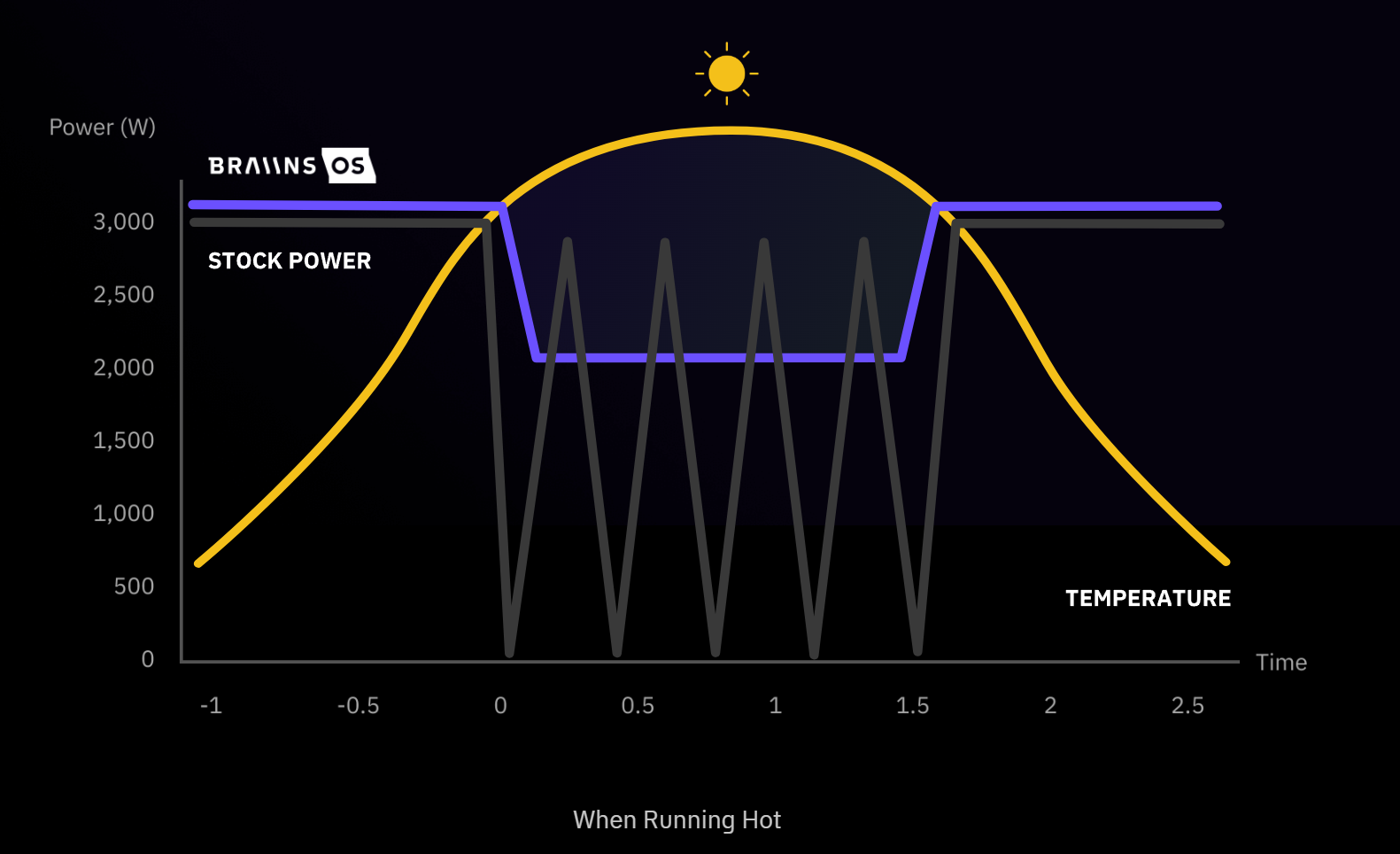
To navigate these thermal extremes automatically, miners running specialized firmware solutions like Braiins OS leverage advanced dynamic control over power targets. While aggressive overclocking profiles are sustainable during cold winter months, the same configurations often push chips past safe thermal thresholds in summer. To counter this, Dynamic Performance Scaling (DPS) automatically adjusts a miner’s power consumption based on real-time silicon temperature readings. If a machine crosses a predefined thermal threshold, the system dials back power just enough to bring temperatures back into a safe operating range, keeping the miner hashing instead of forcing a complete thermal shutdown. Once environmental conditions stabilize, DPS automatically scales power back up to maximum efficiency. This intelligent automation not only preserves uptime but also prevents harmful thermal cycling—the repetitive stress caused by machines rapidly jumping between hot operational states, sudden shutdowns, and cold restarts—thereby significantly extending the operational lifespan of the hardware.
Managing Thermal Pressure with Advanced Software Tools
Effective thermal management extends far beyond physical hardware maintenance; it requires centralized visibility, precise control, and robust automation software. Platforms like Braiins Manager provide operators with the necessary tools to monitor and mitigate heat stress across entire container fleets. Through centralized software interfaces, managers can easily downclock miners across an entire facility by adjusting power targets for devices running Braiins OS or modifying power modes on stock firmware, executed either individually or in batch operations. Lowering power consumption during peak afternoon heat helps prevent unexpected shutdowns and preserves equipment longevity.
To catch thermal anomalies before they escalate into full-scale hardware failures, operators utilize visual site mapping tools that provide a digital layout of physical server racks paired with real-time temperature heatmaps. These visual interfaces make localized airflow restrictions and overheating zones immediately apparent, allowing engineering teams to intervene before machines are forced offline by internal safety limits. Furthermore, automated trigger systems can be configured to automatically pause mining operations whenever ambient or chip temperatures exceed safe thresholds, offering an invaluable layer of protection for fleets operating on stock firmware.
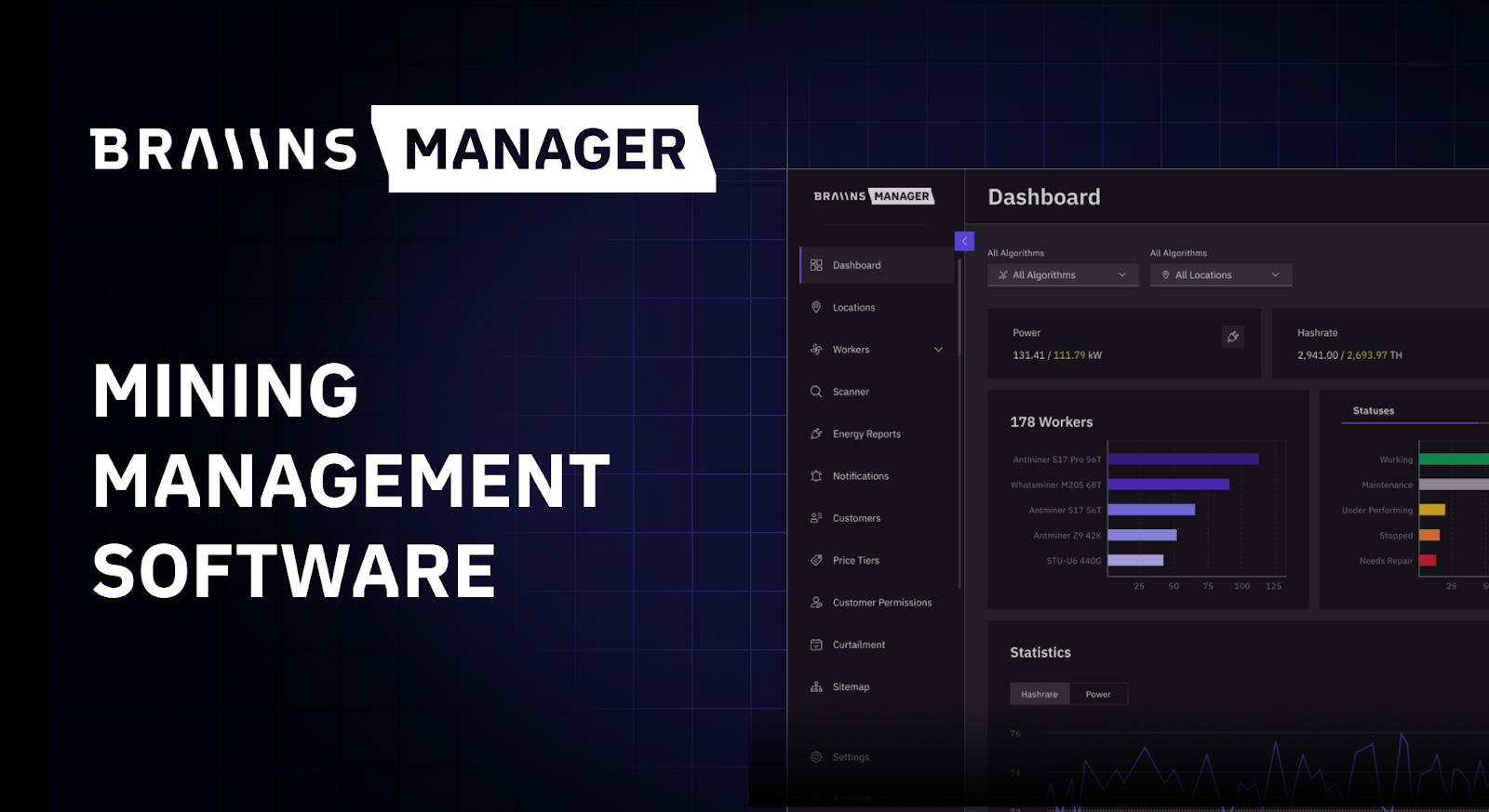
As energy grids experience strain during widespread heat waves, electricity prices frequently spike alongside ambient temperatures. Advanced fleet management platforms incorporate features like strike price curtailment, enabling operators to automatically suspend mining activity when regional power market prices exceed predetermined financial thresholds. This software-driven automation protects operating margins during volatile energy events, ensuring that facilities do not mine at a financial loss during periods of peak thermal and electrical stress.
Summer weather is an immutable operational reality for the Bitcoin mining industry, arriving regardless of whether a facility is fully prepared. By combining rigorous physical maintenance, intelligent performance scaling firmware, and sophisticated remote management tools, mining operators can safeguard their hardware, maintain consistent uptime, and protect their profitability throughout the hottest months of the year.

Related News