WHO Warns of ‘Complex’ Ebola Outbreak as Health Officials Investigate Origin of Nigeria’s First Case
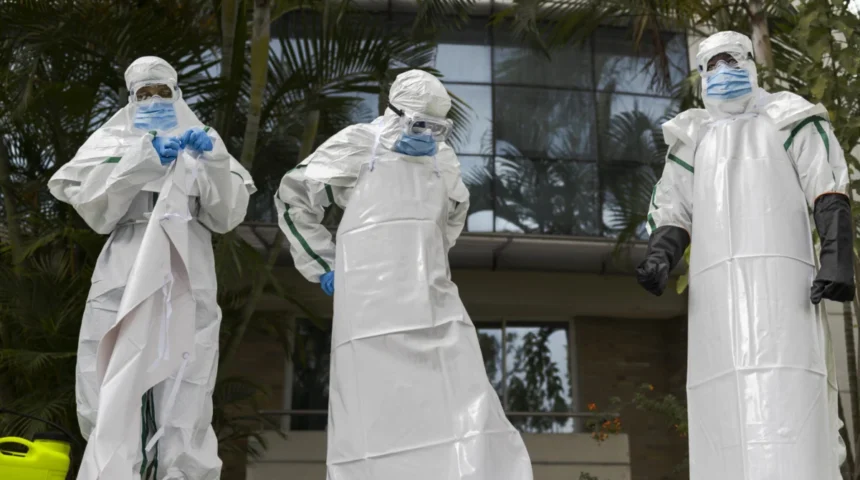
Health authorities are racing to retrace the steps of Nigeria’s first confirmed Ebola patient this week, as international public health organizations warn that the ongoing epidemic has evolved into a far more complex and geographically dispersed crisis.
The World Health Organization (WHO) has stated that the current Ebola outbreak, which originally emerged in the Democratic Republic of Congo (DRC) in mid-May, is growing increasingly intricate. With active transmissions and recent cases now confirmed across nations in both East and West Africa, the operational landscape for disease control experts has become exceptionally challenging.
This growing regional footprint comes into sharp focus as investigators try to pinpoint the exact source of infection for Nigeria’s index case. The discovery has triggered a series of epidemiological inquiries, including whether the patient may have crossed paths with Kenya’s first confirmed Ebola patient at a major Ugandan transit hub.
“We are facing a more complex outbreak landscape,” said Mohamed Janabi, the WHO regional director for Africa, during an online media briefing.
Nigeria reported its first case of the Bundibugyo strain of Ebola on Tuesday. By confirming this case, Nigeria became the fourth African country—and by far the most populous nation—to be affected by an outbreak that has already devastated parts of Central Africa. Since the epidemic was officially announced in the DRC in mid-May, it has resulted in more than 4,000 deaths in that country alone.
The current epidemiological map reveals active or recent cases of the Bundibugyo strain across Kenya, the DRC, and now Nigeria. Meanwhile, neighboring Uganda successfully managed an earlier cluster of cases earlier in the year and has since been declared officially Ebola-free by health authorities.
The patient at the center of Nigeria’s public health response is a Ugandan-born woman who is married to a Swiss diplomat based in the Nigerian capital of Abuja. Initial accounts from authorities in Uganda indicated that she had traveled to eastern DRC before transiting through Uganda on her journey to West Africa. However, during a joint briefing on Thursday, representatives from both the WHO and Africa’s top public health agency stated they had not yet received verified, documented information confirming that the woman had actually traveled to the DRC.
Adding another layer of complexity to the travel history, a formal statement issued by the Swiss government to the Reuters news agency indicated that the patient is believed to have contracted the deadly viral disease while traveling within Uganda itself.
Wessam Mankoula, the head of Emergency Preparedness and Response at the Africa Centres for Disease Control and Prevention (Africa CDC), provided further details during Thursday’s briefing. He noted that both Nigeria’s first patient and Kenya’s first patient had departed from Entebbe International Airport on October 3. Consequently, public health investigators are actively probing whether a potential epidemiological encounter occurred between the two individuals during their transit through the Ugandan airport.
Despite these emerging hypotheses, Ugandan authorities have firmly rejected the suggestion that the patient was infected within their borders. Government spokesman Alan Kasujja told the AFP news agency that it was “preposterous” to link Uganda to the new Nigerian case simply because the diplomat’s wife had spent her holiday in the country.
The debate over her travel timeline underscores the investigative hurdles facing public health officials. Mankoula reiterated that there remains no officially validated information proving the patient had ever set foot in the DRC. This was echoed by Jean Kaseya, the director general of the Africa CDC. Furthermore, Pavel Ursu, the WHO representative in Nigeria, confirmed that the official travel information provided to the global health body included no record of the woman traveling outside of Uganda.
Patrick Otim, a WHO emergency response manager, acknowledged on Thursday that the precise source of the patient’s infection remains entirely unknown as public health teams work painstakingly to piece together her complete travel history.
As part of the containment protocol, investigators are closely auditing which healthcare facilities in Abuja the patient visited. Records show she sought medical attention between the initial onset of her symptoms and her eventual hospitalisation just 48 hours later, a critical window that health teams are attempting to trace to identify potential nosocomial exposures or community contacts.
An Increase in Numbers
The expansion of the virus into new territories has placed intense pressure on local surveillance and contact-tracing systems. Kenya’s Ministry of Health confirmed its first case of the outbreak earlier this month and has since reported eight additional cases, bringing its total upward as the regional footprint widens. Patrick Amoth, the director-general of the Kenyan Health Ministry, reported that local officials have successfully traced all 135 contacts associated with their country’s first patient.
In Nigeria, public health authorities are actively monitoring and tracing 44 primary contacts linked to the diplomat’s wife. While Mankoula noted that additional contacts had been identified as the investigation progressed, specific updated figures were not immediately released during the briefing.
The broader epidemiological data paints a grim picture of the overall epidemic. According to health authorities in the DRC, the current outbreak stands as the deadliest in the nation’s recorded history. Out of more than 9,000 confirmed and suspected cases recorded since May, the disease has claimed the lives of more than 4,000 people.
Before successfully bringing its transmission chains to a halt and earning an Ebola-free declaration in August, neighboring Uganda recorded 20 confirmed cases. This total included 15 cases that were directly imported from the neighboring DRC, resulting in two tragic fatalities before health interventions successfully contained the spread.
In light of these escalating figures and the cross-border movement of infected individuals, the Africa CDC has issued a stern warning regarding what it characterizes as an “extremely serious threat” to continental security. With the overall case fatality rate in the DRC hovering near 50 percent, international health agencies continue to urge heightened surveillance, transparent information sharing, and robust cross-border cooperation to prevent further seeding of the virus across East and West Africa.

Related News