Measles Resurgence in the United States Spurs Public Health Alarms and Raises Elimination Status Concerns
Decades after it was officially declared eliminated in the United States, measles has made a troubling resurgence, with the US Centers for Disease Control and Prevention (CDC) announcing the third death of the year from the highly contagious virus.
Public health experts note that the US was once so successful at wiping out measles nationwide that society developed what epidemiologists describe as the luxury to forget how serious the disease truly is. Matt Ferrari, director of Pennsylvania State University’s Center for Infectious Disease Dynamics, emphasized this dangerous shift in public memory.
“It’s been a long time, and for many of us in the United States, and in fact, throughout the Western Hemisphere, we have been able to forget how nasty measles is,” Ferrari told Al Jazeera.
Pennsylvania has been hit especially hard during the most recent outbreak cycle. In September, state health authorities sought emergency support from the CDC to control the rapid spread of the virus. This intervention occurred even as state and federal health officials quarrelled over the official measles-associated death tally, differing significantly on how specific fatalities should be classified. Despite these bureaucratic disputes, state officials have recorded more than 1,200 confirmed cases and over 240 hospitalizations across 42 counties so far this year.
This sharp spike in cases has naturally raised deep concerns in neighboring US states. On October 5, New York Governor Kathy Hochul declared a state disaster emergency in response to rising infection numbers in rural regions. The emergency declaration expanded the pool of health professionals authorized to administer vaccinations and test residents for measles.
“No one should get seriously ill or die from a vaccine-preventable disease,” Hochul said during the announcement.
Yet, public health experts warn that the risks extend far beyond domestic state borders. The US resurgence is occurring alongside an increase in measles cases globally, particularly within communities marked by vaccine hesitancy or systemic gaps in healthcare access.
Data shows that vaccination coverage among US kindergartners has steadily declined, dropping from 95.2 percent during the 2019-2020 school year to 92.4 percent in the 2025-2026 school year. Experts emphasize that falling vaccination rates in one specific geographic area can leave populations thousands of miles away vulnerable, underscoring the reality that preventing measles is a shared global responsibility.
Building trust in vaccine-sceptical communities
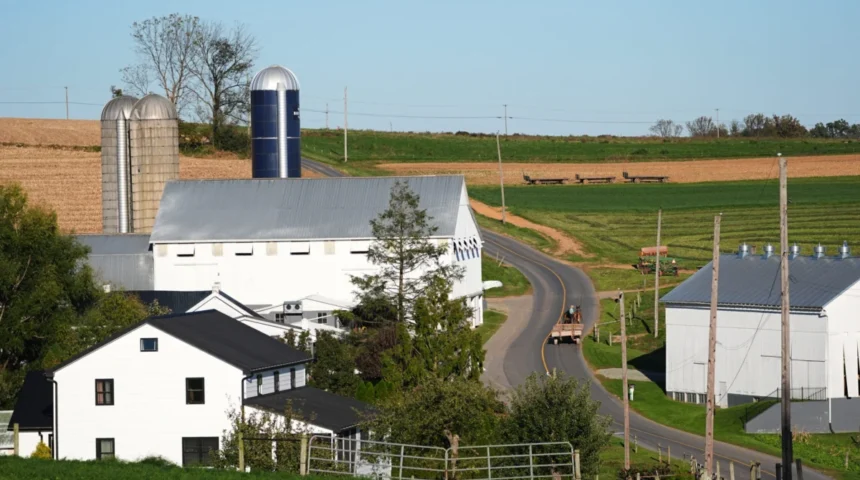
Pennsylvania reported in August that two unvaccinated individuals had died of measles in Lancaster County, located in the south-central part of the state. Lancaster is widely recognized as the center of Pennsylvania Dutch Country and serves as home to some of the nation’s oldest Amish and Mennonite communities, both of which historically maintain under-vaccinated populations.

In response to the crisis, Pennsylvania public health officials worked closely with local community leaders to share vital health information and expand access to vaccination services. Joshua Good, principal of Ephrata Mennonite School in Lancaster County—where two students contracted measles earlier this year—collaborated directly with state officials to organize a pop-up vaccination clinic right at the school.
Good noted that health authorities provided informative communication materials that the school successfully adapted for its specific community, while also helping educators identify families most at risk.
While Good described the collaborative response as productive, he candidly informed state officials that the local Mennonite community still harbors deep-seated vaccine skepticism.
“I said, look, if we do this, keep in mind, our community by and large… made that decision not because they don’t have access to the vaccines. They made the decision based on their own best judgement,” he told Al Jazeera.
Good, who is personally vaccinated and has vaccinated his own children, views himself as a trusted advocate within his community. When families approach him with questions regarding measles shots, he answers them as best as he can.
“I have honest conversations with people, try to engage in respectful, charitable ways,” he said. “I’ll try to understand what their hesitancies are. That said, I respect their concerns.”
Although multiple community members ultimately chose to receive the measles vaccine at the Ephrata pop-up clinic, overall vaccination rates in the area remain stubbornly below the critical threshold required for herd immunity.
Public health professionals advocate for investing heavily in robust community outreach long before emergency outbreaks materialize.
“You can’t just show up in a community in an emergency—an emergency in which they might feel like you’re there to kind of blame them or shame them,” Jennifer Nuzzo, director of the Pandemic Center at the Brown University School of Public Health, told Al Jazeera. “You need to know them so that they see public health as a resource rather than law enforcement.”

Nuzzo pointed out that low vaccination coverage combined with a historical distrust of government entities allows measles to spread rapidly even when vaccines are readily available. However, she argued that this challenge should not deter governments from actively building rapport with vaccine-skeptical populations.
“I worry that by framing it around their demographics, it lets governments off the hook in terms of what they’re supposed to be doing, which is stopping the spread of this dangerous disease,” Nuzzo said.
Experts explain that declining vaccination rates place not only skeptical communities at risk, but also endanger immunocompromised individuals who cannot receive vaccines. Broad herd immunity in the wider population previously acted as a protective shield for those most vulnerable to infection.
“Those are communities that have been at risk for years,” Ferrari said. “But higher rates of vaccination in the communities surrounding them offered a barrier.”
The continental Americas historically made public health history as the first World Health Organization (WHO) region to eliminate endemic measles transmission in 2016. Maintaining that prestigious status requires consistently high vaccination coverage. The Pan American Health Organization (PAHO) reports that vaccination coverage across the region remains below the recommended target for both required doses of the measles vaccine, yielding noticeable consequences.
PAHO holds an annual RVC Measles Elimination Status Conference, during which an independent technical body of international experts monitors and reviews whether countries in the Americas have successfully maintained the elimination of measles, rubella, and congenital rubella syndrome. A country can officially lose its elimination status if the exact same measles virus genotype circulates continuously within its borders for at least 12 months.
Last year, Canada became the first country in the continental Americas to lose its measles-free status following an outbreak that originated in 2024. Amid the ongoing domestic spread, some public health analysts have warned that the United States may be on track to lose its elimination status this year as well.
However, Dr. Daniel Salas, executive manager of the Special Program for Comprehensive Immunisation at PAHO, told Al Jazeera that the US is not the only nation under close regulatory review.
“We have Mexico, we have Bolivia that is going to be closely assessed because they could potentially lose status as well,” he said.

US Health and Human Services Secretary Robert F. Kennedy Jr. has repeatedly defended the federal government’s response to the ongoing measles outbreaks.
“We’re doing a better job than any country in the world at controlling the measles outbreak,” Kennedy said during an August 26 event in Florida, citing higher comparative case numbers in Mexico, Canada, and Britain.
Conversely, Nuzzo argued that recurring, widespread outbreaks across the US point to a nation struggling fundamentally to contain transmission.
“র্দWe have not seen it this bad,” she said. “It’s like this perpetual game of Whac-A-Mole. As long as there are vulnerable communities, as long as we don’t have strategies for early detection and rapid response and containment, measles will just keep on happening over and over and over again.”
Dr. Salas told Al Jazeera that decisive action taken within the first three days following a suspected case is vital. Health authorities must begin active investigations and implement immediate response measures without waiting for laboratory confirmation. Delays lasting a week or more allow the highly contagious virus—characterized by a high fever, persistent coughing, and a whole-body rash—to spread uncontrollably through populations.
Experts repeatedly warn that contemporary outbreaks cannot be treated as isolated local events. Scientific journals have documented genetic evidence showing that the virus strain responsible for Canada’s latest major measles outbreak was genetically linked to cases previously identified in US Mennonite communities—the exact outbreak sequence that ultimately stripped Canada of its measles-free designation.
“The spread of measles in the United States imperils other countries,” Nuzzo said. “It’s easy to kind of point to other countries and say that they’re the problem, but the reality is we’re all dependent on each other, and it’s very hard to protect ourselves when measles is spreading elsewhere.”

Related News