Nvidia CEO Jensen Huang Dismisses 2029 Memory Oversupply Concerns, Warns of Accelerated Chinese Chip Competitiveness
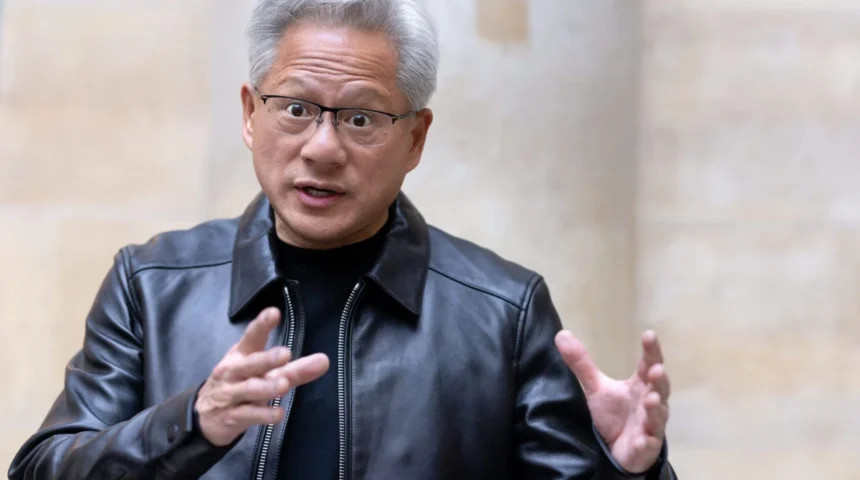
BERLIN — Nvidia co-founder, President, and CEO Jensen Huang has pushed back firmly against growing market anxieties regarding a potential oversupply in the global semiconductor memory market. Speaking in an exclusive, wide-ranging interview with CNBC on the sidelines of Nvidia’s GTC Berlin conference, Huang stated that a surplus of memory supply by 2029 remains highly unlikely, offering a counterweight to recent pessimism that has triggered a sharp sell-off across memory stocks globally.
Over the past week, investor sentiment has taken a battering following an influential opinion column published on October 15 in a prominent South Korean publication. The article urged the South Korean government and domestic industry leaders to brace themselves for a significant deceleration in the unprecedented artificial intelligence boom. Citing industry experts, the piece warned that the market could be overwhelmed by a "flood of new supply," transforming the high-margin memory landscape "into a red ocean" by the year 2029. The column boldly claimed that the current artificial intelligence supercycle could ultimately run its course, plunging the sector into a cyclical downturn before the decade is out.
Memory chips serve as a foundational, core component of Nvidia’s advanced artificial intelligence accelerators. A sudden glut of supply in the market could theoretically drive down component prices, squeezing the profit margins of major memory manufacturers such as SK Hynix, Samsung, and Micron. The sell-off was further compounded by remarks from SpaceX and Tesla CEO Elon Musk, who responded to the initial reports by suggesting that China "will be making a LOT of RAM in 2028." Investor jitters were also stoked by advancements from Chinese memory producer ChangXin Memory Technologies, commonly known as CXMT, which recently unveiled a new design architecture capable of delivering greater production efficiencies, fueling fears that it could aggressively capture market share from established global rivals.
Despite these headwinds, Huang remains unfazed by the specter of oversupply, emphasizing the insatiable appetite for memory in modern accelerated computing.
"One of the things that’s really great about memory is that you can always use more of it," Huang told CNBC’s Arjun Kharpal during the briefing. He underscored that High Bandwidth Memory, widely known as HBM, will remain a critical requirement for computing architectures for many years to come.
Furthermore, Huang highlighted Nvidia’s pioneering architectural choices that integrate various classes of memory to maximize computational efficiency.
"We’re the first company in the world to put LPDDR memory — what goes into your cell phones — into the world’s data centers, and it’s enabled us to deliver performance that’s twice as energy efficient as anything in the world today, and so we’re going to continue to use abundant amounts of them as well," Huang added.
When questioned about whether Nvidia would consider partnering with China’s CXMT to utilize its rapidly improving memory products, Huang adopted a pragmatic and open-ended stance.

"We’re open-minded," Huang stated. "We work with Chinese companies; just about the whole world works with Chinese companies in the supply chain somewhere."
He went on to praise China’s formidable industrial foundation, acknowledging that the nation possesses peerless capabilities in fundamental infrastructure technology and manufacturing execution. "China is incredible at the fundamental infrastructure technology, and no country collectively is better at manufacturing than China, and so we have to take their capabilities very seriously," he noted.
U.S. Regulation ‘Accelerated’ China’s Chip Advancements
Addressing the broader geopolitical landscape governing the semiconductor industry, Huang pointed directly to U.S. government policy as a primary catalyst for accelerated technological development within China. According to the Nvidia chief executive, mounting trade restrictions and export controls imposed by Washington have inadvertently pushed Beijing to fast-track its own domestic chip technology and manufacturing capabilities.
The United States currently enforces strict export controls designed to limit the shipment of its most advanced semiconductors to China, cutting off the country’s direct access to top-tier Nvidia accelerators. Despite these stringent barriers, however, numerous reports have indicated that some Chinese firms have successfully leveraged loopholes—such as utilizing offshore data centers located in Southeast Asia—to access high-end compute power. Industry experts note that this workaround has played a pivotal role in enabling Chinese artificial intelligence models to rapidly improve in capability and sophistication.
Huang asserted that regulatory intervention has failed to suppress China’s long-term ambitions, and has instead served as an unintended accelerant for the nation’s technological self-reliance.
China "definitely accelerated because of all the regulations," Huang said. "We’ve definitely accelerated China’s initiatives, its nationalization of semiconductor manufacturing capabilities, and all of the industrial support that has been put into that sector, and so there’s no question we’ve accelerated that."
Even as international competition intensifies and regulatory pressures reshape global supply chains, Huang projected absolute confidence in the resilience and dominance of American technology corporations. Emphasizing that U.S. tech firms are "mighty," he made it clear that the industry is fully prepared to take on rising global competition from any quarter.

Related News