WNBA Finals Game 6 Scheduled for 12:30 p.m. ET After Arena Conflicts and High-Level Negotiations
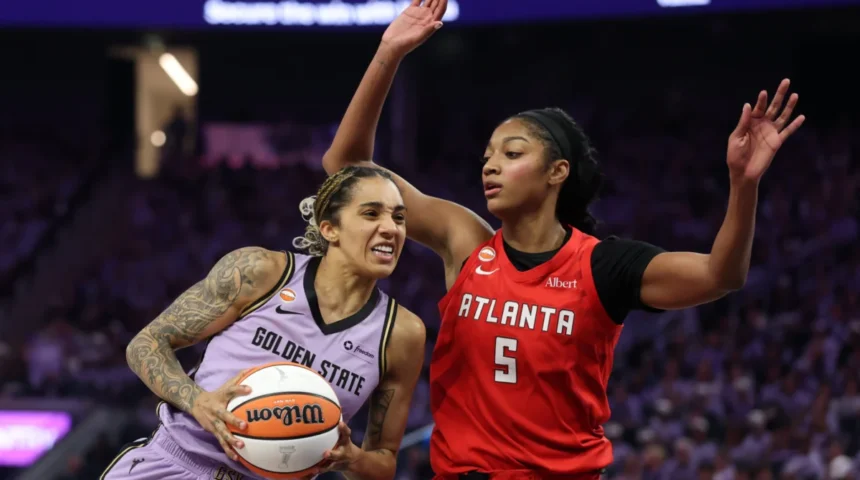
The decision to move Game 6 of the WNBA Finals to a 12:30 p.m. ET time slot on a Thursday places an unusual spotlight on a professional basketball league rapidly scaling up to a much larger stage—even if the surrounding sports infrastructure is not always fully prepared to accommodate its massive growth.
The high-stakes elimination game between the Atlanta Dream and the Golden State Valkyries is set for 12:30 p.m. ET, or 9:30 a.m. local Pacific Time, an astonishingly early hour for a championship series game with title implications. If the Golden State Valkyries secure a victory on the road, they will capture the series 4-2 and claim the championship trophy. Conversely, a win by the Atlanta Dream would force a decisive Game 7, sending the series traveling back west to San Francisco for a matchup scheduled for Saturday, October 31.
Earlier in the week, it became glaringly apparent that the series was hurtling toward a major scheduling and logistical collision course for Game 6. Throughout the postseason run, the Atlanta Dream has been hosting its playoff matchups at Atlanta’s prominent State Farm Arena, the established home of the NBA’s Atlanta Hawks. The facility boasts a seating capacity of 17,000 spectators and is slated to become the permanent home venue for the Dream beginning next season.
However, Game 6 presented an immediate scheduling hurdle because the Atlanta Hawks were also scheduled to play a home game at State Farm Arena on the exact same night. For their regular-season games, the Dream traditionally plays at the Gateway Center Arena, a facility that accommodates a mere 3,500 people, rendering it far too small to host a major WNBA Finals contest.
This conflict sparked an intense, multi-party series of discussions earlier in the week involving the ownership groups of both teams, WNBA Commissioner Cathy Engelbert, NBA Commissioner Adam Silver, Atlanta Hawks CEO Steve Koonin, and executives from Versant, the media rights holder broadcasting Game 6. All involved stakeholders began urgently brainstorming viable alternatives regarding where and when the game could safely and fairly be contested.
The Atlanta Dream and the Atlanta Hawks operate under separate ownership groups. Voicing deep frustration over the situation, the Dream issued an open letter on Tuesday stating that they had raised formal concerns regarding potential scheduling conflicts to the WNBA two months prior, only to have those concerns ignored. Conversely, sources close to the league countered that it remains the individual team’s responsibility to secure a suitable professional arena in the event of potential conflicts, noting that the official playoff calendar and dates had been issued by the league as early as December 2025.
Ultimately, the Dream never secured an alternative professional arena for the game outside of their regular-season home at Gateway Center Arena. The NBA was subsequently brought into the high-level discussions just days ago to help problem-solve the crisis, according to two people familiar with the matter. The WNBA operates its own distinct scheduling division entirely separate from the NBA.
As the crisis deepened earlier in the week, the teams, the league, and Versant executives rapidly threw out a wide range of potential solutions. Numerous options were weighed and discarded, including shifting the Atlanta Hawks game to a different time slot, keeping the WNBA game at Gateway Center Arena and playing Game 6 in front of a restricted crowd of just 3,500 fans, or moving Game 6 to Wednesday, Friday, or Saturday at State Farm Arena, which would have required subsequently shifting Game 7 in San Francisco or scrambling to find an entirely different local venue.
Every proposed option involving shifting the calendar day presented insurmountable hurdles. The Atlanta Hawks were already scheduled to play on Wednesday. Furthermore, USA Network was already committed to broadcasting WWE’s Friday Night SmackDown during the lucrative Friday primetime television window, while the prestigious Breeders’ Cup occupied the Saturday afternoon television block. Additionally, State Farm Arena already had a major concert featuring rapper and singer Young Miko locked into its schedule for Saturday night. Moving Game 7 to the following Tuesday would have created a direct conflict with Election Day.
Meanwhile, the Atlanta Hawks game could not simply be moved to a 12:30 p.m. ET window due to existing NBA collective bargaining agreement rules, which strictly prohibit teams from playing games without a mandatory 22-hour rest break. Both the Atlanta Hawks and the Cleveland Cavaliers were locked into playing a game at 7 p.m. ET.
Discussions even touched upon the possibility of moving the Hawks game to an entirely different month, but given the extreme density of the modern NBA regular-season schedule, too many other teams’ calendars would have been forced to shift for such a move to be realistically feasible, according to individuals familiar with the negotiations.
Both participating teams and their players strongly resisted the idea of playing a high-stakes finals matchup at Gateway Center Arena. This sentiment was publicly echoed by Golden State Warriors coach Steve Kerr earlier in the week, who remarked that moving the game to such a small facility was "better than having it at the YMCA."
At the same time, both organizations felt profoundly uncomfortable exploring non-basketball professional venues, such as Mercedes-Benz Stadium where the NFL’s Atlanta Falcons play, due to critical player safety concerns and a complete lack of familiarity with the venue layout for professional basketball, according to people familiar with the internal discussions.
The Atlanta Dream have experienced strong attendance, regularly selling out State Farm Arena, and had already sold out the tickets for what would have been a primetime contest. On the other side, the Golden State Valkyries play their home games at San Francisco’s state-of-the-art Chase Center, which seats 18,000 roaring fans and has been affectionately dubbed "Ballhalla" by the franchise. The electric atmosphere at Valkyries games throughout the postseason has consistently rivaled nearly any traditional NBA Finals environment.
Initially, media partner Versant favored keeping the game at Gateway Center Arena in order to maximize primetime television viewership, according to sources familiar with the discussions. A skilled sports television production crew can often utilize camera angles, lighting, and audio engineering to make a game played in front of only 3,500 fans appear significantly larger and much louder to the television viewing audience at home.
However, moving the game to the 12:30 p.m. ET time slot is projected to result in an audience loss numbering in the hundreds of thousands, according to two media executives who spoke on the condition of anonymity out of fear of retribution from the league office. By comparison, Game 2 of the series averaged 1.33 million viewers across USA Network and Peacock, and a Game 6 broadcast in primetime would almost certainly have surpassed that impressive viewership mark.
This complex web of logistical failures, venue conflicts, and broadcasting constraints ultimately forced the unprecedented scheduling shift. The game will air live on USA Network alongside two other Versant networks, E! and Syfy. To mitigate the loss of primetime viewers, the league and network have arranged for the game to be rebroadcast at 8 p.m. ET—its original planned start time—on both USA Network and CNBC.
Despite the hurdles, industry observers note that the sheer volume of public attention and media coverage this scheduling controversy has generated in recent days could paradoxically boost overall awareness and tune-in interest for the game.
A spokesperson for USA Network acknowledged the difficult compromise, noting that while the daytime viewing window is far from ideal from a traditional television audience perspective, the league was forced to navigate an exceptionally challenging set of circumstances involving multiple stakeholders. The spokesperson emphasized that the priority for the network was remaining a collaborative partner and helping drive a workable solution.
Disclosure: CNBC, USA Network, E!, and Syfy are divisions of Versant Media.

Related News