Turning Manure into Mining Power: How Biogas and Advanced Firmware are Redefining Sustainable Bitcoin Mining
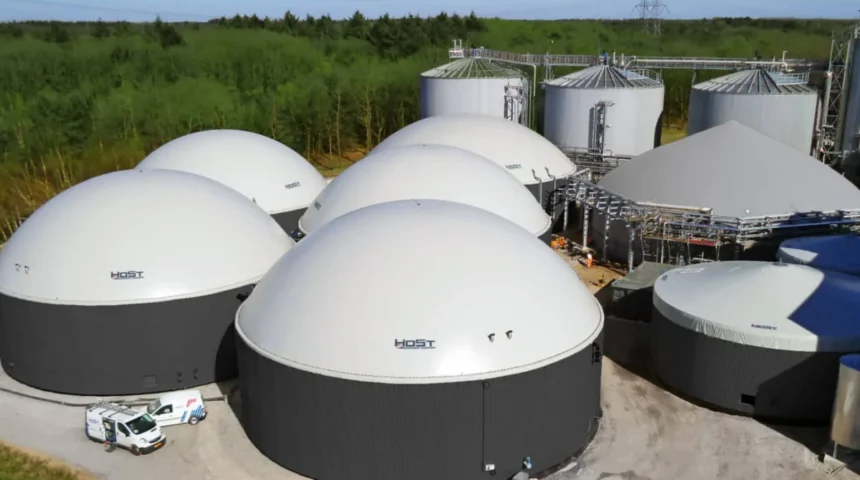
In the intersection of modern agricultural innovation and decentralized finance, a unique proof-of-concept project is turning heads across both industries. By harnessing the untapped potential of agricultural waste, agricultural operations are discovering that cow manure can do much more than fertilize crops—it can fuel the future of digital currency. Through a combination of cutting-edge hardware, specialized biogas generation, and advanced custom firmware, industry participants are successfully transforming animal waste into clean, usable bitcoin mining power while simultaneously capturing valuable thermal energy for secondary reuse.
For centuries, cattle farming has remained a cornerstone of global agriculture. Beyond providing beef and dairy products that sustain populations worldwide, cattle produce massive quantities of organic waste. A single cow can generate upwards of twenty-five pounds of manure every single day. While traditional farming practices have long utilized this organic matter for crop fertilization and soil enrichment, modern energy initiatives are unlocking an entirely new utility for the byproduct. Through sophisticated gasification processes involving grinding, fermenting, and filtering, raw manure is converted into a highly flammable biogas. This gas can then be cleanly combusted to fuel internal generators, producing steady electricity capable of powering heavy industrial equipment, including specialized Application-Specific Integrated Circuit (ASIC) miners.

This innovative approach to energy generation is not merely theoretical. Industry developers and mining infrastructure firms, including the team behind Braiins OS, have actively tested and refined their custom firmware configurations at working agricultural sites utilizing these exact biogas systems. By integrating alternative energy sources with specialized mining software, these operations are proving that high-performance computing can thrive in decentralized, rural environments. The integration relies heavily on gasification and anaerobic digestion to create a reliable fuel source, bridging the gap between traditional farming and modern cryptocurrency infrastructure.
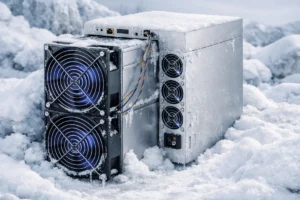
However, deploying heavy computational hardware in agricultural settings requires meticulous environmental and thermal management. Operating high-powered ASICs without adequate cooling systems inevitably leads to severe overheating and hardware failure. To solve this challenge in their agricultural proof-of-concept, the project utilized advanced water-cooling methodologies. Specifically, the team deployed the Bitmain Antrack V1, a specialized enclosure designed to house and cool up to five Bitmain Antrack V1 S19 XP Hydro miners. Together, this compact configuration generates just over one petahash per second of localized mining power.

The mechanics of hydro-cooled mining systems rely on a continuous, closed-loop thermal transfer process. Cold water is directed straight to each individual miner, absorbing the immense heat generated by the computational chips during operation. As the fluid exits the miners, it carries away thermal energy that would otherwise be wasted. Within self-contained cooling setups like the Antrack system, this heated water passes through a dry cooler before being chilled and recirculated back through the miners in a continuous loop.
Crucially, this thermal capture opens the door for innovative heat reuse projects. Rather than releasing excess warmth into the atmosphere, the hot water generated by the mining rigs can be redirected toward entirely separate applications. Whether warming agricultural facilities, heating water for local infrastructure, or supplying thermal energy for recreational amenities like hot tubs, the process demonstrates how computational power can double as a viable thermal generator. This synergy is prompting engineers and agricultural planners to rethink how electricity, bitcoin, and heating systems operate in tandem, transforming what was once an energy sink into a multi-faceted utility stream.

While robust hardware and cooling infrastructure form the foundation of these sustainable mining sites, advanced software is equally vital for maximizing operational efficiency and profitability. In the recent proof-of-concept deployment, the integration of Braiins OS allowed the five S19 XP Hydro units housed within the Antrack V1 to achieve roughly five percent better efficiency per unit, translating to an additional fifty terahashes per second of output.
A primary driver of this efficiency gain is the firmware’s Autotuning feature. Modern bitcoin miners contain over three hundred individual semiconductor chips, and due to manufacturing variations, no two chips possess identical performance profiles. Some chips naturally handle higher computational loads more efficiently than others, while weaker chips struggle under standard operating conditions. Autotuning meticulously analyzes the performance capabilities of each individual chip across every miner in the fleet. It then dynamically redistributes the workload, assigning lighter tasks to weaker components and maximizing the output of more powerful chips. This intelligent allocation yields a stronger overall computational output without increasing the predetermined power limit, allowing operators to extract maximum value from their hardware.

In addition to Autotuning, the firmware incorporates Dynamic Performance Scaling (DPS) to provide critical thermal management and uptime protection. DPS enables operators to pre-set strict chip temperature output limits, a crucial capability for managing heat in diverse or fluctuating environments. Whenever a miner approaches its designated temperature threshold, the software automatically scales the unit down into a low-power mode until internal temperatures stabilize.
This automated regulation proves particularly invaluable during hot summer months when ambient temperatures threaten hardware stability. By preventing thermal throttling and hardware degradation, DPS helps maintain maximum operational uptime, which directly correlates with sustained profitability. Furthermore, because consistent thermal output is essential for successful heat reuse projects, reliable temperature regulation ensures that downstream heating applications receive a steady, dependable supply of thermal energy throughout the year.

The broader implications of these integrated energy projects point toward a significant shift in how society approaches energy consumption and thermal management. Studies indicate that a substantial portion of global energy consumption is dedicated entirely to comfort heating—an expenditure that typically represents a permanent sunk cost with no financial return. Bitcoin miners, by contrast, operate with absolute electrical-to-thermal conversion efficiency; every single watt of electricity consumed by an ASIC is directly transformed into heat.
By strategically deploying mining hardware as localized heating elements, operations can unlock valuable secondary revenue streams from energy that would otherwise be lost to the environment. As hardware manufacturers and software developers continue to refine hydro-cooling solutions, biogas generation, and intelligent firmware, the boundaries between energy production, decentralized finance, and sustainable heating will continue to blur. Industry participants looking to stay informed on these developments can follow ongoing updates through official channels on platforms like X and Telegram.

Related News