Unraveling the Global Game of Money and Power: Rupert Russell on the Hidden Force of Prices and AI
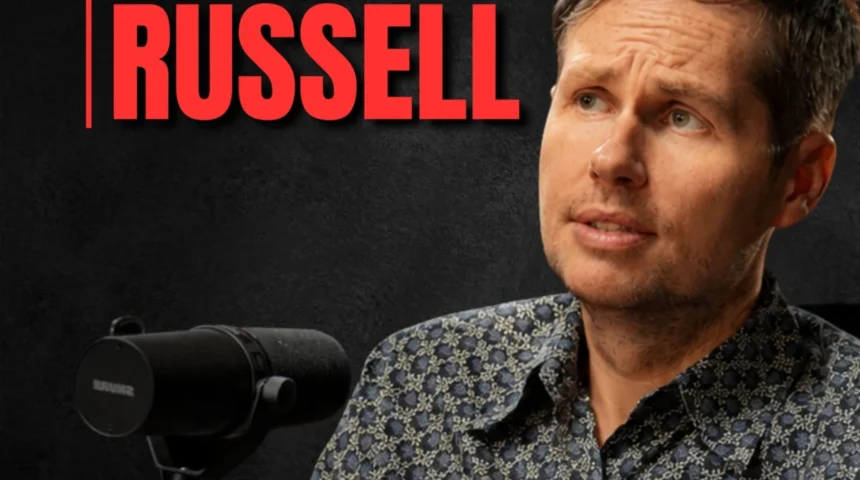
In a recent episode of his podcast, host Pete McCormack welcomed author and researcher Rupert Russell for an expansive, deep-dive discussion into the hidden mechanisms driving the global economy. Titled "#186 – Rupert Russell – The Global Game of Money & Power," the conversation explores whether the modern economic system functions less like a rational science and more like a high-stakes, chaotic game of Monopoly where financial markets, price shocks, and institutional influence dictate the fate of nations.
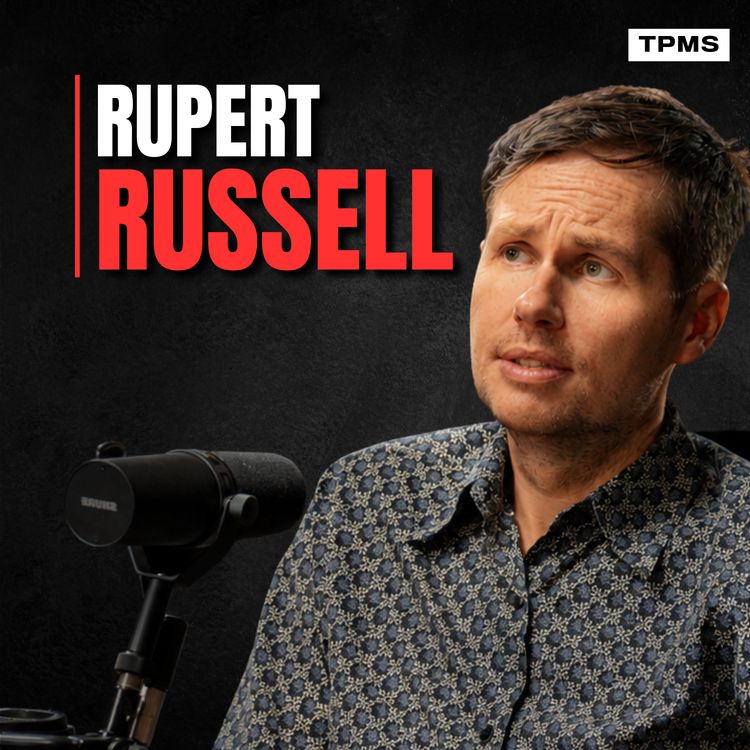
Russell, known for his work examining the volatile intersections of finance and geopolitics, joined McCormack to unpack how seemingly abstract economic variables—such as derivatives, futures markets, and commodity speculation—directly manifest as real-world turmoil. From historical uprisings to the modern housing crisis, the discussion sheds light on why the price of essential goods can quickly escalate into a politically explosive catalyst for social unrest.
The Power of Prices and Historical Shocks
At the core of Russell’s thesis is the profound, yet often overlooked, influence that price signals exert over human history. Rather than viewing historical events purely through the lens of political ideology or cultural shifts, Russell argues that sharp price spikes have repeatedly served as the spark for major global upheavals.

During the discussion, Russell and McCormack traced the historical impact of inflation and market shocks across various eras. They examined how sudden increases in the cost of basic necessities have triggered pivotal historical moments, ranging from classic bread riots of past centuries to the modern catalysts of the Arab Spring. When the price of oil, food, and housing breaks down or becomes disconnected from the purchasing power of ordinary citizens, the foundational social contract begins to fray.
To explain how fragile and interconnected modern society has become, Russell introduced the concept of the "sandpile theory of society." Much like adding individual grains of sand to a pile until it inevitably triggers an unpredictable avalanche, complex economic systems can absorb stress up to a certain point before a minor price shock precipitates systemic chaos.
From Insurance to Speculation: The Financialization of Everyday Goods
A significant portion of the conversation focused on the evolution of financial instruments and how tools originally designed to mitigate risk eventually transformed into vehicles for widespread speculation. Russell detailed the historical origins of derivatives and futures markets, noting how systems initially created to help farmers hedge against unpredictable crop yields and weather patterns gradually morphed into complex financial markets driven by institutional players like major investment banks and central banks.
As insurance mechanisms turned increasingly toward financial speculation, essential goods—most notably food and energy—became financialized. This shift fundamentally altered the dynamics of global commodities. Russell and McCormack explored what actually pushes food prices up in the modern era, examining how the actions of asset managers, central bank policies, and global market structures have sometimes decoupled prices from the physical realities of supply and demand.
This financialization has had profound implications for everyday life, particularly within housing markets. The conversation highlighted how soaring property costs have severely strained the social contract for younger generations, transforming basic shelter from a social necessity into an aggressively contested financial asset.
Re-evaluating Economic Theory and Centralized Power
The dialogue naturally transitioned into a critical evaluation of traditional economic thought, touching upon the theories of free-market economists like Friedrich Hayek and Milton Friedman. While classical economic theory often champions the efficiency of price signals in allocating resources naturally, Russell and McCormack questioned whether global markets have fundamentally broken down under the weight of modern financial engineering and government intervention.

By examining who truly runs the economy behind the curtain, the discussion challenged the notion of a purely decentralized, self-correcting market. Instead, the modern global economy is frequently depicted as an arena shaped by powerful institutional actors, massive asset managers, and central banks attempting to manage systemic instability through monetary policy. In Russell’s view, the system frequently resembles a global game of Monopoly, where wealth and property concentrate over time, and the rules can feel rigged against ordinary participants.
Artificial Intelligence, Scarcity, and Future Horizons
Looking toward the future, the conversation shifted to the technological frontier, specifically the rise of artificial intelligence and its potential to upend traditional economic frameworks. Russell and McCormack discussed whether financial markets are already becoming increasingly correlated to the rapid advancements and speculative fervor surrounding AI.

Beyond market movements, Russell raised profound questions about the long-term implications of artificial intelligence on labor, status, and the fundamental nature of human work. He posed a provocative query: What happens to the traditional price system in a world where AI and automation potentially drive the marginal cost of production down toward abundance?
Rather than looking to conventional science fiction tropes like Terminator or Ready Player One to model the future, Russell argued that The Matrix offers a more fitting conceptual model for understanding how humans might interact with simulated realities, algorithmic control, and digital environments in the decades to come.

The episode concludes by offering listeners a sweeping interdisciplinary perspective on wealth, power, and technology, blending historical analysis with forward-looking speculation on how humanity will navigate the next wave of economic and technological transformation.

Related News