Rethinking Reality: Rizwan Virk on Simulation Theory, Quantum Physics, and the Future of AI
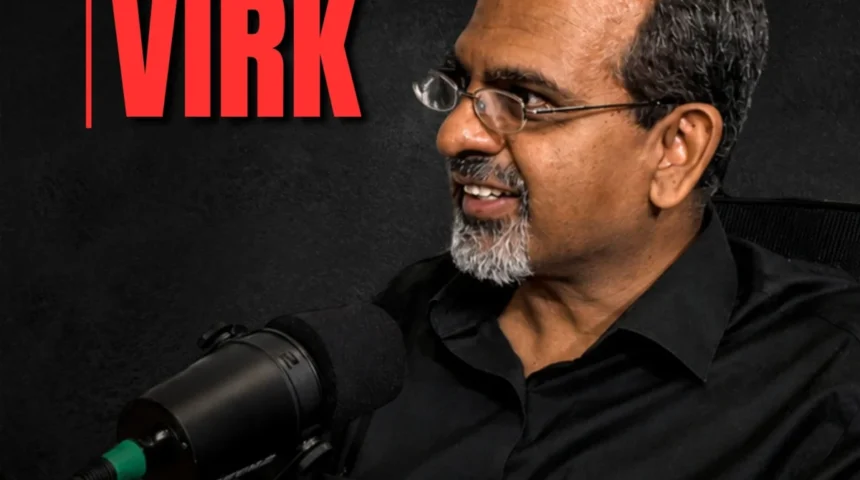
Are we living in base reality, or is everything around us an intricate digital construct? This age-old philosophical question has moved out of science fiction and into serious scientific and technological discourse. In a recent episode of his podcast, host Pete McCormack sat down with Rizwan Virk, a venture capitalist, video game industry veteran, and researcher associated with MIT, to explore why the simulation hypothesis continues to gain traction in the modern era.

Virk’s unique background bridges the worlds of cutting-edge technology and theoretical philosophy. Having worked extensively in video games, virtual reality, and venture capital, Virk brings a distinct lens to how digital worlds are built, scaled, and experienced. During the conversation, he explained how his professional experiences led him to take the simulation hypothesis seriously, comparing the architecture of our universe to advanced video game design and virtual reality environments.

From Video Games to Quantum Physics
The discussion touches on several conceptual breakthroughs in modern technology that mirror the mysteries of the physical universe. Virk highlights everyday technological milestones—such as immersive virtual reality experiences like VR ping pong—as primitive precursors to fully realized simulated worlds. As artificial intelligence advances toward generating complex environments and smart non-player characters (NPCs) on the fly, the technological gap between human-made simulations and our own reality begins to shrink.

One of the most compelling arguments for simulation theory involves drawing parallels between computational shortcuts in software development and strange phenomena in quantum physics. Virk discusses the concept of "lazy programming," a technique used by game developers to save processing power by rendering only what the player is currently looking at. This efficiency model bears a striking resemblance to the "observer effect" in quantum mechanics, where subatomic particles appear to exist in a state of probability until they are actively observed or measured. If the universe functions with limited processing power, rendering reality only when necessary would be a logical design choice for a cosmic programmer.

The conversation also explores the theoretical boundaries of computing power, mapping the human brain into a digital environment, and the implications of the "metaverse Turing test." As AI-generated entities become increasingly indistinguishable from conscious beings, society must grapple with the possibility that someone—or something—may have already built the simulation we currently inhabit.

Exploring the Glitches in the Code
Moving beyond pure technology, Virk and McCormack examine the philosophical and psychological implications of a simulated multiverse. The discussion ventures into territory often explored by visionary science fiction writers like Philip K. Dick, whose works heavily influenced modern cinematic explorations of simulated realities, such as The Matrix.

If reality is fundamentally a digital construct, everyday anomalies take on a new context. Phenomena such as déjà vu, strange coincidences, synchronicity, and even reported altered states of consciousness involving DMT or UFO encounters are framed not merely as neurological misfirings, but potentially as glitches or glimpses into the underlying code of reality. Furthermore, Virk addresses complex existential questions, including the problem of evil, the nature of karma, near-death experiences, and whether human beings consciously choose their life paths or character avatars before entering the simulation.

Ultimately, the dialogue challenges listeners to rethink their fundamental assumptions about existence. Whether one views life as a grand quest, a deterministic software program, or a profound philosophical mystery, the intersection of quantum physics, artificial intelligence, and simulation theory suggests that the line between the physical universe and digital fiction may be much thinner than we ever imagined.

Related News