China’s Secret War on American AI: Inside the Geopolitical Battle for Infrastructure and Supremacy

The race for artificial intelligence supremacy has officially expanded beyond research laboratories, semiconductor fabrication plants, and corporate boardrooms. According to recent expert analysis, the very foundations of the United States’ technological buildout are facing a coordinated, covert assault designed to stall progress and tip the global balance of power.
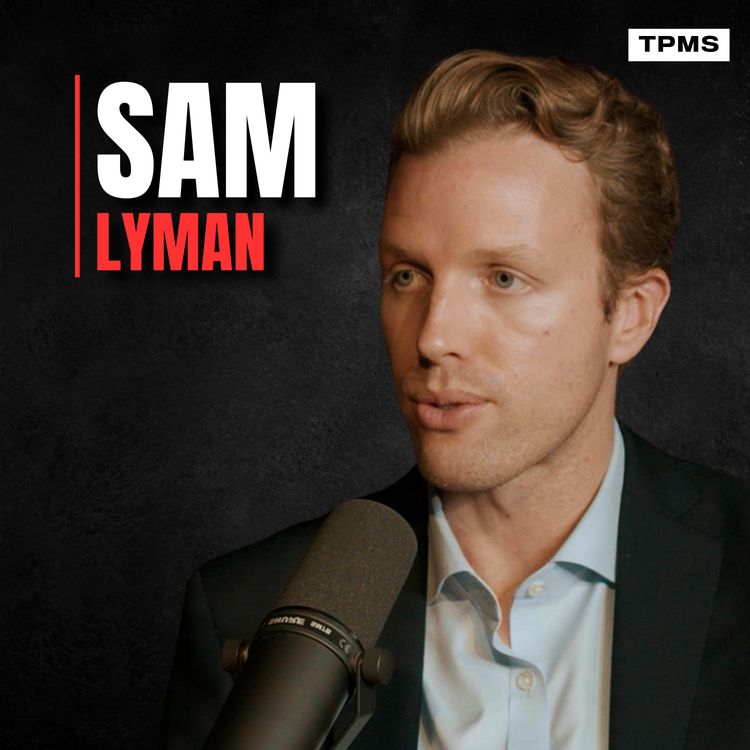
In a recent episode of his podcast, host Pete McCormack sat down with Sam Lyman—a policy expert with a background at the U.S. Treasury Department and the Bitcoin Policy Institute (BPI)—to dissect how China is allegedly targeting America’s AI infrastructure. The conversation illuminated a complex web of foreign influence campaigns, local activist resistance, open-source strategies, and geopolitical maneuvering that has reportedly delayed or blocked billions of dollars in critical data center projects across the United States.
The Geopolitical Battle for AI Infrastructure
At the heart of the modern technological landscape lies a high-stakes national security conflict. As artificial intelligence evolves from a niche academic pursuit into the driving force of the global economy and military apparatus, control over the underlying infrastructure has become paramount. Lyman argues that the race for AI is no longer just a commercial competition between private enterprises, but a decisive geopolitical battle between Chinese AI and American AI.
The United States has long relied on its unmatched capacity to build and scale massive data centers, power grids, and high-performance computing clusters. However, this aggressive buildout is encountering unprecedented friction. According to Lyman, foreign influence networks and strategic disinformation efforts may be working in tandem with domestic activist groups to weaponize local anxieties against data center construction. The result is a multi-billion-dollar bottleneck that threatens to decelerate America’s frontier model development at a time when speed is critical.

Unpacking the Anti-Data Center Campaign
The physical expansion of artificial intelligence requires an immense amount of land, water, and electrical power. Naturally, these massive data centers have occasionally drawn scrutiny and pushback from local communities concerned about environmental impact, energy consumption, and strain on municipal resources. However, Lyman points toward a deeper, more orchestrated phenomenon beneath the surface of these grassroots movements.
The discussion highlights whether local opposition to data centers is entirely organic or if it is being artificially amplified by sophisticated bot campaigns and coordinated foreign influence networks. By leveraging digital manipulation and leveraging pre-existing political anxieties, these campaigns allegedly exploit local zoning board meetings and environmental concerns to stall multi-million-dollar developments.

Of particular concern are connections to specific political organizations and figures. The conversation explores the roles of activist groups and networks associated with figures like Neville Roy Singham, as well as organizations such as Code Pink and the Party for Socialism and Liberation. While these groups often frame their activism around anti-war, environmental, or social justice frameworks, security analysts are increasingly examining how their outcomes align with foreign strategic interests aimed at slowing down Western technological infrastructure.
According to the data discussed, approximately $24 billion in planned AI infrastructure buildouts have faced severe stalls, moratoriums, or outright cancellations due to localized regulatory battles and intense public pushback. For a nation attempting to maintain a decisive edge in technological innovation, these delays represent a strategic vulnerability.

Open-Source Models, DeepSeek, and the Regulatory Landscape
While physical infrastructure faces headwinds on the home front, the software and model development landscape is experiencing its own seismic shifts. China has increasingly leaned into open-source AI strategies, exemplified by developments like DeepSeek, which have challenged the traditional dominance of U.S. proprietary frontier models developed by companies like Anthropic and OpenAI.
This proliferation of open-source capabilities introduces complex strategic dilemmas. On one hand, open-source distribution allows developers worldwide to build rapidly upon existing foundations. On the other hand, it raises serious questions regarding data harvesting, intellectual property security, and the enforcement of AI export controls designed to restrict adversaries from accessing advanced computing power.

Furthermore, the debate surrounding artificial intelligence safety has added another layer of complexity to the domestic regulatory environment. Lyman and McCormack delved into whether catastrophic "AI doom" narratives—warnings concerning the existential risks of superintelligence—are sometimes amplified or weaponized by established industry players to construct regulatory moats. Such barriers can inadvertently stifle smaller domestic competitors while playing directly into the hands of foreign actors who benefit from any slowdown in American innovation.
As the pressure mounts for the United States to secure its position, policymakers are forced to navigate a treacherous path between mitigating legitimate technological risks and defending against coordinated foreign interference. Whether through the implementation of data center moratoriums or the ongoing debate over the safety of open-source distribution, the domestic conversation around artificial intelligence has transformed into a front-line issue for national security.

Related News