Rebuilding Human Society After an Apocalypse: Astrobiologist Lewis Dartnell Lays Out the Blueprint for Civilizational Recovery
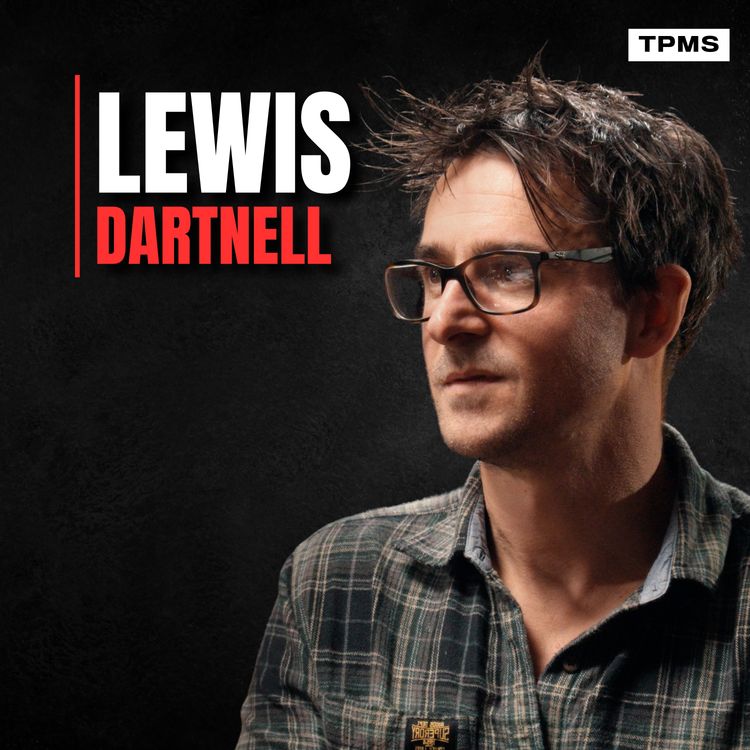
In a comprehensive and thought-provoking discussion on the latest episode of his podcast, host Pete McCormack sat down with astrobiologist and University of Westminster Professor of Science Communication Lewis Dartnell to explore one of humanity’s ultimate hypothetical scenarios: what happens if modern civilization collapses overnight, and how humanity could realistically start over from scratch.
Dartnell, widely known as the author of The Knowledge: How to Rebuild Our World from Scratch, brings a unique scientific perspective to the discussion. While his academic day job focuses heavily on astrobiology—specifically investigating whether microbial life could survive the harsh, radiation-laden environment of Mars—his public-facing work turns inward to examine the fragility of Earth’s modern systems. His writing addresses a stark reality that most people overlook: how little the average citizen truly understands about the complex industrial and technological networks upon which our daily survival depends.
During the conversation, McCormack and Dartnell dove straight into the deep end of a post-apocalyptic thought experiment. If the "big red reset button" were pressed and global civilization vanished tomorrow, humanity would instantly face a brutal hierarchy of survival challenges. The dialogue systematically addressed the immediate threats: what kills a person first, where the safest places to shelter might be, how long existing infrastructure like supermarkets could actually sustain human life, and the critical population threshold required to kickstart the long and arduous process of rebuilding society.
One of the most striking revelations of the conversation challenges common post-apocalyptic tropes found in popular culture. When considering how long a standard, abandoned modern supermarket could keep a lone survivor alive, Dartnell points to a timeline that defies casual intuition—revealing that the contents of a single supermarket could technically support an individual for up to 55 years, provided they could secure the location and navigate the expiration of perishable goods. However, individual survival is only the opening act of a much larger crisis.

Moving beyond solo survival, the discussion turned toward collective recovery, addressing the fundamental question of scale: how many people are actually required in a community to begin reconstructing human knowledge, agriculture, and industry. Dartnell emphasizes that rebuilding civilization is not merely about finding a handful of survivors; it demands a complex division of labor, a robust pool of genetic diversity, and a critical mass of human minds—estimated at roughly 10,000 people—to preserve and execute the vast array of specialized skills that modern humans have largely outsourced.
For generations, society has continuously streamlined efficiency by delegating handiwork, manufacturing, and resource extraction to specialized industries and global supply chains. As a result, the average modern human has become deeply dependent on systems they cannot personally replicate. If those systems evaporate, people are left stranded in a paradox of high capability and deep ignorance. Every foundational technology invented throughout human history—from simple tools to advanced energy systems—inherently doubles as a weapon or a double-edged sword, carrying both immense utility and profound risk.

The conversation explored the historical ingenuity required to pull humanity out of historical dark ages. Dartnell noted a fundamental human driving force: civilization invents and innovates largely out of a baseline of human laziness, seeking clever mechanisms to minimize physical labor. This drive has historically led to remarkable engineering feats, ranging from primitive gasifier stoves and historical vehicles that ran on wood gas during times of fuel scarcity, to foundational chemical processes like manufacturing basic glass from a simple bag of sand.
Delving deeper into the physical preservation of knowledge, Dartnell shared insights into how humanity might salvage its collective memory. He detailed personal experiments in recreating foundational technologies from scratch, such as developing his own photographs without modern commercial darkrooms and manually printing a page of text using rudimentary materials. To protect against catastrophic data loss, Dartnell even weighed the practicality of a "Kindle apocalypse plan," examining how portable electronic readers might be powered and utilized to store thousands of vital books in a low-power, off-grid future.

Shifting the lens from an Earthbound apocalypse to the final frontier, the discussion naturally bridged back to Dartnell’s primary academic research. McCormack and Dartnell examined the realistic prospects of humanity establishing a permanent footing on other worlds, specifically analyzing whether humans could actually live on Mars. While science fiction frequently romanticizes Martian colonization, Dartnell grounded the conversation in hard physics and biology, addressing the severe environmental hurdles—chief among them the intense radiation problem that threatens unprotected biological life on the Martian surface.
As the conversation concluded, Dartnell offered a look ahead at his ongoing research and writing, reflecting on the delicate balance of a modern world that is simultaneously remarkably resilient and astonishingly fragile.

Related News