Intel Shares Suffer Worst Single-Day Decline in Over 50 Years Following Disappointing Fourth-Quarter Forecast
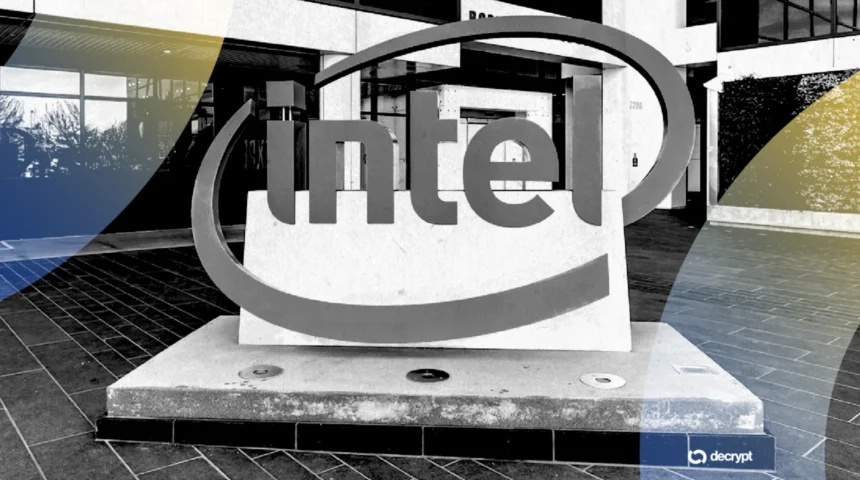
Intel shares plunged nearly 30% to close at $65.76 on Friday, swept into a historic market selloff after the iconic American chipmaker issued a fourth-quarter forecast that fell well short of Wall Street expectations. The downbeat guidance completely overshadowed an otherwise strong third-quarter earnings report, instantly erasing more than $146 billion in market value. For the legendary semiconductor pioneer, the steep drop translated into its worst single-day percentage decline in more than half a century, sending shockwaves through the broader technology sector and leaving investors to reevaluate the timeline of the company’s ambitious turnaround strategy.
The core dilemma facing Intel highlights a uniquely difficult operational paradox: demand for the company’s advanced processors is currently booming, driven largely by the massive global infrastructure buildout for artificial intelligence, yet the company finds itself unable to manufacture enough chips to fully capitalize on this unprecedented wave of demand. Simultaneously, its traditional personal computer business is experiencing a persistent slump, while the capital-intensive construction and modernization of the factories required to support its long-term recovery are consuming astronomical amounts of cash.
A Strong Third Quarter Overshadowed by Guidance
On paper, Intel’s third-quarter financial results were remarkably robust, continuing a streak of outperformance that has surprised many market watchers. Revenue climbed 21% year over year to reach $16.5 billion, while adjusted earnings per share hit $0.52. That figure easily bested the company’s internal guidance of $0.38 and comfortably surpassed the consensus estimate of $0.40 compiled by Wall Street analysts. According to Intel Chief Financial Officer Dave Zinsner, the strong showing marked the eighth consecutive quarter in which the company exceeded its own financial expectations.
The primary engine behind this strong performance was Intel’s Data Center and AI division. The segment generated a staggering $7.3 billion in revenue, representing a 78% increase compared to the same period in the previous year. Profitability within the division was equally impressive, with operating profit climbing to $3 billion—accounting for an outsized 42% of the division’s total revenue and underscoring the lucrative nature of high-end server and AI hardware when supply is available.
However, equity markets are forward-looking mechanisms, and investors quickly pivoted past past successes to scrutinize the horizon. Intel’s outlook for the fourth quarter brought the rally to an abrupt halt. The company announced it expects fourth-quarter revenue to land between $15 billion and $16 billion. Taking the midpoint guidance of $15.5 billion, Intel’s projections fall roughly $1.6 billion short of the $17.07 billion that Wall Street analysts had anticipated. Furthermore, adjusted earnings per share for the upcoming quarter are projected to tumble to $0.25, falling far below the consensus estimate of $0.43.
Margin Deterioration and Manufacturing Bottlenecks
Profitability metrics are also expected to face severe headwinds in the near term. Gross margins—a critical financial indicator measuring the percentage of revenue that remains after subtracting the direct costs associated with manufacturing products—are projected to deteriorate significantly. Intel forecast a non-GAAP gross margin of just 38% for the fourth quarter, dropping sharply from the 44.1% reported in the third quarter.
Company executives attributed this margin compression and cautious guidance to a combination of distinct structural and operational hurdles. Chief among them are a weaker-than-expected traditional PC demand environment, persistent manufacturing constraints that are limiting the output of crucial server processors, and an unfortunate operational accident at one of Intel’s primary manufacturing facilities located in Israel. These compounding factors have choked off potential revenue at a time when fixed costs remain exceptionally high.
Addressing financial analysts during the post-earnings conference call, CFO Dave Zinsner characterized 2027 as a dedicated investment year, explicitly warning investors not to anticipate positive free cash flow. Free cash flow represents the liquid capital a company retains after covering its operating expenses and necessary investments in physical equipment and infrastructure. By prioritizing long-term industrial capacity, Intel is deliberately choosing to sacrifice short-term cash generation to finance its massive manufacturing expansion.
"Probably not a dynamic where we are going to have positive free cash flow next year," Zinsner stated during the call. While he noted that Intel ultimately expects a return on invested capital of at least 20% on its advanced manufacturing node investments, he acknowledged that several major capital projects are currently running concurrently, requiring substantial cash outlays all at once.
The High-Stakes Foundry Ambition and External Partnerships
This heavy capital expenditure is the lifeblood of Intel’s overarching corporate strategy: a high-stakes attempt to rebuild its contract manufacturing business and directly challenge Taiwan Semiconductor Manufacturing Company, commonly known as TSMC, which currently reigns as the world’s leading contract chipmaker. Under this foundry model, Intel aims not only to fabricate semiconductors for its own proprietary designs but also to manufacture chips for external third-party customers on a contract basis.
This aggressive pivot has already attracted significant institutional interest and high-profile partners. In September 2025, tech giant Nvidia made a substantial $5 billion investment in Intel, alongside an agreement to collaborate on the development of custom processors tailored for personal computers and data center environments. That strategic partnership provided Intel with a much-needed financial infusion while tightly binding its cutting-edge processor architectures to Nvidia’s dominant artificial intelligence ecosystem.
Central to Intel’s technological roadmap is its next-generation 18A manufacturing process node. This advanced production technology, which serves as the foundation for upcoming products like the Panther Lake processor lineup, represents the company’s best chance to reclaim its historic technological edge over global competitors.
Adding further credibility to its foundry ambitions, Intel secured a preliminary agreement earlier this year with Apple to manufacture a portion of the tech giant’s custom silicon chips. That potential manufacturing deal briefly sent Intel shares soaring above $130 in May, offering investors a glimpse of a future where Apple diversifies its massive manufacturing supply chain to include Intel’s domestic foundries.
Yet, Friday’s dramatic market selloff serves as a stark reminder of the immense execution risk involved in a corporate turnaround of this magnitude. While Intel continues to enjoy robust, structurally high demand within its data center and AI divisions, it faces the formidable challenge of simultaneously scaling up manufacturing output, navigating a sluggish and contracting traditional PC market, and financing an extraordinarily expensive factory expansion before shareholders can reasonably expect consistent and positive cash generation.

Related News