From Garage Hobbyists to Hashrate Traders: The Evolution of Bitcoin Mining Pools

The history of Bitcoin mining is a tale of rapid industrialization. In the span of a little more than a decade, the network transformed from a decentralized collective of garage hobbyists running code on personal laptops into a multi-billion-dollar enterprise dominated by institutional players and highly sophisticated corporate operations. Understanding this transformation requires looking closely at the backbone of modern mining operations: the mining pool.
Bitcoin Inception: The Pre-Mining Pools Era (2008 – 2010)
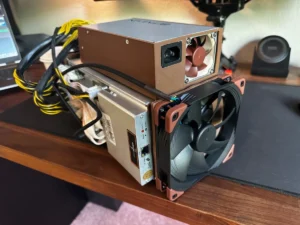
In the earliest days following Bitcoin’s launch, the network was largely the domain of cypherpunks, cryptography enthusiasts, and tech-savvy individuals mining on standard home computers. During this foundational period from 2008 to 2010, every miner operated entirely on their own.
The core cryptographic design of Bitcoin incentivizes individual miners to continuously increase their computing power to capture block rewards. This decentralized competition ensures both a fair distribution of newly minted coins and robust network security against various attack vectors, operating on the principle that the more energy consumed by the network, the more secure it becomes.
Under the protocol rules, miners earn rewards only if they successfully discover a valid block, an event that occurs roughly once every 10 minutes on average. As the total computational power—known as the hashrate—grows, the difficulty of finding a block increases proportionally. Consequently, individual miners find blocks less and less frequently. If thousands of participants join the race with escalating hardware power, a solo hobbyist might take years to win a single block reward, a high-variance proposition that makes solo mining unsustainable for smaller participants.
The landscape began to shift in late 2010. A pivotal moment occurred on December 1, 2010, when a prominent early developer known as "slush" announced a milestone on the Bitcointalk forum: "Just mined my first #bitcoin block! I wish you long and beautiful life, block No.94933…" This era of individual miners competing against one another as isolated islands was rapidly drawing to a close, paving the way for a collaborative model that would permanently alter the trajectory of the industry.
Emerging Mining Pools (1.0): From One-Man Shows to Professional Businesses (2010 – 2018)
Miners quickly grew frustrated by the severe unreliability and high variance of competing individually against an industrializing network. Out of this frustration emerged a simple, powerful concept: cooperation. The underlying ethos was straightforward—if individual miners joined forces to create an alliance, they could find blocks much more frequently as a collective, secure steady rewards, and split the proceeds proportionally based on each participant’s contributed hashrate.

Instead of an isolated "you," mining became an integrated "we." Individual miners within these newly formed pools began receiving smaller, predictable, and far more frequent rewards. This predictable cash flow allowed operators to finance new hardware upgrades, cover mounting electricity bills, and manage other essential operational expenses.
Today, the total computational power securing the Bitcoin network is so immense that a small-scale miner operating independently could theoretically take hundreds of years to discover a single block. While this high hashrate is a testament to the network’s unmatched security, it also means that solo survival is practically impossible. Miners need pools.
The earliest successful implementation of this pooling concept was built by Slush, who coded, supported, and managed the operation entirely on his own for the first two years. This reflected the broader reality of early Bitcoin mining: cyberpunks and developers experimenting with novel software ideas in their spare time. Following its launch on December 16, 2010, the pooled mining model quickly became the industry standard.

What began as a garage-based one-man show evolved into a competitive market of professionalized companies. However, running a mining pool has never been an easy enterprise. Over the years, numerous pools have launched only to fail in the face of razor-thin margins and intense market pressures. Today, only around 10 major pools compete globally, with corporate names and entities shifting frequently. Surviving pools require professional teams, dedicated IT departments, multilingual customer support, and high-end infrastructure distributed across multiple continents.
Professional Mining Pools (2.0): A Mature Market and Value-Added Services (2019 – 2023)
For roughly a decade, mining pools served as the undisputed operational standard for the industry. Yet, from a pure product perspective, innovation slowed. Because there are few trade secrets or strong technical feature differentiators in basic hashrate aggregation, pools largely became commodity software.
In this commoditized environment, fees became paramount. The total cost miners pay to utilize a pooling service dictates market share, and larger operations naturally command better terms. This dynamic sparked a race to the bottom regarding fee structures, compressing profit margins tighter and tighter and placing immense operational pressure on pool operators.

As direct revenue from pool fees approached zero—and occasionally dipped into losses—pools had to adapt to survive. Modern pool operators began acquiring customer bases through competitive fee models before offering complementary products and services designed to generate secondary revenue streams.
Concurrently, the underlying reward distribution mechanism evolved. Full-Pay-Per-Share (FPPS) firmly established itself as the industry standard. The FPPS reward model effectively de-risks reward variance for miners by paying them daily for the exact hashrate they contribute, regardless of whether the pool successfully finds a block on any given day.
While this provides miners with the consistent payouts they demand, it significantly increases financial risk for the pool operators. Because mining remains an inherently probabilistic process, a pool will occasionally discover fewer blocks than statistically expected. Under an FPPS system, the pool operator must cover the shortfall from corporate reserves, which are later replenished when the pool experiences periods of above-average block discovery. By absorbing this variance, pool operators effectively function as buyers of hashrate, intensifying the financial pressures they face in a mature market.

The Future of Mining Pools (3.0): Hashrate as a Commodity and Financial Platforms (2024 Onwards)
Faced with razor-thin margins and the structural risks of the FPPS model, pool operators are actively exploring innovative ways to extract greater upside from their accumulated hashrate. The next generation of mining pools is moving beyond simple aggregation, transforming operators into sophisticated hashrate traders.
By treating hashrate as a fluid, dynamic commodity, pools can execute strategies that go far beyond traditional block reward distribution. This commodification enables the creation of entirely new financial products, such as hashrate derivatives and futures trading. Just as agricultural commodities like corn have established futures markets, the financialization of hashrate allows miners to effectively hedge their positions, manage market volatility, and secure predictable revenues.
In this emerging framework, hashrate can be dynamically redirected in milliseconds to serve various strategic purposes without disrupting standard users. While the vast majority of a pool’s hashrate continues to operate collectively, segments can be strategically allocated or sold over-the-counter to specialized buyers. For instance, family offices and institutional investors increasingly seek out partial hashrate allocations for solo mining, enabling them to generate newly minted, clean coins with a verifiable on-chain provenance for their balance sheets.

This evolution brings the industry full circle, bridging institutional finance with the foundational desire of individuals to discover entire blocks. For forward-thinking mining companies like Braiins—which evolved from a pioneering mining pool into a comprehensive ecosystem focused on maximizing miner profitability—adapting to these structural shifts is essential.
As Braiins CEO Eli Nagar notes, the continuous adaptation of mining pools is changing the industry dynamics for the better. By treating hashrate as a liquid commodity and developing sophisticated trading and yield-generation strategies, pools can enhance profitability for miners, investors, and enterprise clients alike. Ultimately, as the market matures into its next phase, the pools that succeed will be those capable of delivering superior returns and innovative financial tools while remaining firmly rooted in the core ethos of Bitcoin.

Related News