Rupert Lowe Joins Peter McCormack to Discuss Why "The State Has Become The Enemy" of the British People
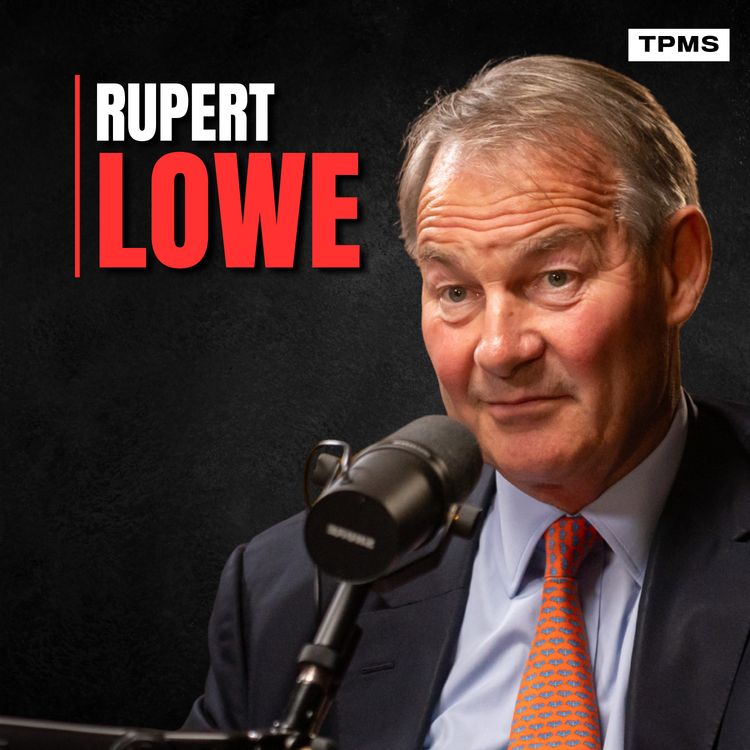
In a wide-ranging and critical assessment of modern British governance, politician and commentator Rupert Lowe sat down with host Peter McCormack for episode 177 of his podcast to deliver a stark warning about the trajectory of the United Kingdom. Under the provocative title "The State Has Become The Enemy," the discussion probed deeply into the systemic dysfunctions plaguing Parliament, the civil service, the judiciary, and the broader economic landscape, while exploring whether traditional democratic mechanisms can still rescue the nation from terminal decline.
The conversation brought together Lowe’s vocal critique of contemporary politics and his involvement with political movements like Reform UK and the newly focused initiatives of Restore Britain. Throughout the extensive interview, Lowe pulled few punches, arguing that the machinery of the British state has ballooned far beyond its intended constitutional boundaries, fundamentally transforming into an adversary of the very citizens it was established to serve.
The Erosion of Democratic Efficacy and State Dysfunction
Opening the discussion with a fundamental challenge to the political status quo, Lowe and McCormack tackled the growing public disillusionment captured by the question of whether voting has stopped working. Lowe asserted that generations of voters have felt increasingly disenfranchised because the levers of power appear entirely insulated from the democratic will. According to Lowe, the state has grown so bloated and dysfunctional that standard electoral cycles struggle to enact meaningful, structural change.
This systemic decay, Lowe argued, is not merely a byproduct of poor policy choices by individual administrations, but rather the cumulative result of decades of bureaucratic expansion. Tracing the historical roots of this phenomenon, the discussion touched upon the gradual growth of the state through intellectual traditions like Fabianism, which favored centralized planning and technocratic control over decentralized individual liberty. The outcome, Lowe suggested, is a labyrinthine governance model where accountability is virtually non-existent.

The conversation quickly turned inward to the institutional culture of Westminster itself. Reflecting on the internal mechanics of Parliament, Lowe scrutinized the internal complaint systems and administrative procedures, characterizing them as opaque and self-serving structures designed to protect the political establishment rather than enforce transparency or ethical standards. He bluntly summarized the overarching crisis by declaring that the individuals currently leading Britain are fundamentally unequipped—or unwilling—to confront the magnitude of the country’s challenges.
Legal Integrity, Sovereignty, and the Rule of Law
A central pillar of Lowe’s critique focused on the integrity of the British legal system and the principle of equality before the law. Raising deep concerns about whether Britain has effectively lost the rule of law, Lowe pointed to what he perceives as a growing two-tier application of justice, where ordinary citizens face crushing regulatory and legal burdens while institutional actors operate with impunity.

Closely tied to the debate over legal integrity is the contentious issue of immigration and the broader future of geopolitical stability in Europe. Lowe elaborated on his vision of what it truly means to "get your country back," framing it as a matter of national sovereignty, border control, and cultural preservation rather than mere partisan rhetoric. He argued that current immigration policies are unsustainable and threaten the foundational social cohesion required to maintain a stable, democratic society, outlining the specific policy approaches advocated by Restore Britain to address these pressures.
Economic Strangulation: From a 22,000-Page Tax Code to a Dying Private Sector
Shifting from political theory to economic reality, the conversation offered a devastating appraisal of Britain’s business environment and fiscal policies. Lowe drew particular attention to the sheer complexity of the nation’s financial architecture, highlighting the staggering 22,000-page tax code as a prime symbol of bureaucratic overreach. Such complexity, he argued, acts as a massive deadweight loss on the economy, stifling entrepreneurship and punishing productivity while favoring large corporations with the resources to navigate compliance labyrinths.

Elaborating on the health of the domestic economy, Lowe issued a stark warning that the private sector—the traditional engine of wealth creation and employment—is slowly dying under the weight of excessive taxation, stringent regulation, and rampant inflation. When McCormack pressed on how to fix inflation, the discussion examined the monetary policies and fiscal expansions that have eroded the purchasing power of British workers and savers alike. In this context, Lowe also touched upon alternative economic frameworks, including the growing significance of Bitcoin as a decentralized hedge against monetary debasement and state-managed financial instability.
Challenging the Machine: Political Movements and Public Apathy
Despite the bleak diagnosis, a significant portion of the interview was dedicated to examining potential pathways for resistance and renewal. Lowe reflected on the practical realities of being an individual political figure attempting to fight against an entrenched establishment machine, discussing how political movements can successfully mobilize an otherwise apathetic electorate.

Drawing on recent electoral experiences, including political campaigns in areas like Makerfield and Greater Manchester’s political dynamics under figures like Andy Burnham, Lowe analyzed how regional disaffection can be galvanized into coherent political action. The dialogue also critically evaluated the broader political landscape, addressing complex questions about whether existing alternative parties, such as Reform UK, represent genuine systemic opposition or whether they risk being co-opted by the very political apparatus they seek to challenge.
Furthermore, the discussion broadened to generational dynamics, touching upon the fiscal pressures facing younger demographics, the implications of the state pension triple lock for baby boomers, and the paradox of why many young people are increasingly gravitating toward the Green Party. Lowe contrasted these trends with his own organization’s mission to return power directly to the people, emphasizing that the stakes for the nation’s future could not be higher.

Concluding the extensive exchange, Lowe addressed the ultimate question hanging over the entire political project: what happens if attempts to restore Britain ultimately fail? Leaving listeners with a sobering thought, the episode underscored the urgent necessity for structural reform before the current imbalances within British society reach an irreversible tipping point.

Related News