Bonds At 5%: Is The 10-Year Treasury Finally A Buy After Two Decades?
By Lance Roberts
October 12, 2026

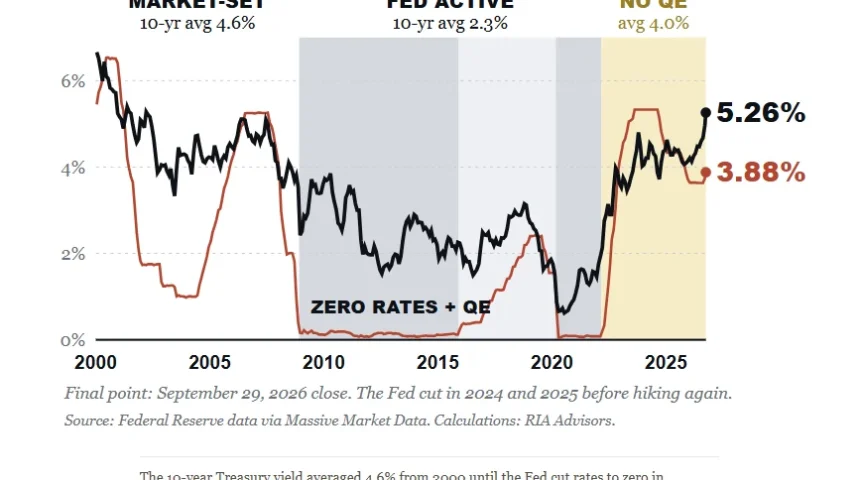
With the 10-year Treasury yield hovering at its highest nominal level since 2002, buying bonds at 5% has emerged as the first genuine income alternative that stock market investors have encountered in nearly two decades. As the 10-year Treasury yield closed September north of 5.2%, reaching a peak not seen in roughly 24 years, mainstream headlines have largely treated the milestone as a warning sign of economic stress. However, many seasoned market analysts view it as the most compelling opportunity in fixed-income assets since before the Global Financial Crisis.
The core question facing portfolio managers and individual investors alike is straightforward: are bonds yielding 5% actually worth owning, or are they merely another value trap following the worst bond bear market in modern financial history? Answering that question requires looking beyond the surface volatility and examining the structural shifts in monetary policy, historical baseline yields, and the changing mechanics of portfolio diversification.
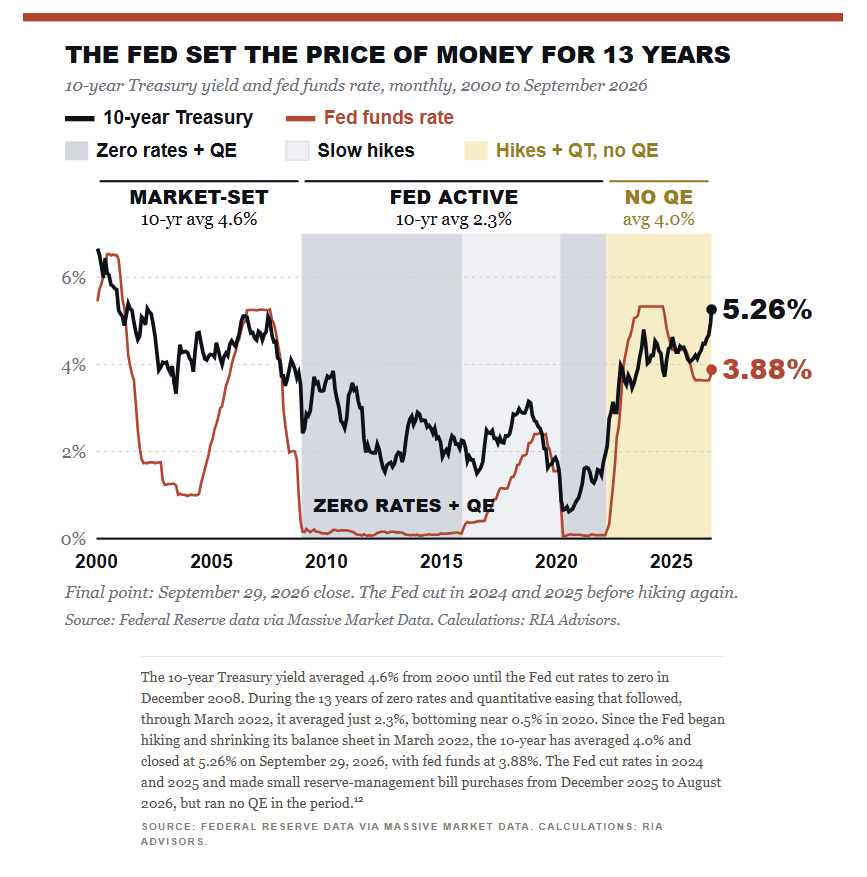
The discussion must begin with a fundamental acknowledgment of what has changed in the macroeconomic landscape. For the better part of the decade and a half following the 2008 financial crash, the Federal Reserve acted as the dominant, omnipresent buyer in the Treasury market. By holding overnight interest rates near zero from late 2008 through 2015, and repeating the emergency measure from 2020 into 2022, the central bank executed massive quantitative easing programs that injected trillions of dollars into the financial system. The explicit purpose of these interventions was to suppress long-term borrowing costs and push yields far below where a free market would naturally set them.
That policy achieved its intended effect. From 2009 through 2021, the benchmark 10-year Treasury yield averaged roughly 2.3%. By contrast, the historical average from 1990 through 2007 was significantly higher, sitting closer to 5.8%. The era of 2% yields was never a normal reflection of economic equilibrium; rather, it was the direct product of a central bank deliberately manipulating the price of money to stimulate growth.
Today, the macroeconomic setup has completely reversed. The Federal Reserve has stepped back from its role as the primary buyer, allowing private investors to take over the market-clearing process. Yields are now being established by private capital based on what investors demand to be compensated for risk, inflation, and term duration. This structural shift marks the primary reason why 5% bonds deserve a fresh look from capital allocators who spent their formative investment years in a zero-interest-rate environment.
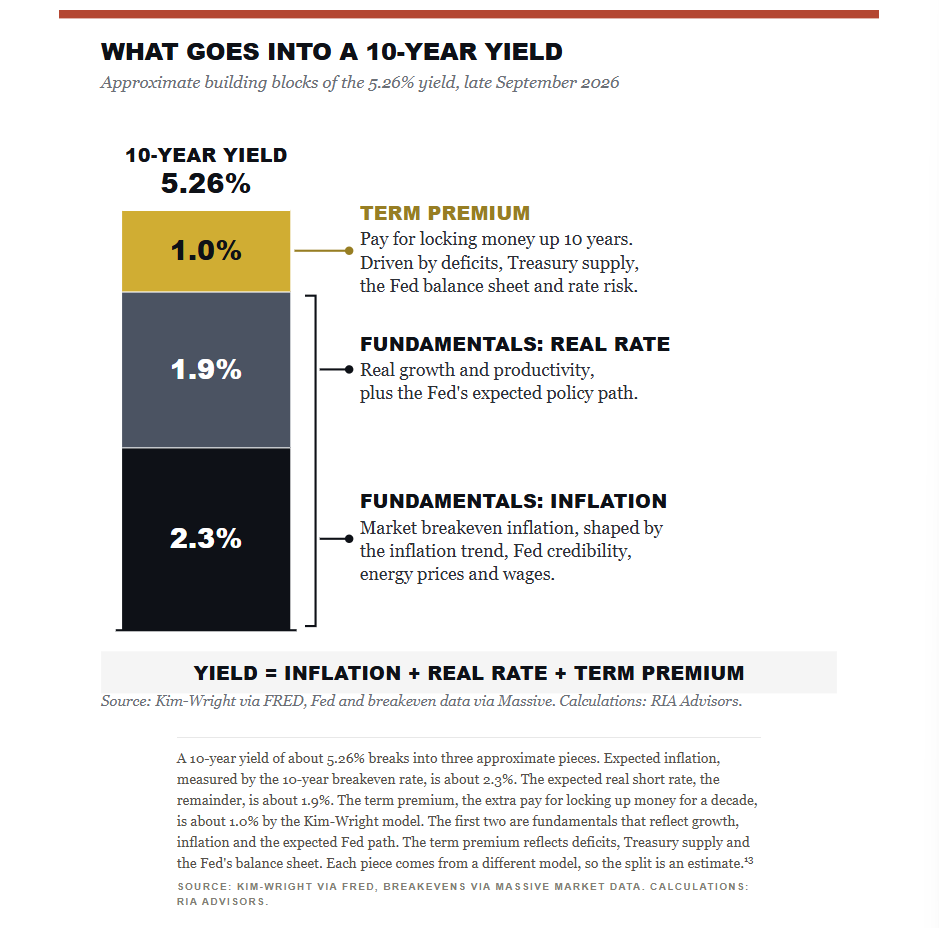
To understand how these yields are established, it helps to review the basic mechanics of a bond. Essentially, a bond is a loan: an investor hands the government a principal amount, and in return, the issuer pays a fixed coupon and eventually returns the principal at maturity. The yield represents the compensation lenders demand for tying up their capital over a specified duration. This demand is driven primarily by two economic forces: broader economic growth and inflation, which erodes the purchasing power of the capital being repaid. On top of those factors sits the term premium, which is the extra compensation required to accept the risks associated with holding a long-term commitment over a decade.

Because coupon payments are fixed, bond prices and yields move in opposite directions. If an investor holds an older bond paying a 4% coupon and newly issued bonds offer 5%, nobody will pay full face value for the lower-yielding asset, causing its market price to drop. This inverse relationship explains the steep capital losses experienced during the bond market downturn of 2022. As interest rates rose rapidly, existing bond prices fell, yet nothing about the federal government’s fundamental ability to repay its debt obligations had changed.
For an entire generation of market participants, a 5% Treasury yield feels anomalously high simply because they have been anchored to an artificially suppressed 2% world. Historical data tells a very different story. Since 1953, the 10-year Treasury yield has averaged roughly 5.6%, typically tracking slightly below the economy’s nominal growth rate. When real economic growth runs at 2.5% and inflation sits at 3.5%, nominal growth reaches the mid-5% range. In such an environment, investors will not willingly lend money at 2%, as doing so would guarantee a loss of purchasing power and a return far below what the broader economy offers.
Current economic data aligns closely with this historical framework. Real GDP expanded by about 2.2% over the trailing year, while headline Consumer Price Index inflation ran at 3.4%. This combination puts nominal economic growth firmly in the mid-5% range, meaning a 10-year yield of 5.24% is sitting precisely where a growing economy dictates. A 5% yield is not an artificial anomaly; it is the natural price of money in a healthy, growing economy.
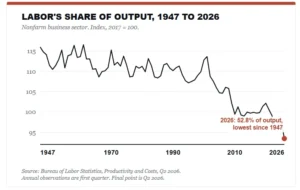
An interesting nuance in the recent rise of interest rates is that wage growth has not been the primary driver. Average hourly earnings rose 3.1% over the past year, trailing slightly behind the inflation rate, meaning workers are largely treading water in real terms. A closer examination of the move in the 10-year yield reveals that the vast majority of the increase stems from rising real yields and a higher term premium, with long-run inflation expectations moving only marginally. The market is increasingly demanding higher compensation for duration in an environment characterized by a growing federal debt load surpassing $40 trillion.

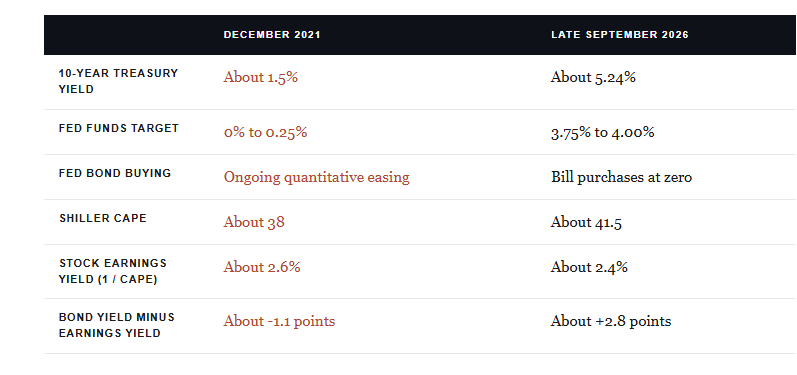
This shift has dramatic implications for asset allocation. In 2021, the stock market offered a higher earnings yield than Treasuries paid in interest, cementing the popular market mantra of TINA, which argued that "There Is No Alternative" to equities. Today, that relationship has inverted. A benchmark Treasury now pays more than twice the stock market’s cyclically adjusted earnings yield. Even when evaluating Wall Street’s more optimistic forward estimates, the S&P 500 trades at elevated valuation multiples that imply an earnings yield roughly equal to the 10-year Treasury rate. Consequently, investors weighing bonds against equities are no longer giving up current yield to hold a safer asset class.
Many investors lost sight of the fundamental purpose of holding bonds following the severe market turbulence of 2022. Watching the value of their fixed-income portfolios decline week after week led some to conclude that bonds were broken. However, judging a foundational asset class by a single inflation shock is akin to judging the climate by a single season of adverse weather. The market price reflects immediate conditions, but the coupon and maturity date represent the long-term structural reality.
Investors typically allocate capital to bonds for three core reasons: lower portfolio volatility, the eventual return of principal at maturity, and a reliable stream of income. Since 1928, the annualized volatility of a 10-year Treasury has hovered around 5.5%, compared to roughly 15.5% for equities. Furthermore, a Treasury security held to maturity returns its full face value regardless of interim price fluctuations, and a 5% starting yield ensures that the income generated finally does meaningful work within a portfolio.
While it is true that many bond funds remained underwater following the historic rate hikes of 2022, those losses originated from an exceptionally low starting yield of 1.5%, which provided virtually no cushion against rising inflation. Historical records show that bonds generally fail to protect portfolios during only one specific type of economic environment: an inflation shock. Because inflation simultaneously erodes the value of fixed coupons and forces central banks to hike rates, it is the one condition that negatively impacts both stocks and bonds concurrently. However, a bond purchased at a 5% yield possesses a significantly larger structural buffer than one bought near zero.
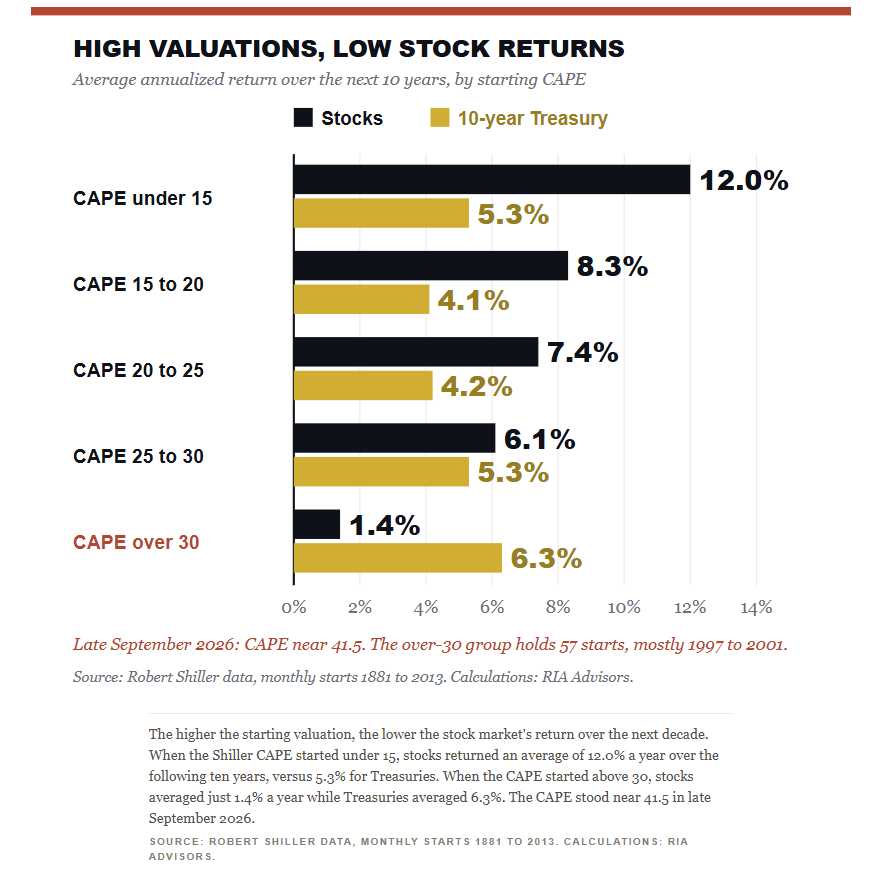
Credit risk remains a frequent concern among market skeptics, particularly given the massive scale of the national debt and recent sovereign credit rating downgrades. Major rating agencies have adjusted the United States credit rating downward in recent years, and net federal interest expenses have risen substantially compared to historical averages. Despite these fiscal pressures, the definition of a risk-free asset in global finance has always hinged on credit risk rather than market price fluctuations. The United States borrows in the currency it issues, and Treasury securities serve as the foundational collateral underpinning the global financial system. The mathematical probability of the federal government failing to make a scheduled coupon payment or return principal is virtually zero, which explains why previous credit rating downgrades caused little more than a momentary ripple in actual trading.
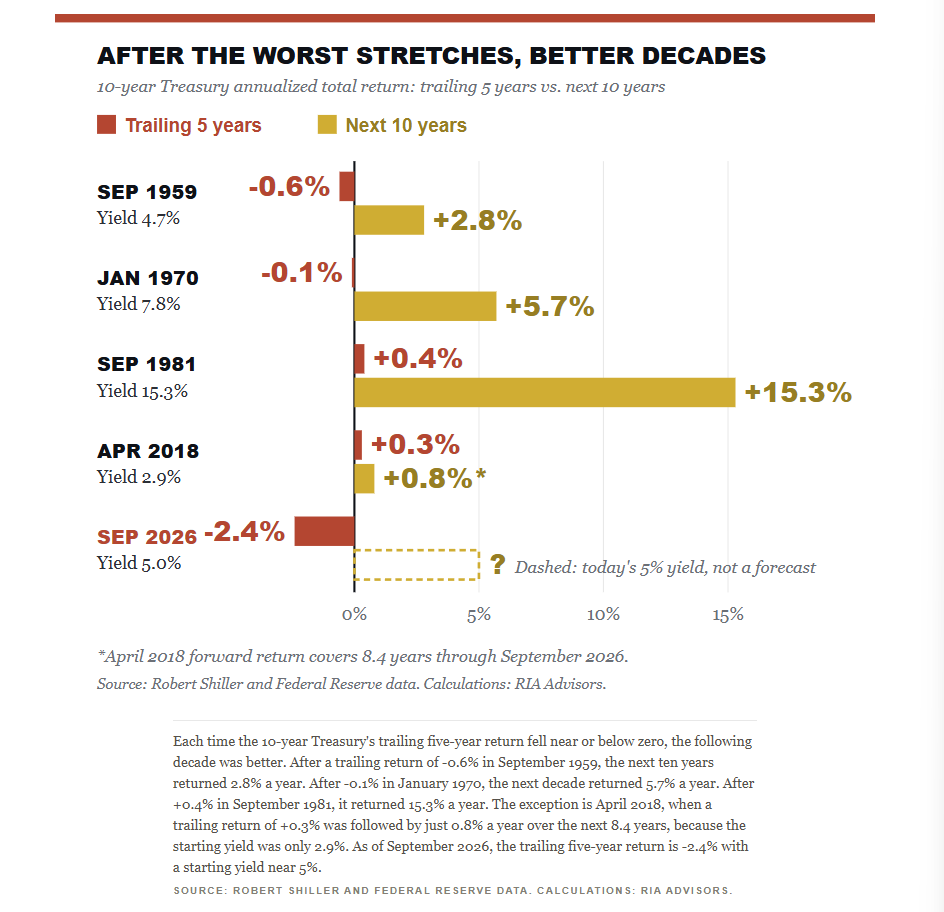
Looking ahead, historical market cycles offer significant context for the next decade of fixed-income returns. Prior to the recent bear market, trailing five-year total returns for the 10-year Treasury had fallen near zero only a handful of times since 1871. In almost every historical instance, those periods of poor trailing performance were followed by a substantial recovery, with the magnitude of the rebound directly tied to the starting yield left behind after the damage occurred.

The historical record indicates that the starting yield is the single most reliable predictor of future returns over a ten-decade horizon. Since 1881, the initial yield has explained approximately 91% of the variation in 10-year Treasury returns over the ensuing decade. For investors locking in yields between 4.75% and 5.75%, historical analogues point to strong annualized returns moving forward, providing a level of contractual predictability that the equity market simply cannot match.
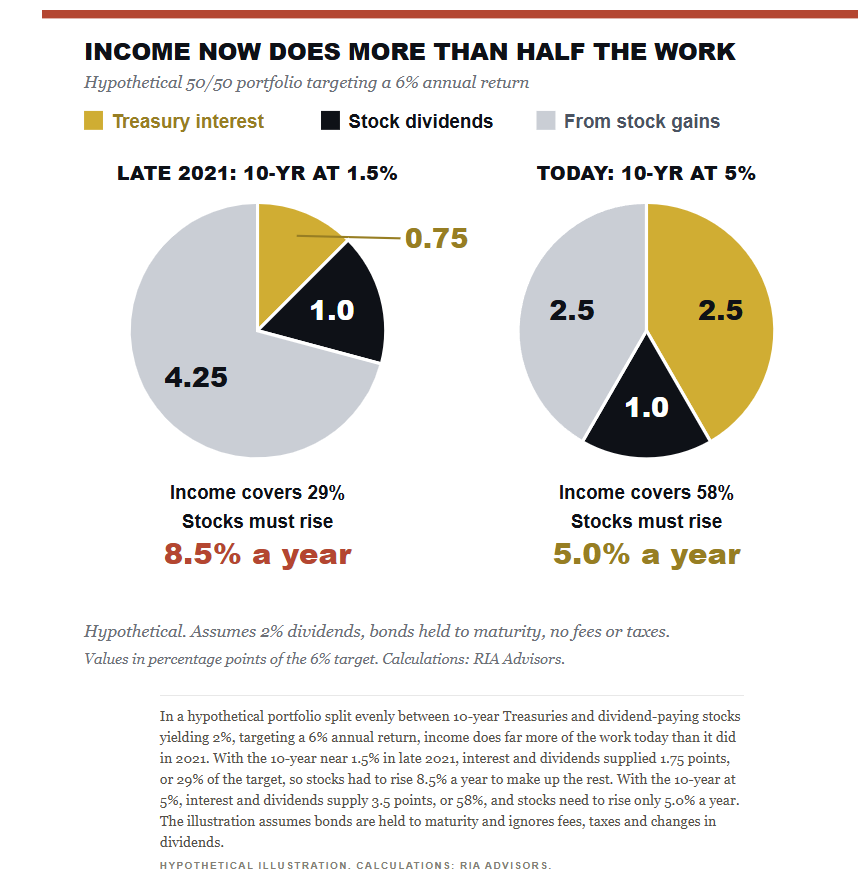
When these dynamics are integrated into broader portfolio construction, the math behind asset allocation shifts favorably. For an investor targeting an annual portfolio return of 6%, a balanced approach dividing capital equally between Treasuries yielding 5% and dividend-paying equities yielding 2% generates a substantial portion of the required return in cash before factoring in any capital appreciation from stocks. This high baseline of income significantly dampens overall portfolio volatility, allowing investors to navigate market drawdowns with greater financial resilience.
While no investment strategy is entirely without risk, and potential headwinds such as persistent fiscal deficits or unexpected energy shocks could influence near-term price action, the underlying fundamentals of the bond market have fundamentally improved. For the first time in a generation, fixed-income assets offer a competitive, predictable return that reduces the burden on equities, giving investors a viable and attractive alternative as they plan for the decade ahead.

Related News