A New Era in Belgrade: Student-Led Movement Ends Aleksandar Vucic’s Decade-Long Political Dominance
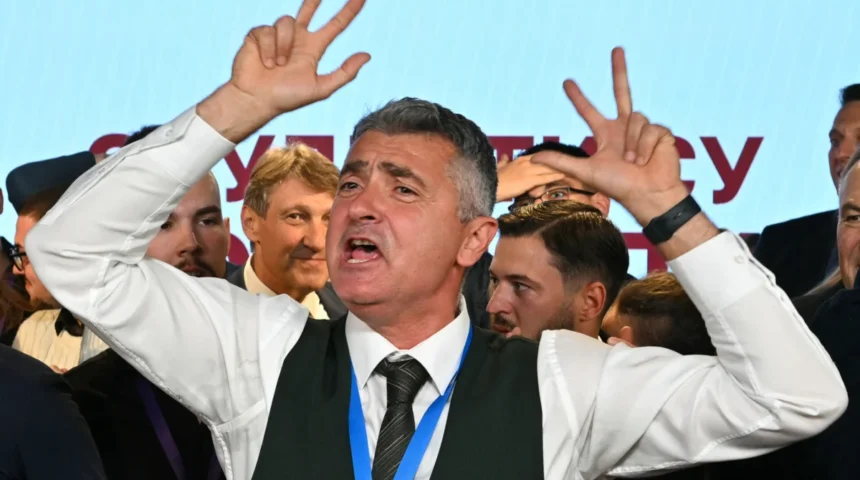
A historic political earthquake has shaken the foundations of Serbian governance as a student-led opposition movement secured a decisive victory in the country’s snap parliamentary election. This remarkable triumph effectively brings an end to former President Aleksandar Vucic’s long and tight grip on political dominance, ushering in an era of profound uncertainty regarding key governmental positions while opening a new chapter for the Balkan nation’s democratic trajectory.
The triumphant rise of the Student List on Sunday was the culmination of nearly two years of relentless, youth-led protests that swept across the country. These demonstrations were initially ignited by a profound national tragedy in 2024, when a concrete railway station canopy collapsed in the northern city of Novi Sad, claiming the lives of 16 people. What began as an outpouring of grief and urgent demands for immediate institutional accountability quickly morphed into a much broader, highly organized political campaign. The public anger fueled by the disaster served as a catalyst for citizens to confront alleged systemic corruption and the perceived capture of democratic institutions by the ruling establishment.
As the movement matured, its platform expanded to address deep-seated socio-economic and political grievances. In its comprehensive electoral programme, which was officially presented to the public in September, the Student List outlined a clear set of priorities. At the forefront of their agenda was a fierce commitment to fighting corruption and organized crime, issues that critics argue had plagued the state apparatus for years. Furthermore, the alliance pledged to significantly raise living standards, boost national employment rates, and revitalize the education sector. Crucially, the movement also promised to fiercely protect and restore media freedom and guarantee the absolute independence of Serbia’s vital state institutions.
Beyond domestic reforms, the movement signaled a significant shift in foreign policy positioning. Following its decisive victory declaration on Sunday, representatives of the student-led coalition emphasized their intention to actively work toward improving diplomatic and regional relations with neighboring countries. This diplomatic reset aims to mend ties that suffered during the prolonged tensions of Vucic’s decade-plus rule, signaling a desire for regional cooperation and stability.
What Are the Latest Results?
The definitive contours of this political upheaval were confirmed by the Republic Election Commission (RIK) on Monday. Based on the processing of 8,077 out of 8,392 polling stations, the official figures revealed that the Student List had captured a commanding 52.54 percent of the vote.
In contrast, the United Serbia list, spearheaded by Vucic’s long-ruling Serbian Progressive Party, secured 39.29 percent of the ballots cast. The election also witnessed an unprecedented surge in civic engagement, with voter turnout reaching a staggering 68.78 percent. According to historical RIK data released on Sunday, this represented the highest voter turnout recorded in Serbia in more than three decades, underscoring the deep public mobilization and desire for change among the electorate.
What’s Next?
Although final, certified election results are still pending, the current figures provide a clear mathematical roadmap for the formation of the next government. The sweeping success of the Student List means that the alliance will be capable of forming a governing majority in Serbia’s 250-seat parliament entirely on its own, bypassing the need for complex and potentially contentious coalition negotiations.
Current projections indicate that the reformist bloc is on track to win 140 seats in the National Assembly. This safely places them well ahead of the 126 mandates required to secure a parliamentary majority. Meanwhile, the United Serbia coalition is expected to retain 103 seats. The remaining handful of mandates in the legislature are projected to be distributed among smaller minority and regional parties, with the Alliance of Vojvodina Hungarians securing three seats, the Albanian political bloc taking two, and the Rasim Ljajc-Ljudski and SDA Sandzak lists winning one seat each.
Who Could Be the New Prime Minister?
While the United Serbia camp ran a highly centralized campaign that explicitly named Vucic as its designated candidate for prime minister long before voters went to the polls, the Student List adopted a markedly different strategy. Throughout the electoral cycle, the movement deliberately refrained from highlighting a single prospective leader. This approach was carefully designed to reinforce the collective nature of a diverse movement that successfully brought together academics, medical professionals, and ordinary workers under one political banner.
During the intense weeks of campaigning, the public face and leading voice of the movement was Ilija Srdanovic, a respected professor at the Faculty of Medicine at the University of Novi Sad. Srdanovic, a practicing cardiologist, has quickly emerged as the frontrunner and is widely viewed as the most likely candidate to step into the role of Serbia’s next prime minister. However, despite his prominent role in the campaign, significant uncertainty remains regarding who will ultimately take charge of other critical government ministries, particularly the powerful portfolios overseeing internal affairs, finance, and justice.
When Will Be the New Government Formed?
The precise timeline for the establishment of the new administration depends heavily on the administrative milestones established by electoral law. Specifically, the process is contingent upon the official announcement of the final election results and the subsequent convening of the newly elected parliament.
Under legal provisions, the newly constituted National Assembly must be formally established within 30 days of the final election results being officially published. Following that legislative assembly, a new government must be successfully formed within a subsequent 90-day window. However, political analysts note that the overwhelming majority secured by the Student List significantly streamlines this timeline, entirely removing the potential delays typically associated with lengthy coalition-building talks.
What About the President?
The departure of Aleksandar Vucic marks the end of an era in which he dominated the pinnacle of Serbian politics for more than a decade, serving first as prime minister beginning in 2014 and subsequently transitioning into the presidency.
Following his decision to call last month’s snap parliamentary vote and his subsequent formal resignation, the presidential office has been held in a temporary capacity by Ana Brnabic, who also serves as the president of the National Assembly. Under the legal framework governing the office, Brnabic is constitutionally obligated to call an extraordinary presidential election. This mandatory vote must be scheduled and held no later than three months after the official conclusion of Vucic’s presidential mandate.
Because Vucic formally stepped down from the presidency on September 27, the strict legal deadline to hold the extraordinary presidential vote falls on December 27. While the president of Serbia is elected directly by the eligible citizens rather than through representatives in the national assembly, the constitutional powers of the office are largely ceremonial, meaning the true locus of executive power in the upcoming political landscape will rest squarely within the newly empowered parliament and the incoming cabinet.

Related News