US Military Prepares New Options for Strikes on Iran Amid Rising Regional Tensions
The United States military has drawn up a fresh suite of options for renewed attacks against Iran, according to reports from the Washington-based website The Hill, injecting high-stakes volatility into a conflict that is rapidly approaching its eighth month.
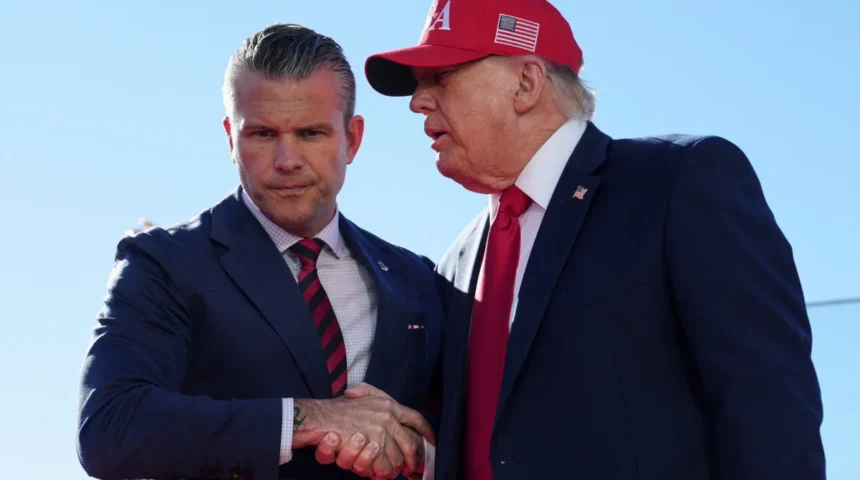
Central Command (CENTCOM), the unified combatant command responsible for overseeing US military operations and forces throughout the Middle East, has reportedly finalized plans for follow-up military strikes should they receive formal authorization from the White House. Military planners have also prepared several distinct tactical pathways for Defense Secretary Pete Hegseth as regional friction threatens to boil over into an unmitigated, full-scale regional war.
The emerging military blueprints focus heavily on potential operations following the November 3 US midterm elections. However, President Donald Trump injected immediate urgency into the equation during a recent public appearance, suggesting that the United States could initiate strikes as early as “tomorrow,” while simultaneously keeping the door open for what he described as a “big, beautiful” diplomatic agreement with Tehran.
Iranian President Masoud Pezeshkian has countered by accusing Washington of deliberately derailing diplomatic negotiations, though he maintained that efforts to achieve a negotiated settlement should ultimately continue. With both capitals trading warnings of impending violence and mutual escalation, international observers are increasingly asking whether the ongoing conflict could tip back into a catastrophic, full-scale war.
What Are the Military Plans?
The latest intelligence and reporting suggest that high-level military preparations are advancing rapidly across the defense apparatus, though it remains entirely unclear which specific options President Trump might ultimately approve, or precisely when he might choose to greenlight them. Earlier this month, Axios reported that the Pentagon had formally instructed CENTCOM to complete all necessary preparations for a potential resumption of major combat operations. According to sources cited in those reports, a renewed military campaign would likely target critical Iranian energy facilities, vital national infrastructure, and contested nuclear installations.
These rigorous preparations do not, on their own, constitute a direct order to launch an attack. The ultimate decision rests squarely with Trump, whose public rhetoric continues to walk a fine line between the active threat of military intervention and the pursuit of a lasting diplomatic breakthrough.

Meanwhile, a report published by The New York Times indicated that the US and Israel have drawn up joint operational plans for an attack on Iran scheduled for the period immediately following the midterm elections. These synchronized military reports arrive in tandem with heightened US intelligence warnings regarding alleged Iranian threats targeting American military and diplomatic personnel stationed overseas.
An intelligence memo distributed by Director of National Intelligence Jay Clayton to Secretary of State Marco Rubio stated that Iran had “substantially increased efforts to target US personnel,” noting that various lethal plots had reached “advanced stages” in multiple locations throughout the Middle East and beyond. In response to these credible threats, the Department of State has ordered immediate staffing reductions at several regional diplomatic missions. While the publicly cited memo did not identify specific individual targets or pinpoint an exact timeline for any alleged attacks, it underscored the precarious security environment.
President Trump has consistently added to the overarching strategic uncertainty. At a political rally, he remarked that Washington “may do another little Epic Fury,” a direct reference to the codename given to the initial US-Israeli joint military operation against Iran that commenced on February 28. Although he subsequently declined to commit to a firm timetable for a potential new strike, his public statements have kept adversaries and allies alike guessing about the immediate future.
Security analysts note that these maneuvers serve multiple overlapping strategic purposes. Julie Norman, an associate fellow at Chatham House, explained that the ongoing military preparations function simultaneously as short-term posturing and as a genuine operational capability for the weeks following the midterms.
“With Trump, I think he is always keeping options on the table, but I think this particular drawing up of plans is an immediate posturing deterrent, but also a very real option after the midterms,” Norman told Al Jazeera.
This posture of readiness is further underscored by tangible force movements. The United States is actively deploying a third aircraft carrier strike group—the USS Theodore Roosevelt—alongside roughly 10,000 additional troops and the 13th Marine Expeditionary Unit to the Middle East, with deployments scheduled for completion by the end of November.
How Has Iran Responded?
Tehran has adopted a dual-track strategy, combining appeals for the resumption of diplomatic talks with stark warnings that any renewed US attacks will be met with a severe, expanded military response.

“We were having negotiations, the cowards messed everything up,” Pezeshkian said in broadcast remarks, before adding that notwithstanding the setbacks, efforts to conclude a formal agreement should not be abandoned.
Diplomatic friction has also disrupted international engagements. Iran’s parliament speaker and chief negotiator, Mohammad Bagher Ghalibaf, was forced to miss the 12th BRICS Parliamentary Forum in New Delhi, according to an announcement from the Iranian Embassy in India, which cited vague “unforeseen circumstances” without providing further elaboration.
On the ground and at sea, the confrontation continues to manifest in kinetic skirmishes. The Iranian army claimed it successfully shot down a US-developed LUCAS drone flying over the strategic southern port city of Bandar Abbas, according to reports from the semi-official Tasnim news agency. Additionally, Reuters reported—citing Iranian security officials—that Tehran has drafted contingency plans to target critical undersea communications cables running through the Gulf should US and Israeli forces launch a new wave of attacks.
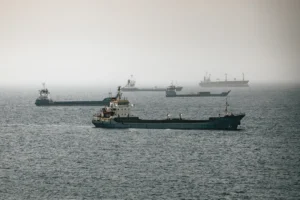
These developments followed earlier Iranian assertions that seven commercial oil tankers had caught fire or sustained significant damage in and around the Strait of Hormuz. In response to the worsening security climate, Tehran announced a definitive shift in its national military posture toward an explicitly “offensive” doctrine, warning that any foreign nations hosting military bases utilized in US strikes would instantly become legitimate targets.
“Our defence doctrine was previously defensive; we used to say that if a country attacks us, we will respond. Now we say that if a country attacks us, we will both respond and launch an offensive,” stated Islamic Revolutionary Guard Corps spokesman Hossein Mohebi.
This stark doctrinal shift significantly broadens the geographic scope of potential retaliation, placing neighboring energy infrastructure and US-allied states directly in the crosshairs.
“Iran is also drawing up its own target lists to include energy infrastructure and US-aligned states,” Norman noted. “So I would say both parties are certainly very prepared for another round of escalation and projecting preparedness to each other. In the meantime, there is a very high risk of miscalculation by either side, a very high risk of rapid escalation.”
The human and economic toll of the ongoing hostilities is already acute. October has been recorded as the worst month for maritime attacks on shipping vessels in and around the Strait of Hormuz since the broader war erupted in February, with more than 120 separate attacks logged to date.

Would Another Attack Serve Strategic Interests?
The political timing of a potential escalation remains exceptionally sensitive. President Trump faces intense domestic pressure to avoid triggering a major new regional conflict on the eve of the US midterm elections. Concurrently, Israeli Prime Minister Benjamin Netanyahu has been fiercely advocating for a renewed military offensive as his domestic political support wavers in opinion polls ahead of crucial domestic votes. Netanyahu has repeatedly reiterated that the ultimate overthrow of Iran’s ruling government remains Israel’s “primary objective” in the theater.
Regional experts suggest that the accumulation of military indicators points ominously toward renewed combat rather than a diplomatic breakthrough. Mohamad Elmasry, a professor at the Doha Institute for Graduate Studies in Qatar, argued that recent actions speak louder than mixed diplomatic messaging.
“There is a lot of signalling, a lot of posturing suggesting that we are headed for another round of fighting,” Elmasry told Al Jazeera, pointing to Defense Secretary Hegseth’s recent high-profile visit to Israel and Washington’s tactical drawdown of diplomatic and military personnel from regional outposts. “All of that would suggest that the US and Israel are planning [another round of attacks] on Iran, either soon or very soon. One of the fears is this next round of fighting could actually be more dangerous, more catastrophic than the previous round.”
As military planners finalize their briefs and aircraft carriers steam toward Middle Eastern waters, analysts emphasize that the fundamental strategic dilemma facing the White House remains unresolved.
“The big question for Trump from military advisers is—what would a further round of escalation bring that the other rounds didn’t?” Norman asked. “What would these strategies do to force Iran to the negotiating table? And I don’t think there has been a clear answer to that.”

Related News