The Evolution of Bitcoin Mining Protocols: From Early Inefficiencies to the Stratum V2 Revolution
The infrastructure underpinning Bitcoin mining has undergone a dramatic transformation since the network’s inception, evolving from rudimentary setups handled by individual enthusiasts to a highly sophisticated global industry. At the heart of this evolution lies the communication protocols that connect miners to mining pools. As the network’s hashrate expanded exponentially from roughly 10 terahashes per second (TH/s) to over 600 exahashes per second (EH/s), these foundational protocols had to adapt to overcome severe scalability bottlenecks, security vulnerabilities, and centralization pressures. Today, the industry stands on the brink of another major paradigm shift with the widespread development and adoption of Stratum V2, a protocol designed to restore miner autonomy and bolster network resilience.
History of mining pools and protocols
In the early days of Bitcoin mining, participants interacted directly with the core protocol by running full nodes on their local machines. As the difficulty of mining increased and solo mining became increasingly unviable for individual hardware setups, pooled mining emerged to aggregate computational power and distribute rewards more predictably. To standardize communication between individual mining rigs and the Bitcoin protocol itself, an open-source solution known as the "getwork" protocol was widely adopted.
The getwork protocol relied on HTTP to facilitate communication between miners and the Bitcoin network. However, because HTTP was fundamentally designed for serving web pages rather than coordinating high-frequency peer-to-peer operations, its limitations quickly became apparent as mining gained popularity. By 2012, these architectural inefficiencies had escalated into major operational hurdles. The exponential growth of the network hashrate demanded a massive amount of network bandwidth on the miner side, while requiring a practically infeasible amount of bandwidth on the server side—the mining pools—to manage the surging participation of miners.
It became unmistakably clear that getwork was not a scalable solution for a rapidly growing financial network. This realization prompted Marek "Slush" Palatinus, who founded the pioneering Slush Pool in 2010, to engineer an alternative. Reflecting on the collaborative spirit of the era, Slush later highlighted the contributions of early developers, noting how open-source GPU miners like the one created by developer m0mchil liberated the network from the dominance of a few players running closed-source software. Drawing on these collaborative foundations, Palatinus developed the Stratum protocol, commonly known as Stratum V1, to optimize communication between miners and pools. For over a decade, Stratum V1 has served as the industry standard, proving resilient enough to withstand the network’s staggering growth.
The current state of the mining protocol
Despite its longevity and historical importance, Stratum V1 has faced substantial criticism from developers and security researchers over the years. One early point of contention was the manner of its rollout. Stratum V1 was developed largely away from the public eye without a formal Bitcoin Improvement Proposal (BIP) to document its implementation. Defenders of the protocol have argued that Stratum V1 is not directly tied to the core Bitcoin protocol or its implementation, but rather functions as a custom pooled mining extension that did not strictly require an official BIP.

Controversy deepened due to timing. While Stratum V1 was being developed, the broader Bitcoin community spent months working on an open-source alternative called "getblocktemplate" (BIP22), which was intended to serve as the definitive modern successor to getwork. The simultaneous release of Stratum V1 fragmented community consensus and stunted the direct adoption of the getblocktemplate protocol. Nevertheless, Stratum servers continued to utilize an underlying getblocktemplate mechanism, wrapping it in a suite of performance improvements.
Unfortunately, bypassing the pure getblocktemplate solution introduced a significant drawback: miners surrendered the ability to construct their own block templates and choose which transactions were included in the blocks they mined. While this compromise did not disrupt the fundamental economic incentives of mining—since miners are universally incentivized to include the highest fee-paying transactions—it created a latent vulnerability. If a pool operator were to be compromised or intentionally malicious, the centralized control over transaction selection opened the door to potential censorship or improper block construction. This exact vulnerability is what modern initiatives like Stratum V2 aim to eliminate by returning block construction power to the miners.
Security concerns have also plagued Stratum V1. In a notable academic paper titled Hardening Stratum, the Bitcoin Pool Mining Protocol, researcher Ruben Recabarren demonstrated that Stratum V1 is vulnerable to potential man-in-the-middle attacks. Although widespread, catastrophic incidents of hashrate hijacking remain rare and largely unreported, the theoretical risk of undetected interception underscored the urgent need for a more secure architecture. Preventing hashrate robbery is a foundational design goal of Stratum V2. While Stratum V1 performed admirably during the formative years of the industry, the exponential scaling of the Bitcoin network necessitated a more robust successor.
BetterHash proposal by Matt Corallo
For the vast majority of Bitcoin’s history, pool operators have held absolute control over transaction selection within mined blocks. Pools assigned work to miners, and miners returned completed shares, creating a dynamic where participants relied heavily on the honesty and fair dealing of pool administrators.
To combat this systemic centralization risk, developer Matt Corallo—then with Chaincode Labs and later associated with projects like Spiral, Blockstream, and Square—proposed a modernized mining protocol known as BetterHash in 2018. BetterHash effectively superseded the older getblocktemplate approach by introducing structural improvements designed to let pools accept work from miners who independently constructed their own block templates.

The core philosophy of BetterHash was to decentralize power by returning transaction selection control to individual miners rather than centralizing it within pool servers. By empowering miners to assemble their own blocks, the protocol aimed to create an immediate defensive mechanism against pool-level transaction censorship or faulty block construction. Despite its noble intentions and innovative framework, BetterHash encountered technical implementation hurdles that made adoption difficult for existing mining pools, causing the proposal to stall in the specification phase.
Comparing bitcoin mining protocols: Stratum V1, Better Hash, Stratum V2
Evaluating the progression from Stratum V1 through BetterHash to Stratum V2 reveals a clear trajectory toward enhanced efficiency, cryptographic security, and miner autonomy. While Stratum V1 established reliable communication at the cost of centralized block assembly, and BetterHash attempted to correct this imbalance without achieving commercial traction, Stratum V2 successfully bridges the gap between performance and decentralization.
Stratum V2 drastically reduces network bandwidth usage, accelerates communications between mining rigs and pools, and introduces rigorous cryptographic security measures designed to neutralize man-in-the-middle attacks. Crucially, it reinstates comprehensive miner control over transaction selection—a capability that was stripped away in Stratum V1 and only partially addressed by BetterHash. These combined technical enhancements position Stratum V2 as a safer, leaner, and fundamentally more decentralized foundation for the future of Bitcoin mining.
Stratum V2 – the mining protocols endgame
Developed initially in 2019 by Braiins founders Pavel Moravec and Jan Čapek in collaboration with Matt Corallo and other prominent industry specialists, Stratum V2 represents the convergence of years of protocol research. It functions simultaneously as a direct upgrade to the legacy Stratum architecture and a logical evolution of the BetterHash philosophy.
The protocol yields substantial operational advantages across the board. By optimizing data transmission, Stratum V2 reduces bandwidth requirements, making mining operations more efficient and lowering the hardware overhead needed to run mining infrastructure. Most importantly, it restores the autonomy of individual miners by enabling them to select their own transaction sets for inclusion in blocks, thereby dispersing decision-making power and reinforcing the decentralized ethos of the Bitcoin network.

Adoption of the protocol has steadily gained momentum across the industry. Several major mining pools, including Braiins Pool, have integrated the protocol to improve operational safety and efficiency. Development efforts reached a major milestone in March 2024 when a coalition of developers released the official Stratum V2 Reference Implementation (SRI) v1.0. This release built extensively upon the original specifications established by the Braiins founders and Matt Corallo, providing the open-source tooling necessary for broader ecosystem integration.
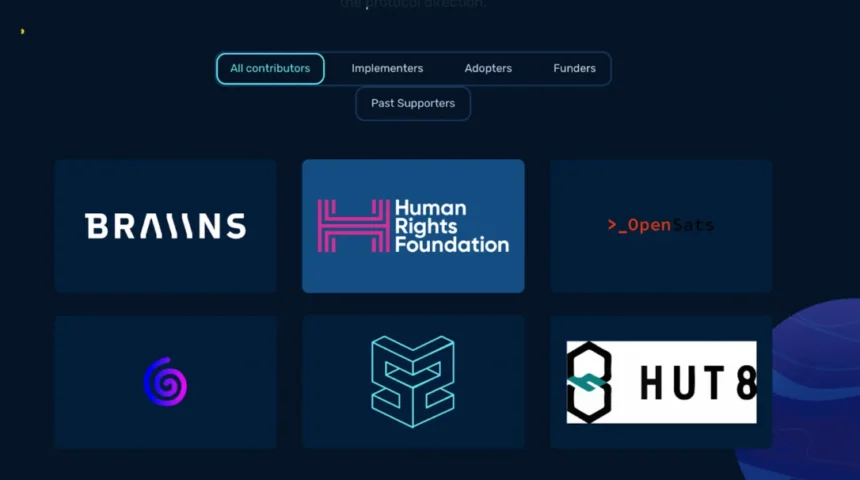
As the movement behind Stratum V2 continues to expand, numerous industry-leading companies and mining operations are aligning with the initiative to secure the network’s next chapter of growth.

Related News