Iran says seven ships hit in Hormuz Strait, warns US of wider response
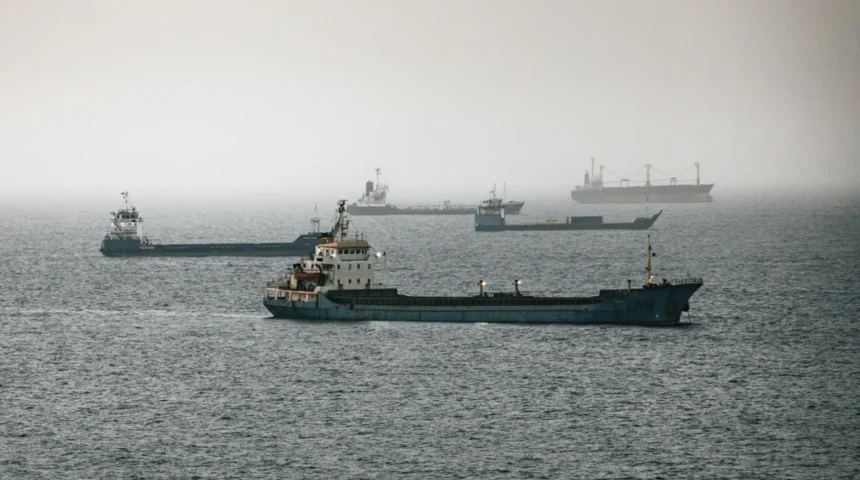
According to a formal statement released by the IRGC on Thursday via its Sepah News website, four of the targeted vessels were actively transferring crude oil when they were struck overnight, subsequently catching fire. The remaining three tankers were reportedly disabled after hitting naval mines deployed in the area.
The Iranian claims, however, could not be independently verified. The initial military reports provided no specific details regarding the flags under which the damaged tankers were sailing, nor did they offer any official accounting of possible casualties or the extent of the environmental impact in the heavily congested shipping corridor.
The Strait of Hormuz represents one of the most geopolitically sensitive chokepoints in the world. Prior to the outbreak of the current conflict, roughly one-fifth of the entire global petroleum supply passed through its narrow waters. Iran, which claims strategic control over the passage, frequently targets vessels attempting to navigate the strait without prior authorization from Tehran.
In response to the growing maritime threat, the United States military has steadily increased its escort operations, deploying naval assets to safeguard commercial vessels transiting the corridor. This heightened military presence has, in turn, prompted Tehran to step up its attacks against both commercial shipping and coalition forces.
Capitalizing on the heightened state of alert, the IRGC issued a stark and direct warning to Washington, threatening to expand the geographical scope of the ongoing conflict if the United States attempts to assist tankers navigating other segments of the strait.
“The US military must know that if this trend continues, the conflict will extend to its bases in the region,” the IRGC stated. “This is a serious warning.”
The claims from Tehran were met with swift and categorical dismissal from Washington. United States President Donald Trump took to his Truth Social platform on Thursday to push back against the IRGC’s announcements, framing the reported attacks as a deliberate political maneuver designed to manipulate global markets.
“Iran is doing everything they can to drive up the price of oil prior to the US Midterm Election,” President Trump wrote. He added that Iranian authorities “are making up fake hits, mines, and everything else because more oil is coming through the Hormuz Strait now than it did even prior to the beginning of the conflict.”
Echoing the president’s skepticism, a spokesperson for the United States Central Command, speaking anonymously to Al Jazeera, dismissed the Iranian assertions regarding maritime mines as entirely incorrect. The military spokesperson emphasized that United States forces have been systematically clearing international shipping lanes of mines, asserting that Iran has instead been relying on missile and drone strikes to harass maritime traffic.
Despite the persistent threat of hostilities, the Central Command spokesperson maintained that the strategic strait remains open for transit, estimating that approximately 95 percent of commercial vessels are successfully navigating the corridor. Furthermore, the spokesperson characterized the recent spate of attacks as a clear indicator of Tehran’s growing desperation under the weight of the ongoing United States blockade, which has severely restricted Iran’s access to the resources needed to rebuild military capabilities that Washington claims to have largely dismantled.
Americans want ‘relief’ from war costs
Reporting from the Iranian capital, Al Jazeera correspondent Mohamed Vall noted that the frequency of maritime skirmishes continues to escalate unabated.
“The number of ships and tankers attacked every single day is increasing, and Iran is saying it is continuing to do this because they are not going to allow any change in that situation,” Vall reported from Tehran. “They have full control over the Strait of Hormuz right now, they say.”
Vall added that political circles in Tehran are increasingly anticipating an imminent escalation in the broader conflict. Iranian leadership reportedly expects the United States to launch further military actions even before the pivotal United States midterm elections scheduled for early November.
“The IRGC army chief has boasted that Iran is more ready than anytime before, and has produced enough weapons and equipment to wage a symmetrical war against the United States,” Vall said.
Meanwhile, the political ramifications of the protracted conflict are being keenly felt domestically within the United States. Reporting from the White House, Al Jazeera correspondent Kimberly Halkett highlighted the delicate political balancing act facing the administration as the midterm elections draw near.
“Striking Iran does not appear to serve any Republican interests,” Halkett noted, pointing out that pre-election polling data consistently reflects widespread public wariness regarding the conflict.
“What we’ve seen in surveys in recent months, and as of today, is that most Americans want relief from their tax money going to pay for any potential war with Iran that is ramped up,” Halkett explained.
She emphasized that everyday citizens are experiencing mounting frustration over the economic toll of the hostilities, particularly regarding the elevated fuel prices that have rippled through the domestic economy as a direct consequence of the disruption in the Persian Gulf.
“There is real frustration over the rising cost for everyday Americans, given the rising fuel prices that have occurred as a result of this conflict,” Halkett said. “As a result, the US president is having to make the case.”
As the diplomatic and military standoff persists, the administration finds itself under intense scrutiny from both political opponents and members of its own party.
“The pressure is on the president, and it’s not just from the opposition party,” Halkett concluded. “It is also from within the Republican Party as well.”

Related News