Israeli Court Releases Nine Settler Suspects Amid Rising International and Domestic Outcry Over West Bank Violence
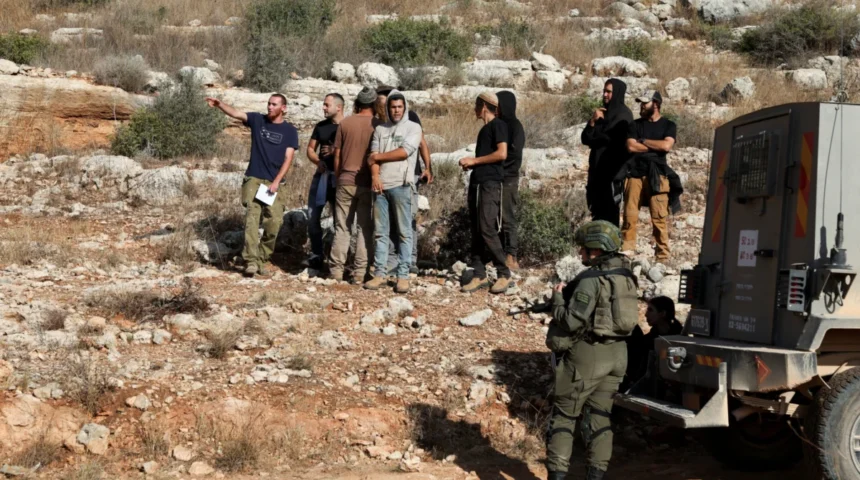
JERUSALEM — An Israeli court in Jerusalem has ordered the release of nine out of ten Israeli settler suspects who were arrested following a series of high-profile violent attacks against a foreign journalist and European diplomats in the occupied West Bank. The suspects, whose detentions drew sharp international condemnation and calls for accountability, have been placed under house arrest following the court ruling handed down late on Wednesday, according to Honenu, a specialized law firm that represents Israeli settlers in legal proceedings.
Israeli police confirmed that while nine of the individuals have been released to house arrest, one suspect remains in custody. Authorities emphasized that the broader investigation into the violent incidents remains ongoing. The arrests had initially been carried out following immense diplomatic pressure, particularly from the United States, which called for a strict crackdown on escalating settler violence in the occupied territories. France, Belgium, and Poland also added their voices to the international chorus, strongly urging Israeli authorities to take decisive action against perpetrators of such assaults.
The detained individuals had been linked to a series of brazen attacks that occurred over the course of a week in the West Bank. In one widely publicized incident, masked settlers were filmed assaulting Heidi Levine, a photojournalist working for The Washington Post. Levine was covering the annual Palestinian olive harvest when she was targeted by the assailants. The attack left her seriously injured, requiring hospitalization and subsequent surgery on her finger.
In a separate violent incident earlier in the same week, a group of masked settlers targeted international diplomatic missions. They assaulted French, Belgian, and Polish diplomats, as well as a French mayor, while they were visiting another part of the West Bank to observe conditions on the ground. These attacks on accredited foreign officials and international media representatives triggered immediate diplomatic friction and forced the issue of settler impunity onto the global stage.
Despite the arrests and subsequent court proceedings, human rights advocates and legal researchers argue that the judicial response remains an exception rather than the rule. Yonatan Kanonich, head of research at the Israeli rights organization Yesh Din, highlighted systemic discrepancies in how law enforcement handles violence in the territory.
"In the vast majority of attacks against Palestinians, no arrests are made at all," Kanonich said, pointing to a persistent enforcement gap. "In cases that receive media coverage… the police arrest several settlers and release most of them shortly afterward."
The recent developments come amid an atmosphere that international leaders have described as dangerously volatile. United Nations Secretary-General António Guterres took to social media to address the deteriorating security situation, stating in a post that the environment in the occupied Palestinian territory was entirely "out of control." Guterres noted that Palestinians continue to suffer daily attacks by Israeli settlers, a situation compounded by the unprecedented targeting of journalists and international diplomats. The UN chief reiterated his urgent call for a credible political path toward lasting peace to halt the spiral of violence.
Parallel to the legal proceedings in Jerusalem, local monitoring bodies have released alarming statistics detailing the scope of violence during the current agricultural season. The Palestinian Colonization and Wall Resistance Commission reported that it has documented 17 distinct West Bank pogroms executed by Israeli forces and settlers against Palestinian farmers and their agricultural lands since the beginning of the olive harvest.
According to the commission’s comprehensive tracking, a total of 409 violent attacks were recorded during the month of October alone. Out of these incidents, 317 were attributed directly to settlers, while 92 involved actions by Israeli military forces. Geographically, the violence has been heavily concentrated in specific northern districts. Nablus recorded the highest incidence of attacks with 166 reported cases, followed closely by Salfit with 91 incidents.
The commission detailed a wide array of aggressive tactics employed during these incursions. These include physical assaults on farmers designed to drive them away from their fields, the systematic theft of harvested crops and essential agricultural equipment, and the deliberate damaging, vandalizing, and burning of olive trees. Furthermore, farmers have faced arbitrary arrests, intimidation at gunpoint, and the use of live ammunition by settlers and soldiers alike.
The human toll of these seasonal confrontations has been severe. The commission reported that Ali Hassan Bazzari, a Palestinian man from the village of Burqa, succumbed to wounds inflicted by settler gunfire on October 7 while he was attempting to harvest his olives.
The violence showed no signs of abating as the week progressed. On Thursday, local Palestinian news agency Wafa reported that settlers set fire to a grove of olive trees located near Imatin, east of Qalqilya. Concurrently, Israeli military forces intervened by forcing farmers off their land and detaining a local farmer alongside several of his agricultural workers. In another incident near Yabad, west of Jenin, local sources reported that settlers stole 17 bags of harvested olives and vital agricultural equipment.
Citing local Palestinian officials, Wafa further reported that Israeli forces have clamped down heavily on freedom of movement around Jenin. Authorities closed critical transport roads and sealed most village gates, effectively cutting off farmers from accessing their agricultural lands in Barta’a as the harvest season reaches its critical peak.

Related News