Student-Led Movement Takes Fight for Justice to Ballot Box Nearly Two Years After Novi Sad Canopy Collapse
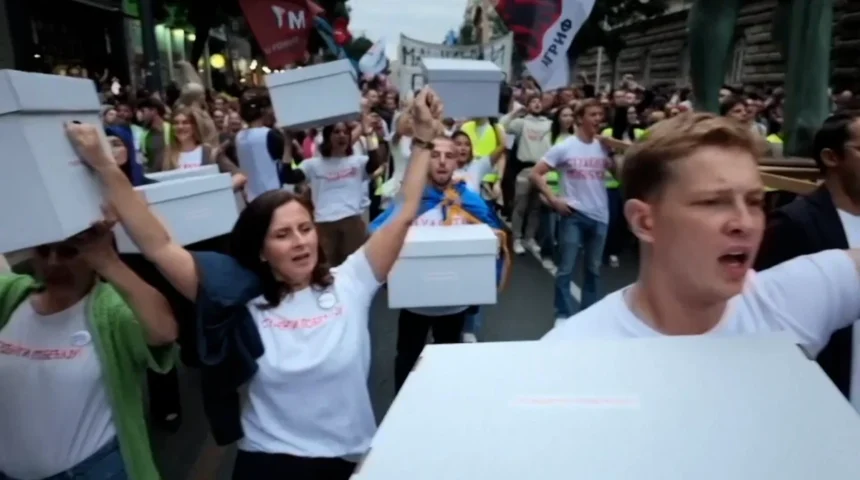
Nearly two years after a catastrophic railway station canopy collapse claimed the lives of 16 people in Novi Sad, Serbia, a resilient student-led movement is preparing to take its enduring fight for accountability directly to the ballot box. The upcoming elections represent a critical juncture for the nation, with the potential to fundamentally reshape Serbia’s domestic political landscape and influence its strategic geopolitical trajectory between the European Union and Russia.
The tragedy in Novi Sad, which shocked the nation and exposed deep-seated concerns regarding public infrastructure, safety standards, and governance, has served as a powerful catalyst for civic mobilization. In the wake of the disaster, public anger quickly coalesced around demands for transparency, institutional responsibility, and systemic reform. While initial grief and outrage dominated the public sphere, the movement has steadily evolved into a structured political force, spearheaded largely by university students who refuse to let the tragedy fade from the national agenda.
For months, demonstrators have maintained pressure on the government, organizing rallies, public forums, and awareness campaigns. By channeling this widespread public discontent into electoral participation, the student-led movement is now seeking to translate grassroots activism into tangible political change. Observers note that these upcoming elections could prove pivotal for Serbia’s political future, offering voters a stark choice on how the country addresses accountability, institutional integrity, and the rule of law.
Beyond the immediate domestic ramifications, the electoral contest carries significant weight for Serbia’s foreign policy orientation. As a candidate country for EU membership while maintaining historical and economic ties with Russia, Serbia has long navigated a delicate geopolitical balancing act. The outcome of the ballot could influence the nation’s pace of alignment with European Union standards and values, or signal a continuation of its multi-vector foreign policy approach.
As the election date approaches, the movement’s ability to mobilize younger voters and disillusioned citizens will be put to the test. Whether this wave of student-led civic engagement can alter the balance of power in parliament remains one of the most closely watched questions in the region, marking a defining moment for a country still grappling with the legacy of the Novi Sad disaster.

Related News