Chinese Authorities Move to Seize $5 Billion in Bitcoin Linked to Massive Ponzi Scheme
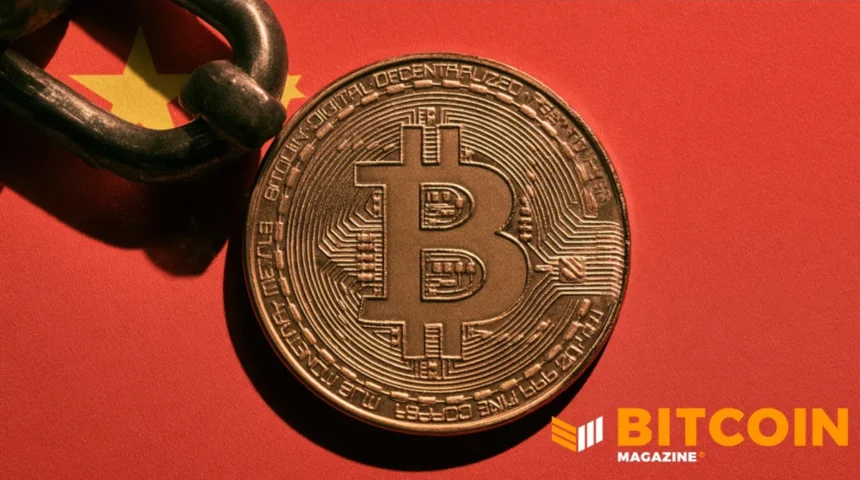
Chinese judicial authorities are actively working to secure and recover nearly 62,000 bitcoins—a staggering digital fortune valued at approximately $5 billion at current market prices—tied directly to one of the largest and most destructive financial fraud cases in the country’s modern history. The unfolding legal battle spans multiple continents, bridging cross-border asset seizures, a landmark UK court ruling, and a complex multi-year restitution process for thousands of defrauded investors.
According to investigative reports published by Shanghai-based media outlet The Paper, prosecutors in China allege that Qian Zhimin masterminded the massive financial deception. Qian served as the alleged controller of Tianjin Lantian Gerui Electronic Technology, a company that operated extensively across the nation between 2014 and 2017. During this three-year window, Qian and a network of recruited associates engaged in the aggressive nationwide sale of fraudulent wealth management products. Operating completely outside the oversight and authorization of official financial regulators, the enterprise lured everyday citizens by promising heavily inflated, guaranteed investment returns.
The elaborate deception ultimately raised an estimated RMB 40.3 billion, which translates to roughly $2.8 billion based on historical exchange rates at the time of the operation. Rather than deploying these billions into legitimate business ventures, commercial operations, or productive economic assets, the perpetrators employed classic Ponzi-style tactics. Qian utilized incoming capital from new participants to pay out artificially high returns to earlier investors, creating a dangerous illusion of sustained financial success and market stability. Meanwhile, a substantial portion of the pooled cash was systematically siphoned away and converted into alternative stores of value, including massive accumulations of bitcoin, high-end real estate, luxury automobiles, and expensive jewelry.
By July 2017, the unsustainable financial structure began to collapse under its own weight as regulatory scrutiny mounted and liquidity dried up. Recognizing that the scheme was unraveling, Qian made the decision to flee the country. Carrying physical computing hardware containing the private keys and access credentials to vast bitcoin wallets, the fugitive escaped to the United Kingdom.
The overseas haven, however, was short-lived. British law enforcement agencies subsequently tracked down the digital assets and physical luxury goods, executing successful seizures that stripped the fugitive of roughly 61,900 BTC, alongside significant caches of traditional cash, high-end jewelry, and various other alternative cryptocurrencies.
The international dimensions of the case introduced a profound legal hurdle regarding who ultimately holds legal claim to the exponentially appreciated digital fortune. A significant turning point in the prolonged legal saga arrived when the UK High Court delivered a pivotal ruling establishing that Chinese law—rather than British law—applies to the complex ownership disputes surrounding the seized bitcoin reserves.
This choice-of-law determination carries massive financial implications. Because digital asset markets have matured dramatically since 2017, the seized bitcoin has appreciated in value by billions of dollars. The applicable legal framework directly dictates whether the original victims of the Tianjin Lantian Gerui Electronic Technology fraud scheme will be entitled to share in the enormous capital gains generated by the cryptocurrency over the years, or if their recovery will be strictly limited to their initial principal losses calculated in fiat currency.
Representatives from the UK’s Crown Prosecution Service have indicated that affected victims may potentially pursue the recovery of their financial losses through China’s established domestic judicial compensation mechanisms. However, the path forward remains contentious. Legal representatives from the international law firm Fieldfisher, who are actively acting on behalf of a contingent of the victims, are currently reviewing the High Court’s decision and considering an appeal. Further upcoming legal hearings will be required to definitively determine whether the individual victims can legally prove and secure their direct entitlement to the rapidly appreciating digital assets currently held within foreign jurisdictions.
While the legal sparring continues in the United Kingdom, domestic judicial proceedings inside mainland China are advancing rapidly. The Second Intermediate People’s Court of Tianjin formally announced that it officially accepted the local prosecution’s application on September 28 to initiate formal legal proceedings to confiscate Qian’s massive portfolio of illicitly acquired assets.
To facilitate the identification and restitution of those affected by the multi-billion-dollar fraud, Chinese authorities have established an accessible administrative pathway. Victims seeking to participate in the upcoming asset recovery and confiscation proceedings are required to register through a designated WeChat platform. The court has instituted a strict six-month notice period for this registration process, allowing affected individuals adequate time to step forward before the formal trial proceedings officially commence.
The sprawling fraud case and the subsequent cross-border recovery efforts unfold against the backdrop of China’s uniquely hostile regulatory stance toward the digital asset industry. The Chinese government maintains some of the strictest regulatory frameworks and enforcement mechanisms in the world regarding cryptocurrencies, having implemented a sweeping, comprehensive ban on all digital asset trading and domestic bitcoin mining activities back in 2021. Despite this prohibition, the government’s current efforts to repossess billions of dollars worth of cryptocurrency underscore the unique legal and law enforcement challenges that arise when traditional financial crimes intersect with decentralized digital assets on a global scale.

Related News