Meta Plans $95 Billion Capital Raise to Fuel Massive AI Infrastructure and Superintelligence Push
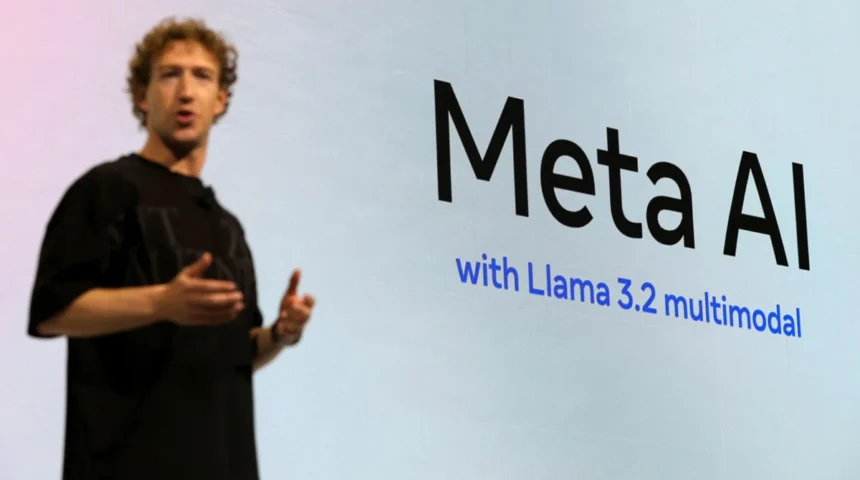
Meta Platforms announced on Monday that it is planning to raise a staggering $95 billion to fund its aggressive investments in artificial intelligence infrastructure and the pursuit of artificial general intelligence, commonly referred to as superintelligence.
The announcement triggered an initial positive reaction in the market, with Meta’s stock rising 1.6% in premarket trading following the news. Highlighting the immense industry-wide demand for hardware, Meta revealed in a regulatory filing that prominent semiconductor giants Nvidia, AMD, and Broadcom have expressed interest in purchasing up to $5 billion combined in shares as part of the broader capital-raising initiative.
The tech titan detailed a multi-phase financial strategy to secure the funds. Initially, the company will raise $35 billion through underwritten public equity offerings. Following that, Meta plans to secure an additional $60 billion through an at-the-market program, allowing the firm to sell shares over time at prevailing market prices.
This sweeping financial maneuver arrives as major technology companies—frequently referred to as hyperscalers—pour record-shattering sums into building out the vast physical foundation required to support modern generative artificial intelligence. Investment banking giant Goldman Sachs has estimated that cumulative AI-related capital spending across compute architecture, specialized data centers, and dedicated power generation could reach an astonishing $7.6 trillion globally between 2026 and 2031.
According to Monday’s statement, Meta’s planned investments will directly support a wide array of emerging artificial intelligence opportunities. These include enhancements to its vast family of social media applications, the rollout and scaling of its proprietary AI agent Muse, and the ongoing expansion of its data center business.
To maintain financial flexibility, Meta stated it plans to balance the funding of these capital-intensive investments through a disciplined mix of operating cash flow, investment-grade debt issuances, strategic partnerships, and fresh equity capital.
Meta Racing to Secure AI Infrastructure
Meta stands shoulder-to-shoulder with other major technology hyperscalers that are increasingly turning to debt markets and aggressive equity dilution to fund the prohibitively expensive infrastructure necessary to maintain a competitive edge in the ongoing artificial intelligence boom.
The aggressive fundraising plans follow closely on the heels of Meta’s third-quarter financial results, released last week. Those figures revealed that quarterly revenue surged by 26% year-on-year to hit $64.60 billion, comfortably beating the $63.37 billion consensus estimate compiled by Wall Street analysts.
Despite the strong top-line growth, investor attention quickly zeroed in on the company’s negative free cash flow and a substantial upward revision to its full-year capital expenditure forecast. Meta now projects that its total capital expenditures for the full year will land between $135 billion and $145 billion, raising the lower bound of its previous range from $130 billion. That announcement initially placed downward pressure on the company’s share price as markets digested the sheer scale of the required spending.
Driving a significant portion of these soaring costs is Meta’s massive physical expansion. The company is currently constructing four colossal "superclusters," each designed with more than one gigawatt of computing capacity. Meta management noted that the enterprise is on track to nearly double its total infrastructure capacity in 2026 compared to the previous year.
Industry analysts emphasize that Meta’s decision to tap the markets for tens of billions of dollars is symptomatic of a broader, high-stakes technological race. Ben Wood, senior partner at technology market research firm CCS Insight, noted that the move "reflects the eye-watering levels of investment required to keep up in the AI arms race."
Wood further pointed out that Meta’s offering of additional stock arrives during a period when numerous heavyweight technology entities are aggressively seeking external funding. Companies across the tech and aerospace sectors are similarly turning to public and private markets to secure capital for compute power.
The macroeconomic landscape is crowded with massive capital-seeking maneuvers. Alphabet, the parent company of Google, announced plans in June to raise $85 billion to fund its own sprawling artificial intelligence data center network. Meanwhile, Elon Musk’s SpaceX recently closed a $40 billion debt financing round specifically designated for the acquisition of advanced graphics processing units, the critical silicon chips powering AI model training. At the same time, artificial intelligence startup Anthropic is actively preparing for an initial public offering to fund its computational ambitions.
The scramble for hardware and real estate extends beyond traditional tech firms and startups. Last week, reports indicated that TikTok U.S. is seeking to secure multiple gigawatts of dedicated computing capacity over the coming years to handle its burgeoning workloads, further intensifying competition for limited power grids and data center space.
As the industry hurtles deeper into an era defined by multi-billion-dollar compute clusters and unprecedented energy demands, Meta’s $95 billion capital raise underscores the staggering financial commitment required simply to remain a contender in the artificial intelligence landscape.

Related News